In the famous film, a man trapped in a time-loop is condemned to relive the same awful day. DW's Sabine Kinkartz knows how he feels as Germany enters its second pandemic autumn.
As we set off for Turkey on vacation from Cologne-Bonn Airport recently, we were asked by an airline employee whether we were vaccinated. We answered yes and proceeded to present our telephones to prove it by showing our certificates before she stopped us, saying simply: "I believe you."
That is not good. Not good because it is not a one-off. Across Germany, there seems to be a lax understanding of the rules in place to make everybody safer during this pandemic. Far too often, restaurants and bars fail to check whether patrons are vaccinated. The same is true at events. And when they do check, hardly anyone bothers to ask for IDs to make sure the QR-codes are not fake.
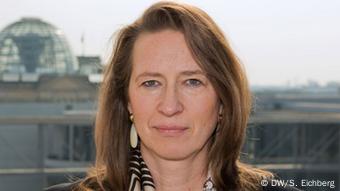
Sabine Kinkartz
Many people no longer keep a distance in the subway, on buses, on escalators and countless other places. Some wear a mask but do not cover their nose or mouth. Others say, "I am vaccinated," and others refuse to acknowledge the risk or simply accept it.
Where have the politicians been?
Where were the politicians in the past few weeks? Those who should have been drawing up guidelines and roadmaps and ensuring that rules and regulations were implemented? Germany in autumn 2021 is a country that has drifted into the fourth coronavirus wave without a plan. A country in which the numbers are rising exponentially and are already higher than in autumn 2020. A country where hospitals are raising the alarm and where people in care homes are falling ill and dying in droves.
It is reminiscent of the early 1990s film Groundhog Day, in which a man played by Bill Murray wakes up and has to relive the same day over and over again because he fails to learn from his mistakes. Unfortunately, in Germany this is not fictional at all.
It was foolish to believe that the vaccine would fix everything. It was clear early on from the example set by Israel that it does not suffice when only two-thirds of the population is vaccinated. The message was heard in Germany but did not elicit any action, partly because COVID-19 was not on the political agenda during the recent election campaign.
Who is in charge of Germany?
The Christian Democrats (CDU/CSU) were voted out in the elections. Chancellor Angela Merkel and her Cabinet are currently in office on a caretaker basis only, and the parties of the next probable coalition are busy negotiating. Merkel has raised the alarm in view of the drastic rise in cases, but does anyone still listen to her?
For days, there has been an inconclusive debate about whether the chancellor should meet with the leaders of the states for a coronavirus summit.After a two-day meeting with the state health ministers, Federal Health Minister Jens Spahn did say that rules have to be adhered to more and there has to be more monitoring. He has also taken to promoting booster shots. But all this comes far too late. Elderly people and those with underlying health issues should have started receiving booster shots in July. Instead, vaccine centers shut down in September.
Not that long ago, Spahn gave the impression that he did not expect the situation to worsen. He even set the ball rolling so that the "epidemic situation of national scope," a legal construct that gives the federal state more powers on pandemic-related policy, would elapse at the end of November.
That means that, from December onwards, the 16 German states will make their own decisions on what to do about the pandemic. The country faces the same chaos as in autumn 2020. Nothing has been learned! The disparities are already obvious. While in Saxony only vaccinated people and those who can prove that they have recovered from COVID-19 can go everywhere, in North Rhine-Westphalia, schoolchildren no longer have to wear masks.
Politicians do not want to impose any restrictions on those who are vaccinated because they promised that this would not happen. But they do not dare introduce compulsory inoculation. Not even in care homes! At least those visiting them and working in them can now once again be tested for free. Otherwise, people still have to pay for tests from their own pockets, which means many are no longer getting tested.
Should we just shut our eyes and hope for the best? Health Minister Spahn has said that there are difficult weeks ahead. That is for sure. However, we could have avoided another, possibly more devastating, COVID-19 winter.
"Opinion" - Google News
November 06, 2021 at 10:37PM
https://ift.tt/3CQSGOo
Opinion: Germany is caught in a COVID Groundhog Day - DW (English)
"Opinion" - Google News
https://ift.tt/2FkSo6m
Shoes Man Tutorial
Pos News Update
Meme Update
Korean Entertainment News
Japan News Update


No comments:
Post a Comment