Rechercher dans ce blog

Monday, June 1, 2020

Opinion: Trump wants armed conflict. Don't give it to him - Los Angeles Times

America is in peril tonight. The days and hours ahead could define our nation, in the same way that the turmoil of 1968 did.

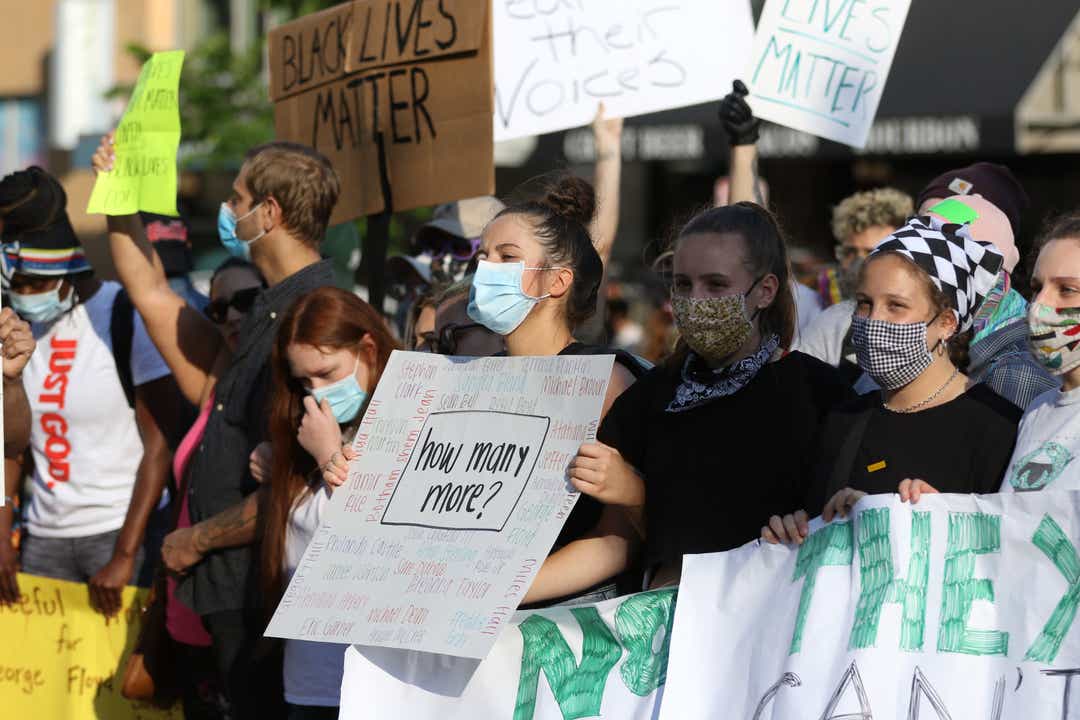
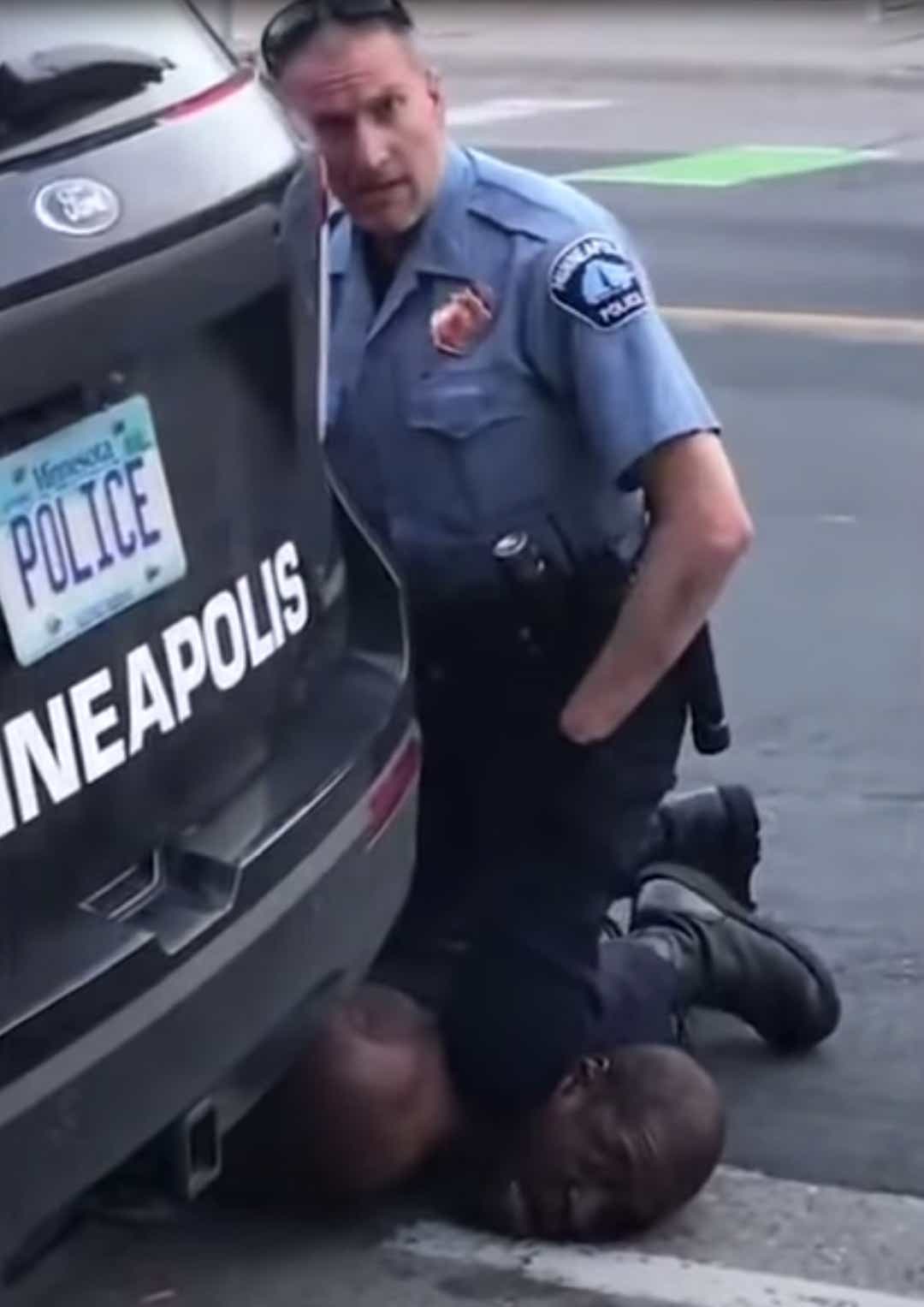
Today, President Trump took another page from the authoritarian playbook, threatening to deploy active-duty troops to quell the unrest that has roiled dozens of American cities. Even by the depraved standards he has set, this is a new low. It risks exacerbating the tragic violence and loss of life that have marred the legitimate and necessary protests that erupted a week ago following the death of a black man, George Floyd, in the custody of four Minneapolis police officers.

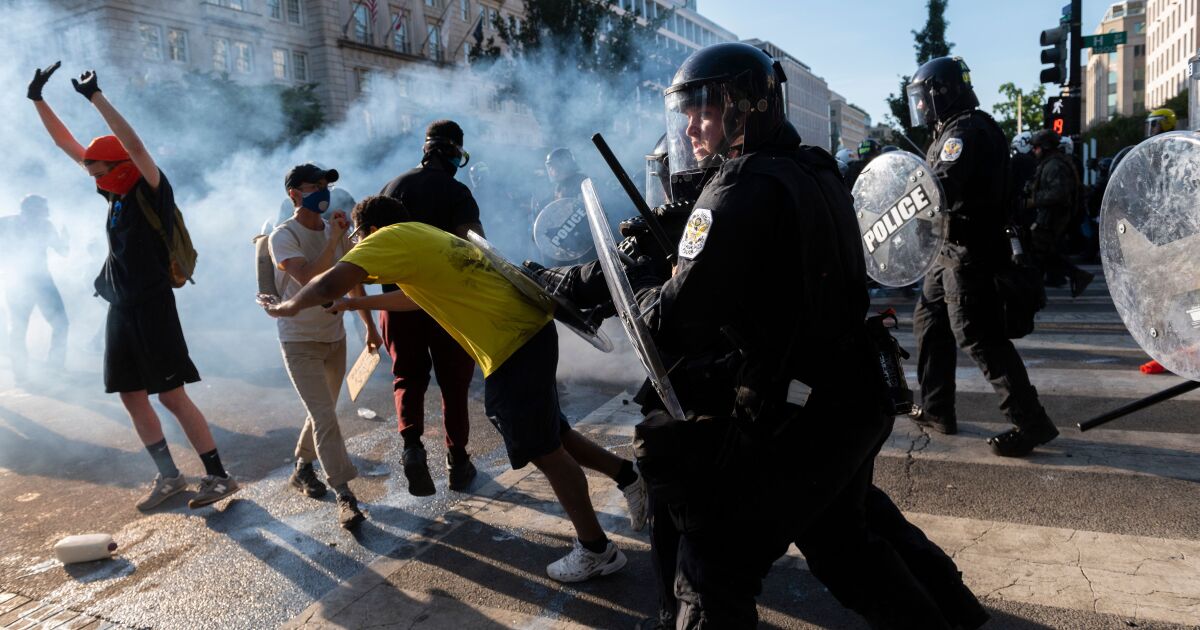
It is shocking even to write these words, but Trump does not abide by the constitutional norms of our democracy, and we must stop pretending that he can or will. His style is that of the demagogue and the strongman — and the only thing he understands is confrontation and spectacle, as was evinced on Monday night when law enforcement officers fired tear gas on peaceful demonstrators in Lafayette Park in Washington so that Trump could walk from the White House to St. John’s Church in what he no doubt believes to be a show of strength.

This would be comparable to the conduct of a truculent teenager, were it not for the enormous might of the military Trump commands, and his total lack of the temperament, character and ability to carry out his oath to “preserve, protect and defend the Constitution.” Our president has become the greatest living threat to that document, and he risks provoking a crisis unlike any since our nation’s basic law was enacted in 1787. Military deployment in support of law enforcement should be contemplated only as a last resort, and only if state officials have requested it.

Advertisement

America is an experiment. Our country is not a nation-state founded on an ethnic identity — sorry, white supremacists — but a democratic and constitutional republic based on a set of ideas, chief among them the rule of law, not of men. Yet the Constitution has often failed us. It took the Civil War, and the loss of 620,000 American lives, to begin to overcome our country’s original sin: the denial of the humanity and equality of enslaved people of African descent. It took the turmoil and suffering of the Depression to bring about a modern welfare state, with protections against old-age poverty. It took the sacrifice and struggle of the civil rights movement to advance the unfinished work of Reconstruction.

Trump’s actions tonight risk turning our democracy — flawed as it is, ever a work in progress — into a failed experiment. We must not give him the perverse satisfaction we know he craves. We must avoid the slide into authoritarianism, and the erosion of democratic institutions and values, that his actions threaten. We must turn out in protest — peacefully, purposefully — but we must also stop and condemn anyone who would exploit this fragile moment to sow mayhem and disorder.

If we give in to violence, we know how this story ends: consolidation of state power, further moves toward autocracy and censorship and a slide into dictatorship. This is how democracies die.

The causes of our democratic erosion are many: decades of rising inequality; stagnation of wages and loss of economic opportunity; growing mistrust of all institutions, since the era of Vietnam and Watergate; hyper-polarization, exacerbated by new technological platforms such as Facebook; race-based disparities in health, wealth, income and opportunity; reduced confidence in the integrity and validity of our elections; and, perhaps most tragic, a loss of faith among young people that nonviolent social change, via democratic processes, can bring about improvements to the human condition.

Advertisement

Our system of education system has left too many young people ill-equipped, and, by extension, our country insufficiently prepared to compete globally.

It is not too late to pull back from the brink. Reviving our economy in the midst of a pandemic that has claimed more than 100,000 American lives, and resuscitating our democracy after decades of institutional and moral erosion, will be the work of years, if not generations. But it has to start somewhere. It has to start today.

We sleep tonight fitful and restless, glued to our smartphone or TV screens, numbed by the staggering suffering that has brought America closest to the brink of chaos since 1968.

The young people marching in the streets of America’s cities — from Minneapolis to Birmingham, Ala., from Los Angeles to Columbus, Ohio — were not alive then. Nor was I.

Advertisement

But we can and indeed must absorb its lessons if we are to avoid calamity.

If you are a young person reading this, please know that your anguished demands for justice have been heard. If you are a parent, guardian or relative of a young person, please keep them close to you. If you are tempted to rob, steal, vandalize or loot, please listen to George Floyd’s brother, who moved us all with these simple words: “That’s not going to bring my brother back.” If you are next to someone who wants to rob, steal, vandalize or loot, stop them with all your might.

By all means, flood the streets during the day, and engage in righteous struggle — “good trouble,” in the words of Rep. John Lewis (D-Ga.), who put his body on the line so that African Americans could have the right to vote. But at night, please go home. Heed the curfews. Obey lawful orders. Don’t give Trump the crackdown that he is itching to mete out. Your voice is too important right now to be silenced. And when this is all over, vote like your life is on the line — because it is.

Let's block ads! (Why?)


"Opinion" - Google News
June 02, 2020 at 08:51AM
https://ift.tt/3cqq94n

Opinion: Trump wants armed conflict. Don't give it to him - Los Angeles Times
"Opinion" - Google News
https://ift.tt/2FkSo6m
Shoes Man Tutorial
Pos News Update
Meme Update
Korean Entertainment News
Japan News Update

Why Donald Trump can't grasp this moment - CNN

Michael D'Antonio
No moment defines the Donald Trump era more precisely, for this is a man whose life has been spent inside a series of bunkers -- intellectual, emotional, financial, and political -- where he schemed to make us all accept his narcissistic fantasy. This dreamworld, where he would rule as the "I alone can fix it" president has become, not the 1950s idyll of his imagination, but a hellscape governed by a man frozen in his childhood and out of step with the times. The world is spiraling out of control and its most powerful man is abjectly unprepared and unqualified.
Understanding the malignant perspective Trump brings to this crisis, requires a brief tour of his formative years. Before now, the convulsive 1960s was America's most trying period of unrest in modern times. For some, the trauma of the violent response to the civil rights struggle and the assassinations of Martin Luther King Jr. and Robert F. Kennedy led to a lifelong struggle to understand and address the pain of our fellow citizens who sought dignity and equality. Others became determined to restore what they imagined was a more orderly reality when rich and powerful white men ruled with unquestioned authority.
As a very wealthy young white man isolated in privilege, Trump didn't seem to consider the suffering that caused the crises of his youth. Having concluded that those who ruled had responded too weakly when protests led to riots, he adopted a hardcore law and order mentality and began developing a physical and psychological reality where he could be isolated from dissent. By 1989, when he spoke out about the infamous assault on a jogger in Central Park he would decry "the complete breakdown" of society and yearn for the days "when I was young" and he saw cops rough-up two loudmouths who had harassed a waitress. He wanted a return of that sort of policing and called on New York State to adopt the death penalty after the arrests of the five young black and Latino men in the jogger case. Years later, those men were found to be innocent.
Trump's crazy designation of Antifa as terrorist organization
By 2016, he would ignore the overall declines in violent crime to paint a dire picture of American life and promise to be the "law and order president." When asked about when America was great he recalled the time of his childhood, the 1940s and 1950s, when "we were not pushed around, we were respected by everybody, we had just won a war, we were pretty much doing what we had to do." He also remains nostalgic for the stereotypical 1950s housewife, speaking wistfully of women like actress Donna Reed, who always seemed to play the role of a gentle and accommodating woman.
Nothing symbolized Trump's isolation from the rest of us better than the skyscraper he built on Fifth Avenue. Trump Tower was, in its time, the tallest concrete truss structure in the world. Its mass was most evident in the studio where he filmed his TV show The Apprentice where, behind the sets, the unfinished bunker-like walls blocked every sound and every ray of light from the world outside.
From his redoubt, the future president used his TV show and considerable storytelling talent to sell himself to America and the world. The Trump he offered was nothing greater than the blustering, I'm-never-wrong personality he displayed at all times. With nasty vendettas against public figures from actress Bette Midler to former President Barack Obama, Trump divided onlookers into supporters and opponents. His drive for the presidency ended with him in the Oval Office thanks to an Electoral College system that lets the loser of the national vote gain the presidency.
In a sad week for America, Trump has fled from his duty
With no experience in government, the military, or genuine civic engagement, Trump brought his true self to the White House, where his team included many who seemed to share his back-to-the-50s mentality. At the Justice Department federal efforts to safeguard civil rights were curbed. The Department of Education rolled back protections for the rights of women and minorities. The Pentagon barred transgender recruits.
Those of us who knew Trump's limitations feared the kind of crisis that arrived with the deadly coronavirus. There was an inevitability in the way that he first denied the problem and then banked on solutions that reeked of his pre-'60s childhood, when polio was defeated by a vaccine and new drugs arrived to vanquish infectious diseases. Watching him in action, it seemed as if he had never noticed that the world and its problems are complex and require respectful study and difficult, collaborative work. As instant solutions failed to materialize, he did what he has always done; blame others, claim victimhood, refuse accountability. Nothing Trump has ever said sounded more true to his character than his declaration about the nation's Covid-19 testing delays: "I don't take responsibility at all."
That the US is a country in crisis, without a leader, is now so obvious that as Time magazine reported last week, cracks are forming in his once-unbreakable base. The doubts the magazine documented before the country was convulsed by recent protests against police brutality reflected his failed response to the Covid-19 pandemic, which contributed to a death toll now exceeding 100,000.
The virus continues to kill at a higher rate among minorities. The economic toll that includes 40 million unemployed, hit the poor and working class harder than others. Then George Floyd died on a Minneapolis street as a police officer pressed his knee into his neck for nearly nine minutes. Floyd, arrested on suspicion that he passed a counterfeit $20 bill, cried out that he could not breathe. Bystanders begged for his life. All this was recorded and as the video circulated, the natural human response -- outrage and anger -- led to worldwide protests.
That the President has been deaf to the suffering, and incapable of responding like any previous president would, reminds us that his character, his view of humanity, and his life experience, made him wholly unqualified for the role he now occupies. He has lived much of his life in reaction to the trauma of the '60s and denying that the country has become a more richly diverse place where no one is willing to accept second-class status. Obsessed with the past, he doomed us all to repeat it -- and cannot lead us to a better outcome. For that we'll have to depend on ourselves.

Let's block ads! (Why?)


"Opinion" - Google News
June 02, 2020 at 07:55AM
https://ift.tt/36P4bqm

Why Donald Trump can't grasp this moment - CNN
"Opinion" - Google News
https://ift.tt/2FkSo6m
Shoes Man Tutorial
Pos News Update
Meme Update
Korean Entertainment News
Japan News Update
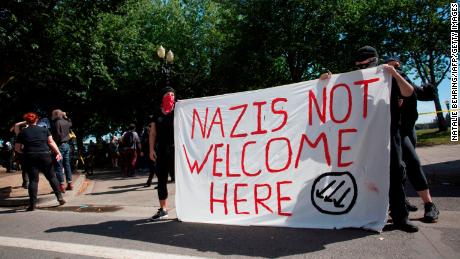
Trump's American dystopia has reached a new and ominous cliff - CNN

Frida Ghitis
The President claimed he would use all the civilian and military resources of the federal government, declaring he would deploy "thousands and thousands of heavily armed soldiers, military personnel and law enforcement officers" to bring order, to stop the violent protests
He did this moments after TV cameras captured in real time the scene of security forces wielding batons and shields -- including a line on horseback -- moving in on peaceful citizens exercising their First Amendment rights nearby in Lafayette Park. Tear gas filled the air as the crowd fled from the clouds of tear gas, turned, regrouped and were pushed back once again by the advancing forces.
Trump declared himself the "law and order" president, vowing to defend the law, "including your Second Amendment rights." That was a chilling dog whistle to his armed supporters. Anyone who thought the Trump presidency represented a threat to American democracy, anyone who ever thought Trump could unleash a civil war, saw those fears closer to being realized on Monday night than at any time since he took the oath of office in 2017 with a speech warning about "American carnage."
Once the American citizens had been cleared with flash bangs, tear gas and rubber bullets, the President walked across the park to St. John's Episcopal Church, which was partially burned in a Sunday evening protest, and held up a bible for a photo op: "We have the greatest country in the world," Trump said.
America's dystopia in the Trump era has reached a new and ominous cliff.
Cities have exploded, driven by anger and frustration, in the midst of the worst health crisis in a century and the deepest economic downturn since the Great Depression. The country is heartsick, frightened, divided. And President Donald Trump is failing on every front.
But even at a time like this, with multiple literal and figurative fires burning, he can think of nothing better to do than urge more violence from authorities, calling on governors to step up the use of force on protesting American citizens, as he did earlier in the day.
Realize that for Trump, the show of bravado, the made-for-TV routing of largely young demonstrators in Lafayette Park, is not merely a reflex, it's a campaign strategy. The President is trying to capitalize on the disaster, hoping to accrue public support by strutting his phony, carefully constructed tough guy persona.
Indeed, in the conference call with governors Monday he sounded more like a Chinese leader talking about Hong Kong -- more like an insecure power-hungry tyrant -- than the head of the United States, a country once known (remember?) as a beacon of democracy.
According to a recording of the call, obtained by CNN, he advised, "You have to dominate or you'll look like a bunch of jerks." Obsessed, as is his custom, with image over reality, Trump claimed that, "the whole world was laughing at Minneapolis over the police station getting burned." He said the governors, "look like fools."
Few will disagree that the looting and the vandalism must be stopped. In fact, that is precisely what America's most respected leaders have said, but not without acknowledging that the protesters not only have a right to be heard peacefully, but that their grievances are legitimate and their anger justified.
Why Donald Trump can't grasp this moment
Over the weekend, with city neighborhoods smoldering, Americans were on edge, grief stricken, uncertain about what the future holds. Any other president would have used the role to acknowledge the pain, quell the passions and offer words of comfort and reconciliation. Instead, Trump traveled to Florida to watch a rocket launch, ludicrously striding onto a platform to the tune of "Macho Man," one of his campaign rally theme songs.
Since this third layer of the 2020 Trump-era catastrophe started to unfold, the President has mostly tweeted threats and incitement. First, he appeared to call for police to shoot Americans when he said, "When the looting starts, the shooting starts," a famous, threatening jape from a racist police chief in 1968, who boasted about engaging in police brutality.
After taking cover in a White House basement to protect himself from protesters this weekend, Trump claimed the Secret Service was eager to fight them, and warned of "ominous" weapons and "vicious dogs," that awaited citizen demonstrators, should they try to come closer. It's hard to imagine a more jarring image during protests against police brutality. At a moment when the need to come together has not been greater, he has relentlessly attacked Democrats, unable to pause partisan invective even in the midst of a grave crisis.
On his call with governors, Illinois Gov. J.B. Pritzker tried to explain, "rhetoric coming from the White House is making it worse, people are experiencing real pain," he said. He appeared to be trying to appeal to an empathetic part of the President that may not exist, "We've got to have national leadership calling for calm and legitimate concern for protesters."
Trump, who had just had a call with Russian President Vladimir Putin, his admired strongman, shot back, "I don't like your rhetoric much either."
Tammy Duckworth: Fight for the justice that George Floyd didn't get
The President, who is raring to see more soldiers in the streets, praised Minnesota Gov. Tim Walz for using the National Guard. But Walz later said he disagreed with Trump's assessment and told Trump, "No one's laughing here. We're in pain. We're crying. We saw a man lose his life."
That's what other governors and mayors who are not watching the mayhem only on television or responding via Twitter, are saying across the country, from the front lines.
The challenge is grave and complicated, but some of what Trump should have done is not such a mystery. Every president before him has helped Americans grieve, helped them through difficult times, appealed to national unity. Somehow, that is beyond the abilities of this man who is so thoroughly incapable of fulfilling some of the fundamental duties of his job.
As with the pandemic, the President didn't start America's racial tensions -- although he has emboldened white supremacists -- but his every instinct has propelled him in the wrong direction. He is making everything worse. Instead of trying to salve America's suppurating wounds, he is making them more painful. It is a deadly shame.
Trump appears to be trying to gain political profit from the crisis, possibly expecting it will propel him to victory in 2020. (Perhaps it will help him. Burning cities tend to favor conservative politicians.) As always, it is all about him, about what can benefit him; the country be damned.
Law enforcement officials are struggling to contain the looting and vandalism that have boiled over from the protests following the televised killing of Floyd. The demonstrations are driven by an incandescent rage at the never-ending stream of killings of African Americas; the most horrifying aspect of continuing racism, and an unmistakable sign of the need for criminal justice and law enforcement reform.
Trump's aides had debated what kind of a statement Trump might make. Mayors and governors were worried, rightly, as we have seen, about what he might say. On CNN Monday morning, Atlanta Mayor Keisha Lance Bottoms said he should keep quiet if he's going to say something like what he said after the Charlottesville march by white supremacists. Back then, he ended up claiming there were some "very fine people," among them.
What should Trump do? Bottoms told CNN the President should, "give us the support that we ask for. If we don't ask for it, we don't need your input, your advice and your rhetoric." Bottoms said Trump is throwing matches into the flames.
"It's like watching a nightmare," the Atlanta mayor said. If Trump can only stoke further hatred and division, "It would be better if he said nothing at all."
Yes, it would have been.

Let's block ads! (Why?)


"Opinion" - Google News
June 02, 2020 at 08:04AM
https://ift.tt/2XRLKNJ

Trump's American dystopia has reached a new and ominous cliff - CNN
"Opinion" - Google News
https://ift.tt/2FkSo6m
Shoes Man Tutorial
Pos News Update
Meme Update
Korean Entertainment News
Japan News Update
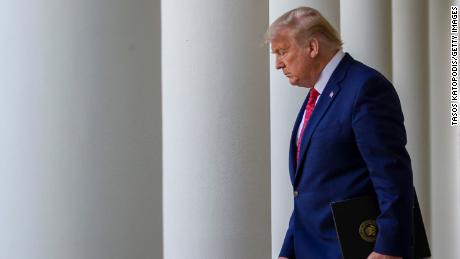
Safetyism Isn’t the Problem In the Coronavirus Debate - The New York Times

As America debates when and how to reopen, those concerned about the side effects of the lockdown have begun to use the word “safetyism” to characterize what they consider extreme social-distancing measures.

Safetyism, a term first used in the book “The Coddling of the American Mind,” by Greg Lukianoff and Jonathan Haidt, denotes a moral culture in which people are unwilling to make trade-offs demanded by other practical and moral concerns. Rather than seeing safety as one concern among many, it becomes a sacred value.

Some point to statements like the declaration by Gov. Andrew Cuomo of New York that “if everything we do saves just one life, I’ll be happy, as evidence that safetyism has taken over what should be a more nuanced calculation about how to reopen.

While there is evidence of this kind of thinking in some politicians’ statements and policies, the more pressing problem is what we don’t see. The crisis has been marked by a rush to label, and demean, the other side. Partisans on both sides lack even a modicum of curiosity about their political opponents’ views regarding how to solve the Covid-19 crisis. Certitude is pervasive.

Individuals and cultures differ in the extent to which they’re willing to tolerate risk, so disagreements about safety are inevitable, whether deciding how to protect people from car accidents, crime or Covid-19. But everyone tolerates some risk. And there is some truth to the way we characterize left and right during this crisis: As polls demonstrate, the right is slightly more concerned about lockdowns being lifted too slowly and the left is vastly more concerned about lifting lockdowns too quickly.

The onslaught of social and news media make it easy to make general assumptions about each side. When bombarded daily with statements from Governor Cuomo, the lockdown position seems like safetyism: an obsession with avoiding contact with the virus at all costs, even if it means national suicide. Similarly, when those on the left hear only from people on the right who think the virus is either a bad flu or a hoax, the open-up position can look like a reactionary ideology of anti-safetyism: an obsession with freedom at all costs, even if it means sacrificing our grandparents’ lives.

But the left is also composed of people who argue for tolerating some risk, even as they suggest a slower reopening than the right would like. And the right is also composed of people who object to mandated lockdowns but accept indoor mask-wearing requirements and expect citizens to take voluntary precautions not only to protect themselves, but to protect the most vulnerable. And a vast majority of Americans across both sides of the aisle say, “We’re all in it together.”

When we react to our opposition’s most extreme views, however, and interact only with those who think like we do, not only do we fail to see the value in our opposition’s perspective, but our own views tend to become more polarized and extreme. In other words, the more each side reacts to the most extreme version of the other side, the more each side becomes like the extreme version the other side rails against.

The mentality of safetyism adopted by some lockdown proponents makes it difficult to alter course, even when doing so might save lives. For example, as we learn more about the virus, we’re beginning to understand that the likelihood of transmission outdoors is very low. But instead of encouraging people to spend time outside, we’re seeing beach and lakefront closings and new mandates requiring people to wear masks outdoors at all times, even when social distancing.

At the same time, Americans whose lives are disrupted more by the lockdowns than by the virus are beginning to resist policies that expose them to negative and potentially ruinous financial, emotional, social and health implications.

Protesters across the country (often maskless and not social distancing) have begun employing anti-safetyism talk that simply dismisses all concerns about the virus. Some compare the risks to other risks we easily tolerate — without acknowledging that those other risks are either less deadly (like the seasonal flu) or noncontagious (like car accidents). This embrace of anti-safetyism makes it harder to get out of the lockdown safely.

If lockdown proponents oppose not just the kinds of social activities that are likely to spread the virus, but all social contact, while lockdown opponents reject not just the costliest virus-fighting measures, but all such measures, it’s hard to see how we ever get to a place where work and life can resume with any amount of normalcy.

Solving the complex problems of the pandemic cannot be accomplished without considering ideological opponents’ views. We just don’t know how long lockdowns can serve as a lifesaving, medically induced coma, and at what point they become lethal. Partisans need to replace “us versus them” thinking with the intellectual humility necessary to get the best thinking from political opponents.

Blame and recrimination are certainly common responses in pandemics. But they’re also counterproductive. Those who fall on the safetyism side of the spectrum are not fascists, and those who fall on the anti-safetyism side are not human sacrificers.

If politicians would reject the tribalism of partisanship and do the hard job of listening — with open-mindedness and curiosity — to those with whom they disagree, we’d stand a much better chance of protecting both lives and livelihoods from not only the effects of the pandemic, but also the effects of our responses to it.

Pamela Paresky (@PamelaParesky) teaches psychology at the University of Chicago and writes for Psychology Today. She is a senior scholar with the Foundation for Individual Rights in Education.

Bradley Campbell (@CampbellSocProf) is a professor of sociology at California State University, Los Angeles. He is the author of “The Geometry of Genocide: A Study in Pure Sociology” and a co-author of “The Rise of Victimhood Culture: Microaggressions, Safe Spaces, and the New Culture Wars.”

The Times is committed to publishing a diversity of letters to the editor. We’d like to hear what you think about this or any of our articles. Here are some tips. And here’s our email: letters@nytimes.com.

Follow The New York Times Opinion section on Facebook, Twitter (@NYTopinion) and Instagram.

Let's block ads! (Why?)


"Opinion" - Google News
June 02, 2020 at 05:07AM
https://ift.tt/2Avo3Tf

Safetyism Isn’t the Problem In the Coronavirus Debate - The New York Times
"Opinion" - Google News
https://ift.tt/2FkSo6m
Shoes Man Tutorial
Pos News Update
Meme Update
Korean Entertainment News
Japan News Update
Medica Group of Hospitals hosts COVID-19 virtual discourse - Express Healthcare

israelob.blogspot.com
Read Article

The session took viewers through clinically oriented topics ranging from defining the disease to technicalities of managing COVID positive patients

Medica Group of Hospitals, hosted its first COVID-19 virtual discourse, highlighting, the subject – ‘Adopt the new normal – Let’s work together and build a safe and healthy future.’ Dr Alok Roy, Chairman, Medica Group of Hospitals and Chair -FICCI Health Services Committee enlightened viewers on how private hospitals should prepare to treat both COVID as well as non COVID patients. Sharing their experiences, the COVID Warriors, doctors, who have been frontliners, were other panelists, Dr Tanmay Banerjee, who spoke about ‘Defining COVID, Challenges and Outcome’, Dr Amitabha Saha, made a ‘Clinical presentation on Triaging and Imaging’, Dr Aviral Roy, highlighted the ‘Management and Myths surrounding COVID-19’ on behalf of the Medica Kolkata Critical Care team and Dr Prashanta Behera, Head, Critical Care Medicine, Tata Steel Medica Hospital, Kalinganagar, Odisha, shared his experience of handling positive patients successfully.

The hour-long session took the viewers through clinically oriented topics ranging from defining the disease to the technicalities of managing COVID positive patients. On this virtual session, Dr Roy shared Medica’s overall journey in dealing with the current pandemic crisis. He stated, “We are treating COVID patients in six of our hospitals. Over 630 COVID positive patients have passed through our three hospitals in Kolkata, Kalinganagar and Gopalpur. We would sincerely like to offer our gratitude to the West Bengal Government for allowing Medica to test and treat COVID 19.” Speaking on the infrastructural and operational changes Dr Roy commented, “While Medica Group of Hospitals is treating COVID positive patients we are also curing non COVID critical patients equally. On an average our occupancy goes up to 47 beds for COVID patients. We are also offering tele-referral system to reduce consultant entry into COVID wards and teleconsultation service to reduce volume of physical OPDs.”

The classical CT (Computed Tomography) findings and the importance of CT imaging in the cohort of COVID patients were explained by the doctors. The intricacies of various drug combination along with their and limitations were also highlighted during the webinar. Dr Aviral Roy, Consultant, Critical Care, Medica  Superspecialty Hospital, shared few of the salient features of the COVID -19 virus, conveyed, “Coronavirus is the successor of Severe Acute Respiratory Syndrome (SARS) which evolved in 2003 from China. This virus spreads primarily via respiratory droplets over 1.8m (6 feet). In early stage as the virus is of high compliance, we are using FiO2 (Inspired Oxygen Fraction) over PEEP (Positive end-expiratory pressure) during mechanical ventilation for better treatment. In Medica we are providing ARDS (Acute Respiratory Distress Syndrome) dose steroids and Haemofiltration system for providing better immunity to the COVID patients.”

Dr Banerjee, added “The last two and a half months have been challenging for all of us. We have learnt and grown together in our endeavour to better serve our patients while keeping our healthcare workers safe. The constantly changing guidelines and new studies have kept us on our toes. We are getting 60:40 male and female ratio COVID patients at our hospital. We have already discharged 64 COVID patients.”

The clinical session was followed by a segment on the experience of Tata Steel Medica Hospital, Kalinganagar in Odisha. Dr Behera added, “Tata Steel Medica Hospital has been designated by the Odisha government as a COVID hospital and is the only one in the Jajpur district. 170 COVID positive patients have been treated till date with 87 having been discharged so far. We applaud the hard work of the team at Kalinganagar that is bravely taking the COVID-19 crisis head on.”

The virtual session was ended by Dr Roy who shared important foresights not to underestimate the disease. Medica has been successful in transforming major infrastructural changes that made to keep the hospital safe for both COVID and non-COVID patients. No frontline warriors have been affected by COVID 19 at Medica. Additional sinks for hand washing, a fever clinic and thermal scanning facilities were set up as early as February. COVID beds were created and increased to meet the demand, with entire wards being put under negative pressure. Dr Roy acknowledged the COVID Warriors who worked tirelessly to stay abreast with the ever changing norms, making the hospital safe for all kinds of patients. He concluded the session by delivering the message that being prepared is the only way to survive this crisis. This is the new way of life and together, we will strive to make the world safe again.

Let's block ads! (Why?)


"discourse" - Google News
June 01, 2020 at 09:21PM
https://ift.tt/3ck0bPL

Medica Group of Hospitals hosts COVID-19 virtual discourse - Express Healthcare
"discourse" - Google News
https://ift.tt/2KZL2bm
https://ift.tt/2z7DUH4

Opinion: Not the time for 'not all' rebuttals to racism - The Cincinnati Enquirer

opinion

"Not all cops…"

I see this rebuttal in my social media feed in response to the death of George Floyd at the hands of Minneapolis police officers.

"Not all white women…"

Is a rebuttal I see from white women regarding Amy Cooper’s behavior. Cooper is the white woman who invoked her privilege when calling 911 to falsely accuse an African American man of threatening her life when he merely asked her to follow park protocol and leash her dog.

"Not all…"

Stop. It’s the wrong response. Juvenile even. I understand how a person wants to react in defense. I fight it within myself.

"Not me!" I want to shout.

"I’m not like that." I want to differentiate.

I want to be sure I’m not lumped in with behavior so appalling. I want to reassure the community that allies exist. The "good guys" in law enforcement must feel the same way when someone in their mix behaves as horrifically as Minneapolis police officer Derek Chauvin did. 

But, this is not about me. And this isn’t about the "good cops" either. We have to take a deep breath, step back and realize that we are not under attack. 

The second someone says "not all cops..." or "not all white women...," they divert attention from the horrific events we should be collectively trying to address. And through that diversion, more trauma piles onto the African American community by not validating very real and raw experiences, which further isolates and separates us as people. 

We have enough division and isolation in our lives right now. We should be pulling one another closer in comfort instead of pouring energy into worrisome differentiating. People are dying from heinous acts within a system meant to protect and serve. These two incidents happening within a week of one another prove that racism not only exists in our society and in our law enforcement, it proves that racism is prevalent enough that a white woman in New York City’s Central Park was confident enough to call upon it in her time of humiliation.

If criticism insults you to the point of pride and defense, remind yourself what horrific deed is prompting scrutiny of the community to which you belong. Whether that’s the police department or the white woman’s community of "Karens."

Our scrutiny and hope to be better – as humans and as communities – has to start from within. I don’t have all the answers and I know there is no quick fix. But I do know it can only come from within if we stop rebutting, "not all…," and we start to truly listen. 

Bonnie Jean Feldkamp is a member of the Enquirer editorial board and communications director of the National Society of Newspaper Columnists. She lives in Fort Thomas. Email: Bonnie@Writerbonnie.com Find her on Twitter and Instagram: @writerbonnie.

Let's block ads! (Why?)


"Opinion" - Google News
June 01, 2020 at 11:33AM
https://ift.tt/3eAj1DS

Opinion: Not the time for 'not all' rebuttals to racism - The Cincinnati Enquirer
"Opinion" - Google News
https://ift.tt/2FkSo6m
Shoes Man Tutorial
Pos News Update
Meme Update
Korean Entertainment News
Japan News Update
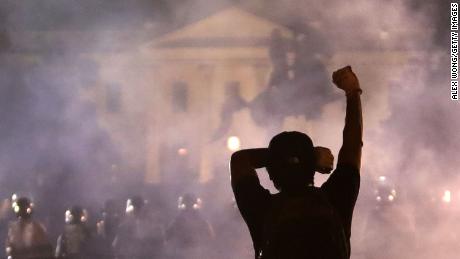
Sunday, May 31, 2020

Opinion: Some wise and calming words to consider during days of protests and violence - Long Beach Post

People Post is a space for opinion pieces, letters to the editor and guest submissions from members of the Long Beach community. The following is an op-ed submitted by Naomi Rainey-Pierson, president of the Long Beach Branch NAACP, and does not necessarily reflect the views of the Long Beach Post.

As president of the Long Beach Branch NAACP, civil rights advocate, and an African American, I have been bombarded and overwhelmed with calls from friends and NAACP members about the footage of George Floyd. He died on the street under the knee of a police officer in Minneapolis calling out to the officers and his mother, asking for help because he could not breathe. The incident is extremely troubling and disturbing for people of all races. I concur with former president Barack Obama and believe his statement speaks volumes:

“It’s natural to wish for life ‘to get back to normal’ as a pandemic and economic crisis upends everything around us. But we have to remember that for millions of Americans, being treated differently on account of race is tragically, painfully, maddeningly ‘normal’—whether it’s while dealing with the health care system, or interacting with the criminal justice system, or jogging down the street, or just watching birds in the park.

“This shouldn’t be ‘normal’ in 2020 America. It can’t be ‘normal.’ If we want our children to grow up in a nation that lives up to its highest ideals, we can and must be better.

“It will fall mainly on the officials of Minnesota to ensure that the circumstances surrounding George Floyd’s death are investigated thoroughly and that justice is ultimately done. But it falls on all of us, regardless of our race or station—including the majority of men and women in law enforcement who take pride in doing their tough job the right way, every day—to work together to create a ‘new normal’ in which the legacy of bigotry and unequal treatment no longer infects our institutions or our hearts”

I also concur with the following great men and women whose words resonate during this time in history.

Albert Einstein: “The world is a dangerous place to live; not because of the people who are evil, but because of the people who don’t do anything about it.”

Martin Luther King Jr.: “Returning hate for hate multiplies hate, adding deeper darkness to a night already devoid of stars. Darkness cannot drive out darkness; only light can do that. Hate cannot drive out hate, only love can do that.”

Cesar Chavez: “I am convinced the true act of courage, the strongest act of humility, is to sacrifice ourselves for others in a nonviolent struggle for justice”

My beloved grandma: “Baby, you are accountable for your actions. If you do something in the dark, and are not willing to do it in the light, you shouldn’t do it.”

I am in deep prayer and meditation, and here are some thoughts about the matter. We must be persistent, proactive and united in developing a positive plan to stop the senseless killing of people of color, especially African American males.

We all must work to see that all persons involved are held accountable and we should work together for that accountability.

I believe in the power of prayer, and non-violent, lawful protests. Because the African American male has been targeted for so long, we must stand together in prayer, positive protest and remain united until this long standing societal problem is changed and resolved. Most human beings will agree that the George Floyd incident was horrific. Let’s not just put this behind us and just move on. Rather, let us use this tragic event as a call to action, to work together in a brave, inclusive fashion to make tomorrow better than yesterday. We owe this to ourselves, our children, and to all mankind.

Let's block ads! (Why?)


"Opinion" - Google News
June 01, 2020 at 06:37AM
https://ift.tt/2ZRjmy1

Opinion: Some wise and calming words to consider during days of protests and violence - Long Beach Post
"Opinion" - Google News
https://ift.tt/2FkSo6m
Shoes Man Tutorial
Pos News Update
Meme Update
Korean Entertainment News
Japan News Update
Search

Featured Post

I just paid $9.99 for a carton of 18 eggs. Will prices ever drop? | Opinion - Sacramento Bee

[unable to retrieve full-text content] I just paid $9.99 for a carton of 18 eggs. Will prices ever drop? | Opinion    Sacramento Bee ...

Postingan Populer