Rechercher dans ce blog

Wednesday, June 3, 2020

Opinion: MediCal cuts would send more into deadly nursing homes - The Mercury News

The East Bay Post-Acute Healthcare Center in Castro Valley. where 16 patients have died of the coronavirus as of May 25. (Jane Tyska/Bay Area News Group)

I can’t imagine a worse time than the present to feel forced into living in a nursing home. Not while half of all COVID-19 fatalities in California are occurring in eldercare facilities.

Not while we are repeatedly traumatized by deeply disturbing stories about the aloneness of nursing home residents in COVID quarantine, even while dying, separated from their loved ones. Not while the cost for such institutionalized care is many-fold higher than the cost for remaining at home.

But if Gov. Gavin Newsom’s proposed revisions to the 2020-21 state budget are passed by lawmakers, tens of thousands of elderly and disabled Californians will lose the in-home support from MediCal that has been helping them to live independently. And losing that will force many of them into long-term institutions, like nursing homes or assisted living facilities.

That’s because the governor’s proposed budget cuts would force the closure of all adult day health programs in California that depend on funding from MediCal. MediCal is our state’s version of the federal Medicaid health insurance program provided to low-income seniors and disabled adults who, to qualify, must make less than $17,600 a year.

These adult day health programs provide the proverbial helping hand to a small subset of MediCal recipients: about 46,000 frail Californians with medical, cognitive or behavioral conditions who need help to function at home.

That help includes professional nursing and social services, mental health care, physical and occupational therapy, healthcare coordination and transportation assistance. And it can provide daycare at a health center where recipients can socialize with others, engage in physical and mental activities, and obtain a decent meal.

These programs not only support those among our state’s poorest and most frail adults. They provide critical assistance to the caregivers — mostly women, mostly unpaid or poorly compensated — working to uphold the dignity and independence of loved ones who wish, often desperately, to avoid nursing home placement.

For family and friend caregivers, even an occasional freed-up hour to meet personal needs can make all the difference in the world. And when regular adult daycare is provided, the caregiver is also freed to pursue a paying job — as daunting a task as it has become to find one now.

State taxpayers are also helped when these MediCal-funded community programs prevent costly emergency room visits and hospitalizations for at-home vulnerable recipients. And the benefit can prove substantial when nursing home institutionalization is circumvented; the cost varies significantly, but a typical MediCal reimbursement hovers around $41,000 annually.

The COVID-19 pandemic has ravaged the country, and the California economy as well. Our state began the year with a surplus, but now faces a whopping $54.3 billion deficit as a result of lost revenues. The governor projects a peak unemployment rate nearing 25% in July, and the addition of 2 million more people to the MediCal program. All this is to say, that the state’s economy is hemorrhaging and more budget cuts and adjustments will have to be made.

But let’s be clear about this particular cut, during this particular time. It takes primary aim at extremely vulnerable seniors and people with disabilities. And it sends them this chilling message: While we claim to be horrified by high COVID-19 fatality rates in California’s long-term care facilities, we’re withdrawing the hand we’ve been extending to protect you from, literally, ending up in one.

Kate Scannell is a Bay Area physician and author of the novel “Flood Stage.”

Let's block ads! (Why?)


"Opinion" - Google News
June 03, 2020 at 07:37PM
https://ift.tt/2Xruzn6

Opinion: MediCal cuts would send more into deadly nursing homes - The Mercury News
"Opinion" - Google News
https://ift.tt/2FkSo6m
Shoes Man Tutorial
Pos News Update
Meme Update
Korean Entertainment News
Japan News Update

Tuesday, June 2, 2020

Is there no place for thoughtful discourse? | Editorial Columns - Brunswick News

israelob.blogspot.com

[unable to retrieve full-text content]

Is there no place for thoughtful discourse? | Editorial Columns  Brunswick News

"discourse" - Google News
June 03, 2020 at 11:00AM
https://ift.tt/2zZnrW6

Is there no place for thoughtful discourse? | Editorial Columns - Brunswick News
"discourse" - Google News
https://ift.tt/2KZL2bm
https://ift.tt/2z7DUH4

Opinion: Time to go to school come next year - The Detroit News

opinion

While Michigan continues to resume some normal activity during this tragic COVID-19 crisis, many questions still linger. The last two and a half months have been a whirlwind to be sure, and that has been nobody’s fault. The fault especially does not lie with Michigan’s almost 1.5 million school kids, but they will be among the most affected.

When school was in session statewide for the last time on March 13, we all plunged into the unknown, but we did so with the singular goal of protecting our kids and those to whom they might spread the disease. Now that we have had time to regroup and prepare, it’s time to go back to school at the start of the school year, so that we can best care for and protect our youth.

In March, political leaders worldwide were making decisions for kids with the worst scenario in mind, not knowing what might happen. Research now suggests what we didn’t know then: Kids don’t catch or spread COVID-19 as easily as previously thought. This is according to new research by noted immunologists Dr. Saul Faust and Dr. Alasdair Munro, and it is a strong step in alleviating the concerns of educational leaders and parents as we get closer to September when normal school calendars are planned to commence.

Sturgis is working together as a community to creatively plan for that possibility safely and efficiently. Sturgis Public Schools is already talking to area churches and community centers about how kids might be spaced out more than normal and still attend school five days per week, also allowing for students to continue distance learning whose parents still aren’t comfortable with that setup by August.

Furthermore, the district is purchasing additional disinfectant equipment, forehead thermometers, personal protective equipment, hand sanitation stations, and installing touchless technologies throughout the district. Additionally, procedures like eating lunch in the classroom to avoid large gatherings and staggering start and end times to reduce bus congestion are being considered. That is the beauty of local control, which schools have long championed: Each school community with its own unique characteristics knows how to accomplish its goals better than anyone else. Sturgis’ plan probably looks drastically different from some others depending on thousands of different mitigating factors, and that’s OK. 

The opportunity cost for keeping schools closed has already been made abundantly clear. Academic, social and emotional learning losses are real, and those who experience them most are at a disadvantage in normal times, but especially in this crisis with no school. The disadvantaged consist of children of single working parents, students with language barriers, those without reliable Internet, special education students who need more one-on-one attention, and more.  Students in these categories rely on school as a place of stability and they should, and they’re not getting that right now and those consequences are more brutal than some might think. There are also undoubtedly other longer-term impacts to child development that we haven’t even realized yet.

We think the COVID-19 pandemic has been tragic and we are heartbroken by the deaths and lives affected by the virus. As Michigan’s Return to School Advisory Council starts to formulate plans for what its name implies, it must consider what Drs. Munro and Faust have revealed and also the detriment that school closure brings to kids. Despite our best efforts, the reality is that we are social beings and many kids are already interacting with their peers without the structure of school. It is time to get back to school for the emotional well-being and education of our kids.

Arthur Ebert, Ph.D., is superintendent of Sturgis Public Schools. Rep. Aaron Miller, a former high school math teacher, chairs the school aid budget in the Michigan House of Representatives. Both reside in Sturgis, a city of 11,000 near the Indiana border

Let's block ads! (Why?)


"Opinion" - Google News
June 03, 2020 at 10:00AM
https://ift.tt/302esOH

Opinion: Time to go to school come next year - The Detroit News
"Opinion" - Google News
https://ift.tt/2FkSo6m
Shoes Man Tutorial
Pos News Update
Meme Update
Korean Entertainment News
Japan News Update
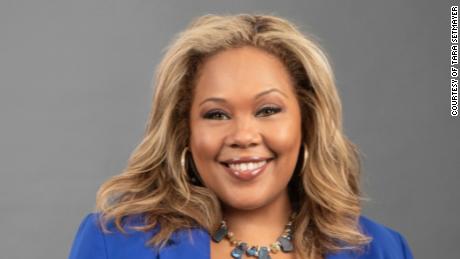
GOP's pandering to racism has to stop - CNN

Glorifying the Confederacy is not. It is immoral. It is honoring a symbol of racial oppression and division.
Tara Setmayer
Nate Nesbitt
So why does the Confederate flag seem to have a ubiquitous presence among Trump supporters during their protests and at Trump campaign rallies?
For years, the GOP has pandered to and placated racists and white supremacists, willing to sow division and disunion in order to grow and maintain electoral power, particularly in the South.
That was the genesis of the "Southern strategy," used to describe how the Republican Party exploited racist fears to court white voters during the Civil Rights era. And it's been a mantle President Donald Trump has been all too willing to take up and co-opt.
It goes without saying that it has had a profoundly negative effect on every dimension of the Republican Party, strategically, policy-wise, in terms of outreach and even the selection of candidates, and it has resulted in the mistrust of the party by an overwhelming majority of black voters for decades.
The age-old Republican rebuttal is to insist the party played a major role in standing up to racism and inequality in the 19th century and early part of the 20th century, and to some extent this is true. But it's an insufficient history. One that is tangential at best, and belies the underlying truth that the party has created a political reality wherein without giving refuge to racists, it wouldn't stand a chance at electoral success in what became Republican strongholds in the South, as a result of the adoption and continued implementation of this strategy.
Why Donald Trump can't grasp this moment
And now, they are reaping what they've sown.
This moment we're in as a country, confronting Trump's lawlessness, his MAGA contagion and army of elected enablers, seemingly feels like we are at the precipice of a proverbial fight against a modern-day Confederacy.
Black Americans are on the front lines of this battle, and we and our allies are literally and figuratively fighting for our lives. Whether it be against disparate health impacts from Covid-19, a compounded effect due in large part to generations of inequitable health care, or the ongoing, inter-generational struggle against police brutality in communities of color, where the indignities of racial inequality can no longer be ignored and passively accepted by a political party that claims to be the party of Lincoln.
What black children will learn from George Floyd's death
Leading up to the Civil War, Americans had to decide what kind of country they wanted the United States to be. Those who joined the Confederacy made their choice. One of treason, slavery, subjugation and oppression. Fulfilling the promises of our Constitution or Declaration of Independence was not among their goals.
They chose the wrong side of history.
Now, more than 150 years after the Civil War, we are facing another inflection point in America, where we are presented with a choice.
It is time to choose, and choose we must. There is no middle ground on this decision. There is no acceptable excuse of ignorance or cognitive dissonance, as the world observes Trump's deplorable behavior of rage tweeting while American cities explode in righteous anger and frustration of centuries of oppression. The same day he tweeted that when the "looting starts, the shooting starts," a racist 1960's phrase, he was briefly whisked away to his White House bunker by the Secret Service. Though the security measure may have been necessary, it symbolized what many have described as Trump going into hiding during a pivotal moment in America's history.
At this point, it is morally impermissible to be in between.
Whitewashing the transgressions of Trumpism, and the complicity of the Republican Party in it, is a conscious, deliberate decision to join the ranks of the modern-day "Lost Cause" (a theory that Southern states adopted to show themselves as heroic, while denying that slavery was a central part of the Civil War's conflict) as co-conspirators.
They will no longer go unnoticed or be granted grace in their enabling of Trump and his band of deplorables who are dishonoring the legacy of Lincoln, working overtime to exacerbate and exploit -- not bridge and heal -- the racial and cultural divide in this country at the expense of American lives for political power.
American history will look upon Trump's legacy with shame and disgust and will not allow feeble attempts to weave revisionist histories and retellings of these tumultuous times to make it palatable for the next generation.
Donald Trump's actions necessitate this choice.
Now is the time to decide which America we want to be.

Let's block ads! (Why?)


"Opinion" - Google News
June 03, 2020 at 08:04AM
https://ift.tt/3doiEfv

GOP's pandering to racism has to stop - CNN
"Opinion" - Google News
https://ift.tt/2FkSo6m
Shoes Man Tutorial
Pos News Update
Meme Update
Korean Entertainment News
Japan News Update

George Floyd’s Death Is a Failure of Generations of Leadership - The New York Times

The circumstances that led to the police killings of George Floyd — and thousands of other citizens over the years — could have been avoided if our elected officials in the 1960s had responded to protesters’ demands for socioeconomic inclusion. Instead, policymakers blamed black people for the instability, ignoring the buildup of centuries of racial oppression. They pursued a misguided policy path that has failed to keep communities of color safe for more than 50 years.

The police have long operated as guardians in white and middle-class communities, protecting property from outsiders. But in segregated urban neighborhoods, officials have deployed militarized police forces and expanded the prison system instead of working to address the root causes of the uprisings: mass unemployment, failing public schools, dilapidated housing and the deterioration of basic public goods like clean water.

We can’t let history repeat itself. While flames engulf at least 140 cities across the country, we must create a more egalitarian society out of the ashes by transforming policing. The blueprint was laid out in the 1960s — empowering low-income citizens to change their communities in their own vision, and investing in those alternatives at scale. Today we need the courage to act.

President Lyndon B. Johnson recognized the role police brutality and socioeconomic inequality played in urban uprisings when he convened the Kerner Commission in 1967. Its report warned that if American political and economic institutions failed to commit resources “sufficient to make a dramatic, visible impact on life in the urban ghetto,” the nation would become increasingly divided along racial lines and plagued by inequality — a “spiral” of segregation, violence and police force. Unfortunately, Johnson and other liberal policymakers distanced themselves from the Kerner report, out of discomfort that the document implicated white racism in fomenting domestic turmoil.

Johnson’s racism may have compromised the promise of the Great Society, but his domestic policies leave us with an important policy precedent, a blueprint for getting out of our current crisis. To begin to dismantle the socioeconomic conditions that led to Mr. Floyd’s premature death, we can look to the principles of community representation and grass-roots empowerment that steered the early development of Johnson’s domestic program.

The inaugural legislation of the war on poverty, the Economic Opportunity Act of 1964, enshrined a commitment to community involvement in the idea of “maximum feasible participation.” Inspired by Saul Alinsky’s method for organizing, this principle empowered ordinary citizens to develop their own solutions to cure and prevent the system of racial inequality, with support from the federal government.

Officials from the Office of Economic Opportunity interpreted “maximum feasible participation” to mean the law should help “the poor in developing autonomous and self-managed organizations which are competent to exert political influence on behalf of their own self-interest.” Essentially, the Johnson administration and Congress charged the O.E.O. with systematically including poor people in the administration of urban social welfare programs. It was the first and only time in the history of the United States that grass-roots organizations received direct federal funding to transform unequal conditions on their own terms.

During the very brief moment when “maximum feasible participation” was given a chance to steer the direction of the war on poverty, activists, organizers and residents of segregated low-income communities throughout the country seized on the idea to realize radical, even revolutionary approaches to restructuring American society, exercising claims to self-determination and autonomy that mainstream civil rights leaders championed in the mid-1960s.

In Manhattan’s Lower East Side, the O.E.O. supported residents in protesting the New York City’s police department, department of welfare and public school administrators with the Mobilization for Youth Program. In Chicago, federal authorities granted the community-based Woodlawn Organization $1 million to work with young people who had been arrested. And the Community Development Corporation of Syracuse used federal funding to support neighborhood organizations in rent strikes and demonstrations at city hall, so parents could have enough disposable income to feed their families and keep a roof over their heads. Continued direct action eventually led to the establishment of public recreational centers in the city, providing young people with space to play.

The tragedy of the war on poverty is that the promise of grass-roots empowerment and representation was not sustained on a wider level, or for entire communities, but only for individuals. While remnants of critical reforms are still with us, like the Head Start program, on the whole policymakers at all levels believed “maximum feasible participation” worked against their self-interest. By 1965, as many promising grass-roots initiatives began to receive the initial O.E.O. grants, they were required to design programs with public officials and municipal authorities in top-level positions. Soon after, policymakers defunded and dissolved anti-poverty programs.

Following Johnson’s escalation of the “war on crime” during the second half of the 1960s and amid the “long hot summers” that marred his presidency, the national government began to invest in police forces and entrust officers to assume a more prominent role in urban life and the administration of social services in low-income neighborhoods. The United States would look entirely different today had policymakers embraced “maximum feasible participation” with the same level of resources and the same length of commitment as they devoted to the wars on crime and drugs.

As well as divesting from grass-roots initiatives while shoring up law enforcement, policymakers and officials consistently dismissed the ideas for social change that emerged among people of color themselves — resistance largely rooted in their own racism. “There has never in history been an adequate black nation,” President Richard Nixon told his chief of staff, Harry Haldeman, “and they are the only race of which this is true.”

This thinking prompted Nixon to defuse the O.E.O. and join its programs with the Justice Department, relegating community involvement in federal social programs to the crime control arena and bolstering omnipresent police patrol, surveillance and law enforcement technologies in black and brown neighborhoods. During this period, only about 2 percent of the grants the Justice Department dispersed to fight the war on crime went to community-based measures like tenant patrols and block watches.

Although public officials rarely assert their racism in such blatant terms as Nixon did, their consistent resistance to supporting autonomous community organizations reflects a longstanding unwillingness to disrupt the racial hierarchies that have defined the United States since its founding.

For instance, President Jimmy Carter emphasized the need for grass-roots participation in a program he established to revitalize public housing projects in the late 1970s. In practice, however, citizen groups like the League to Improve the Community in Chicago’s Robert Taylor homes were denied funding — even though activists called for the very same strategies as federal officials, but sought to carry them out without oversight from law enforcement and housing authorities.

The rhetoric of community involvement evaporated from the domestic policy arena when Ronald Reagan took office. As the wars on drugs and gangs unfolded in the 1980s and 90s, and federal policymakers continued to shore up policing and incarceration over social welfare provisions, the police became even more central to the provision of social services in isolated communities.

In the aftermath of the unrest that roiled Los Angeles in 1992 after an all-white jury acquitted four police officers on charges of assault and excessive force for beating Rodney King, the Clinton administration and Congress created “empowerment zones” to spur economic activity. But rather than empowering impoverished residents themselves, this grant program turned into tax breaks for businesses and is widely considered a failure.

As we create a new future of policing, we should not fall back on the unsuccessful, top-down approaches of the past. Demonstrators today are calling for the restructuring of vital resources that will be required to build a just society, summarized in their demand: “Fund Community, Not Police.” The Minneapolis group Reclaim the Block quickly set up a campaign in the wake of Mr. Floyd’s killing that envisions the abolition of police forces by defunding them altogether. The burning of the Third Police Precinct in Minneapolis, the fires set to the Multnomah County Justice Center in Portland, Ore., and the widespread smashing and destruction of police cruisers across the United States are material expressions of this sentiment.

Although the University of Minnesota ended its contract with the police and the Minneapolis Public School Board seems poised to do so, residents in over-policed and underprotected communities of color must have a more central role in fostering public safety, as well as welfare, education, public housing and other social programs that directly shape their everyday lives.

Ceding political and economic power to the people doesn’t require us to reinvent the wheel. The policy precedent of “maximum feasible participation” provides an inspiring starting point.

We can fund local victims’ rights groups and vibrant autonomous grass-roots programs at or above the same level as anti-gang task forces and community policing initiatives. We can establish powerful civilian review boards to hold troublesome officers accountable and entrust residents themselves to keep their own communities safe, rather than outside forces that often resemble occupying armies. We can commit to job creation programs for at-risk groups outside of the service economy. We can come to terms with the growing movement to abolish the police and the nation’s horrific prison system.

These are the kinds of transformative approaches that will allow us to attack the entrenched systemic problems and assaults on civil liberties that have enabled racial inequality to persist in America. The challenge must be met immediately. Or else we risk becoming even more fractured, with the fires in our streets continuing to burn.

Elizabeth Hinton (@elizabhinton) is an incoming professor of history, law and African-American studies at Yale and the author of “From the War on Poverty to the War on Crime: The Making of Mass Incarceration in America.”

The Times is committed to publishing a diversity of letters to the editor. We’d like to hear what you think about this or any of our articles. Here are some tips. And here’s our email: letters@nytimes.com.

Follow The New York Times Opinion section on Facebook, Twitter (@NYTopinion) and Instagram.

Let's block ads! (Why?)


"Opinion" - Google News
June 03, 2020 at 05:57AM
https://ift.tt/3gLUMob

George Floyd’s Death Is a Failure of Generations of Leadership - The New York Times
"Opinion" - Google News
https://ift.tt/2FkSo6m
Shoes Man Tutorial
Pos News Update
Meme Update
Korean Entertainment News
Japan News Update
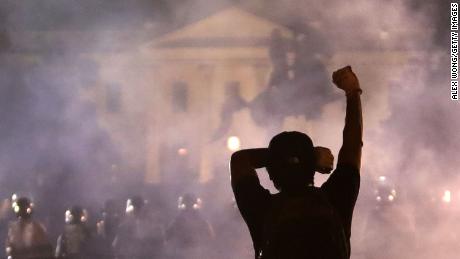
Opinion: By working together, we can build a better Silicon Valley - The Mercury News

Protesters chant as they protest the killing of George Floyd outside of San Jose City Hall in downtown San Jose, on Monday. (Nhat V. Meyer/Bay Area News Group)

I began writing this a month ago as a reflection on how we must build more inclusive decision-making tables in order to co-create an equitable and thriving Silicon Valley post-COVID-19. Then the murders of innocent, unarmed African American people in the last couple of weeks once again ripped off the national Band-Aid, exposing a painful and constant undercurrent of bias and racism in these United States. The wound is hundreds of years old and we as a country continue to let it fester. Racism leads to exclusive tables and tilted scales. It’s all connected and a part of the American ecosystem many of us have benefited from and remain complicit in.

To my white colleagues and friends – we have work to do. This is on us. We must get educated and get to work.

Organizations claiming to be in leadership in Silicon Valley – including my own – must stand humbly in solidarity with impacted communities and examine our role in letting wounds fester. If this statement makes you feel uncomfortable, nervous and vulnerable, you’re going in the right direction. Keep going.

Big things can emerge when we develop deep relationships and new understandings with those outside of our sectors and lived experience bubbles.

For 30 years, American Leadership Forum Silicon Valley has demonstrated what can happen when we create a trusted space where diverse private sector executives, public policymakers, non-profit CEOs, labor and religious leaders build deep personal relationships, have real conversations about racism and inequities and think through collective civic solutions in an ALF Fellows experience. We know from experience that the big systemic issues of our Valley will persist unless we all have the courage to collectively address the root causes of our shared civic problems.

Still, according to a recent Silicon Valley Indicators report put out by Joint Venture, 30% of Silicon Valley households are living in poverty and below self-sufficiency standards. The 2019 Santa Clara County Homeless Census and Survey reported 9,703 people experiencing homelessness, a 31% increase over 2017 and the highest the number that has been seen in over a decade. A disproportionate number of people in poverty in Silicon Valley are people of color.

And this was before COVID-19. Now, staggering health and financial crises stemming from historic and current systemic barriers to resources are deeply impacting communities of color, immigrants and low-income neighborhoods. This newspaper reported that while Latinos comprise just 27% of Santa Clara County’s population, they account for about 40% of coronavirus cases.

As Silicon Valley communities begin to grapple with exposed racism and assemble task forces to rebuild the economy and get people back to work, consider this: Who are the unusual suspects that might add innovation and diverse perspectives to that dialogue? What sectors, under-the-radar innovators and those with proximity to the pain are not being invited to the conversation, let alone being asked to lead them? This moment of global disruption can be an opportunity to actually not return to normal, but to build something better.

My fellow white civic leaders, if we are not willing to have the uncomfortable conversations and humbly learn and act to bring equity to our valley, it’s time to step aside.

Suzanne St. John-Crane is the CEO of American Leadership Forum Silicon Valley and chairwoman of American Leadership Forum National.

Let's block ads! (Why?)


"Opinion" - Google News
June 02, 2020 at 10:07PM
https://ift.tt/305gy0b

Opinion: By working together, we can build a better Silicon Valley - The Mercury News
"Opinion" - Google News
https://ift.tt/2FkSo6m
Shoes Man Tutorial
Pos News Update
Meme Update
Korean Entertainment News
Japan News Update
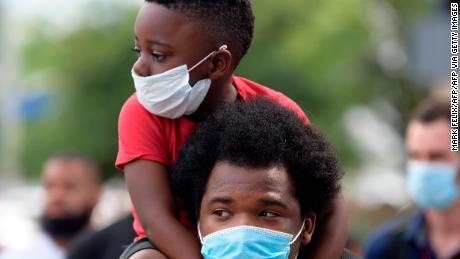
Opinion: The Senate can protect the public lands we need now and post-pandemic - The Colorado Sun

The school year is ending and we are still uncertain about what our summer will look like. Travel plans, day camps for the kids, the local pool and playground – everything is in question.

Parents are wondering what to do with their children all summer, especially while working. The one thing that is certain is that we are all trying to find our way in a new time. 

Another thing that seems to be certain across Colorado is that people are seeking out the restorative power of nature. These days I have found myself in the garden frequently, not even conscious of the fact that I am seeking out the evidence of new growth. The hope that comes with new life.

Jen Clanahan

The joy that flowers bring. The peace that we feel when surrounded by green spaces. 

You see it at the trail heads and in the parks. Everyone is seeking the solace that nature brings. In fact, people are so desperate to get outside and get their kids outside that some of the trails and parks are overcrowded and have been closed.

Health officials worry about the ability to keep socially distant. Park managers are concerned about the damage done as people attempt to move off trails and away from others.

Since spring sports were canceled and children have been cooped up at home, kids have started climbing the walls. It became important not just for physical exercise but also for everyone’s mental sanity to get out and run around. It truly spotlights the demand on our public lands in Colorado where we love and depend on our outdoor quality of life. 

COVID-19 IN COLORADO

The latest from the coronavirus outbreak in Colorado:

  • MAP: Known cases in Colorado.
  • TESTING: Here’s where to find a community testing site. The state is now encouraging anyone with symptoms to get tested.
  • WRITE ON, COLORADO: Tell us your coronavirus stories.
  • STORY: Before protests brought thousands together, data pointed to a possible coronavirus resurgence in Colorado

>> FULL COVERAGE

And now, since we have been encouraged to stay close to home, outdoor recreation opportunities need to be available throughout the state at the neighborhood, county and regional levels.    

Grants from the Land and Water Conservation Fund (LWCF), the nation’s most successful program to protect and improve access to public spaces, will provide us with this.

It’s funded from offshore oil and gas drilling and has been helping to ensure access to recreation for everyone and safeguard cultural heritage for more than 50 years. We need the benefits of this program now more than ever. 

Unfortunately, most years LWCF has been shortchanged to about half of its originally intended $900 million annually, with the remainder going to unrelated non-conservation projects. LWCF needs to be fully funded for many reasons, not the least of which is to continue to help moms survive difficult times like these and so our kids can reap the benefits of outdoor recreation.

READ: Colorado Sun opinion columnists.

An article from Harvard Health Publishing enumerates the skills gained from outdoor play. Kids learn to create, they develop executive function skills like planning and troubleshooting, and get the necessary vitamin D.   

Already registered? Log in here to hide these messages.

Actually, as moms we don’t need the experts to tell us that our kids should get outdoors.  We know it instinctively. My organization recently commissioned a poll of moms across all parts and parties of Colorado and Montana.

The results say it all: 91% want to live in a place where their family has access to parks, trails and open space and 88% say ensuring new investments to protect and maintain access to public lands and public waters is important.

Fortunately the Senate is poised to vote on a bill in the next couple of weeks that will fully and permanently fund LWCF. Moms across the state have their fingers crossed.

We, and our kids, are counting on our members of Congress to help us grapple with these difficult times, and moreover to ensure our children’s children have access to the public lands they need. 


Jen Clanahan is the Colorado State Director of Mountain Mamas, an organization that raises the volume of Western women’s voices to protect our outdoor quality of life, for our kids and our future.


The Colorado Sun is a nonpartisan news organization, and the opinions of columnists and editorial writers do not reflect the opinions of the newsroom. Read our ethics policy for more on The Sun’s opinion policy and submit columns, suggested writers and more to opinion@coloradosun.com.

Rising Sun

Already registered? Log in here to hide these messages.

The latest from The Sun

Let's block ads! (Why?)


"Opinion" - Google News
June 02, 2020 at 09:55AM
https://ift.tt/3cqmiEm

Opinion: The Senate can protect the public lands we need now and post-pandemic - The Colorado Sun
"Opinion" - Google News
https://ift.tt/2FkSo6m
Shoes Man Tutorial
Pos News Update
Meme Update
Korean Entertainment News
Japan News Update

Search

Featured Post

I just paid $9.99 for a carton of 18 eggs. Will prices ever drop? | Opinion - Sacramento Bee

[unable to retrieve full-text content] I just paid $9.99 for a carton of 18 eggs. Will prices ever drop? | Opinion    Sacramento Bee ...

Postingan Populer