Rechercher dans ce blog

Thursday, February 4, 2021

Political strife, pandemic causing public discourse to plunge even lower - Arizona Public Media

israelob.blogspot.com

Researchers say many rank and file Democratic and Republican voters may be closer to common ground on political issues than their elected representatives are.

Keith Allred heads the University of Arizona’s National Institute for Civil Discourse in Washington. He notes the political divide looks different outside the Beltway.

“In fact the research shows the average Republican and the average Democrat is half as far apart on the issues as they think they are," he said.

Allred believes the country is at a turning point regarding civility. He says last month’s insurrection and Presidential inauguration along with next week’s Trump impeachment trial has created a tear in the national discourse which will take a long time to repair. He adds the pandemic has robbed the country of common cultural events that typically serve to unify people.

Let's block ads! (Why?)


"discourse" - Google News
February 05, 2021 at 07:13AM
https://ift.tt/3rmn6C3

Political strife, pandemic causing public discourse to plunge even lower - Arizona Public Media
"discourse" - Google News
https://ift.tt/2KZL2bm
https://ift.tt/2z7DUH4

Wednesday, February 3, 2021

Why Donald Trump could melt away - CNN

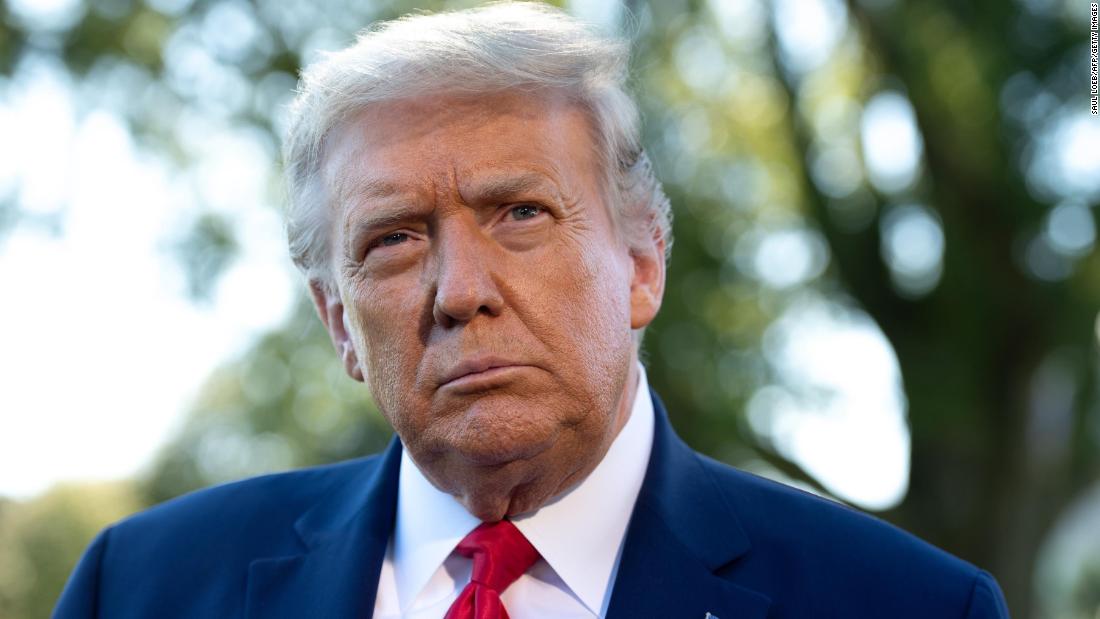
Now, with the Senate set to launch his second impeachment trial, Trump should take one more lesson from McCarthy. The Red-baiting lawmaker vowed to fight on after the political establishment shunned him in 1954 -- and his millions of boosters were ready to rally yet again -- but instead the seemingly shameless Republican from Wisconsin quietly decamped in a way that helped the nation heal.
Trump's debt to "Low Blow" Joe was apparent from the first. In lieu of solutions, the former president, like the senator, pointed fingers. Attacked, both bullies aimed wrecking balls at their assailants. When one charge against a manufactured enemy was exposed as specious, they lobbed fresh bombshells.
Each made his name into a ubiquitous brand. Neither had a master plan other than accruing and hanging onto power. Both astounded the world and themselves by rising as far and fast as they did.
Candidate Trump bragged to supporters in 2016 that "I could stand in the middle of Fifth Avenue and shoot somebody, and I wouldn't lose any voters." Sixty-two years earlier, polling pioneer George Gallup offered an eerily similar forecast about McCarthy's minions: "Even if it were known that McCarthy had killed five innocent children, they would probably still go along with him."
The connection between the two is more than hypothetical. The flesh-and-blood link was Roy Marcus Cohn, an ingenious and imperious attorney from New York. In the 1970s, an aging Cohn taught the fledgling Trump the lessons he had learned a quarter century before from his then-boss McCarthy -- how to slander opponents and contrive grand conspiracies. Trump has celebrated his connections with Cohn although never, ever with McCarthy.
McCarthy gripped the public's imagination for precisely as long as Trump -- a full four years. At the start of 1954, the anti-communist senator's favorability ratings were higher than the anti-immigrant president's ever were, with a full 50% of Americans saying he was doing a good job and his name implanted in public discussion as an "ism" that became synonymous with reckless accusation and guilt-by-association.
But then McCarthy put in his crosshairs an enemy too big to bully, the mighty US Army, the most stouthearted and sacrosanct institution in America, and which had just waged a lethal war on the Korean Peninsula against Communists.
By the end of the Senate's famous Army-McCarthy hearings, the senator's popularity had sunk to 34%, which is almost exactly where today's polls put Trump.
That December, the Senate finally summoned the backbone to condemn its rogue colleague. McCarthy was unbowed, branding the congressional tribunal a "circus," pledging to "get back to the real work of digging out communism" and even talking about running for president.
But he didn't. It was partly that he wasn't well. He'd been in and out of Bethesda Naval Hospital for a bad back, aching elbow, wrenched knee, herniated diaphragm, painful gallstone, bleeding gums, obstructed sinuses, throbbing headaches and hemorrhoids, sore feet and a scarred liver.
His medical records reveal one more malady that mounted alongside his political woes and likely exacerbated his physical ones: substance abuse. He was a drinking man in a drinking town. By the middle of 1956, a year before he died, McCarthy confided to doctors that his "alcoholic intake is 3 highballs daily." A neurologist wrote, "Patient has been recovering from acute hallucinosis and delirium."
There was more, however, to this last closing chapter of the senator's saga. He realized it wasn't just a censure vote that he'd lost. His assaults on Dwight D. Eisenhower's White House ensured he'd be shunned not just there but at the Army, the State Department, the FBI and even the Post Office.
Newspapers banished him to page 25, next to the corset ads, or wrote him out entirely. So did his Senate colleagues. Being subjected to a punishment so extreme that it had been meted out just five times in that chamber's 165 years, meant trading in the badge of the outlier, which McCarthy had proudly worn from his first days in office, for the stigmata of the shunned that made him the butt of even the president's jokes.
So while he remained a US senator, he did so softly enough that few noticed him anymore. And while he publicly insisted he'd run for reelection back in Wisconsin, he confided to a companion, "Jean and I have enough money for a small cattle spread in Arizona. I might open a little law office for friends and neighbors with my books and degree right on the place."
Is there a chance that Trump might likewise just melt away? It seems inconceivable, but it did for McCarthy, too, who also coveted the spotlight and continued to inspire tens of millions of true believers.
What is clear is that the rogue ex-president has already taken matters several steps further than the outlaw senator ever did. McCarthy fought hard and dirty to win offices for himself and his allies, yet when either lost, he accepted the results. And while he delighted in riling up his unflinching disciples, he stopped short of inciting insurrection.
If the former president continues according to form, there is one outcome that seems certain: He'll displace McCarthy as America's archetypal demagogue, and McCarthyism will be replaced in the American lexicon by an ever more unnerving doctrine -- Trumpism.

Let's block ads! (Why?)


"Opinion" - Google News
February 04, 2021 at 09:57AM
https://ift.tt/3oMdM8L

Why Donald Trump could melt away - CNN
"Opinion" - Google News
https://ift.tt/2FkSo6m
Shoes Man Tutorial
Pos News Update
Meme Update
Korean Entertainment News
Japan News Update

Opinion: Gonzaga, and fans, left wanting after week of scheduling ups and downs - KREM.com

[unable to retrieve full-text content]

Opinion: Gonzaga, and fans, left wanting after week of scheduling ups and downs  KREM.com

"Opinion" - Google News
February 04, 2021 at 09:44AM
https://ift.tt/3rpfA9F

Opinion: Gonzaga, and fans, left wanting after week of scheduling ups and downs - KREM.com
"Opinion" - Google News
https://ift.tt/2FkSo6m
Shoes Man Tutorial
Pos News Update
Meme Update
Korean Entertainment News
Japan News Update
Why it matters that Biden team restored regular press briefings - CNN

Wednesday at the White House, press secretary Jen Psaki briefed the press after the Covid response team, led by scientists, delivered one of their three times per week sessions. At the State Department, spokesperson Ned Price briefed. And at the Pentagon, reporters got the chance to speak with the NATO Supreme Allied Commander Europe, the best title in government after President, from Brussels via a telephonic briefing.
Joe Lockhart
Actually, if you can manage to put the last four years out of your mind, it's not really that unusual to see this many briefings. Before Donald Trump, the White House, State Department and Department of Defense held regularly scheduled briefings. The Trump administration quickly moved away from this tradition by holding sporadic White House briefings, at one point 400 days passed between briefings, while the State Department and Pentagon virtually abandoned the exercise.
For sure, there is symbolic value in holding regular briefings at the White House and national security agencies. The Biden administration is sending a strong symbol that transparency and accountability, two things lacking in the previous administration, will be central to how the government will work moving forward.
But it goes well beyond symbolism. Reporters now can depend on regular access to senior officials and spokespeople. The public also has the ability to watch the briefings live or read a transcript later to stay in touch with what their government is doing. And it's not just being responsive to all questions from the media. We can all learn as much from the questions that are avoided or evaded to fully appreciate what the government is doing right and, what the government is doing wrong.
Briefings makes for better government as a whole. Regularly scheduled ones impose discipline and accountability. The discipline comes from having to make decisions in a timely way -- namely, in time for the briefing. Staffers know explicitly that there is a ticking clock on all decisions, forcing them to come to one. It also forces coordination between agencies. The worst of all worlds is the White House briefing at odds with either the State Department or the Department of Defense.
Most importantly, it enforces accountability. Staffers know that the administration's spokespeople will be held accountable for everything they do. It's a powerful and practical reminder of the value of doing the right thing.
Perhaps the most striking thing about the new briefings is not what gets said on a regular calendar, it's what isn't said. Two full weeks in, there has not been a single attack on the press as the "enemy of the people." There's been no time trying to explain away late-night and early-morning tweets.
There have been no gratuitous attacks on the opposite party or on those in your own party that you disagree with. And, most of all, there has not been the kind of political theater, posturing and aggressive diatribes that became the trademark of Kayleigh McEnany.
Most of all, Jen Psaki at the White House, John Kirby at the Pentagon and Ned Price at State are using decades of experience and credibility built up by being straight with reporters even when the news is not good. Psaki spent years at both the White House and State Department and has earned the benefit of the doubt through that service. Kirby is returning to his old job at the Pentagon and Price moves to State after working in the Central Intelligence Agency (Both Psaki and Kirby were CNN commentators until recently).
Each of President Biden's picks sends a strong message about how important he sees accountability and transparency in government. Remember, it took less than a day for Sean Spicer, Trump's first press secretary, to squander any credibility he had built up over his years in Washington to back on the President's bizarre claims about inaugural crowd size.
Time will tell if this commitment to keep the press and public informed will be honored in the long term. But the early results are in -- both from a symbolic scheduling perspective and the performance of each of these communicators. Things are very different under Biden and that's good for the government, the media and, most importantly, the American public.

Let's block ads! (Why?)


"Opinion" - Google News
February 04, 2021 at 08:42AM
https://ift.tt/39LsBV2

Why it matters that Biden team restored regular press briefings - CNN
"Opinion" - Google News
https://ift.tt/2FkSo6m
Shoes Man Tutorial
Pos News Update
Meme Update
Korean Entertainment News
Japan News Update

Opinion: The financial lessons of the COVID-19 pandemic - Crain's Cleveland Business

The coronavirus crisis delivered a severe shock to the U.S. financial system. So how did it do? Did the reforms enacted after the 2008 financial crisis succeed in ensuring stability this time around?

The answer is mixed, which means there's more work to do.

The core U.S. banking system has emerged in good shape. Thanks to regulatory changes, banks had more cash available to accommodate the increase in demand for credit and more high-quality capital to absorb losses. This helped maintain confidence that they would be able to keep performing essential functions such as providing credit and facilitating payments. Yet even here, there's a caveat: The banks benefited greatly from the government's multitrillion-dollar efforts to support markets and the economy, so no one should conclude that they are bullet-proof.

The rest of the financial system — specifically, the nonbank or "shadow banking" sector, which in the U.S. dwarfs the banking system — proved much more vulnerable. Sudden demands for cash prompted runs on some money market mutual funds, crippled mortgage-focused real estate investment trusts and froze the markets for municipal and corporate bonds. Even the highest-quality assets weren't exempt: In March, yields on U.S. Treasuries spiked as hedge funds and others sold the securities to raise cash. All this necessitated extraordinary interventions by the Federal Reserve to prevent a broader market meltdown.

Clearly, nonbanks need to be more robust and resilient. I see four areas for improvement:

• Set up a reliable, credible mechanism for meeting cash demands when crises hit. Only the Fed has the elastic balance sheet needed to achieve this. Ad hoc interventions aren't good enough: They tend to come too late and create moral hazard. One solution would be to set up a standing repo facility, which would lend cash against Treasuries and other government-backed securities. The liquidity should be expensive enough to be tapped only in times of stress, and the collateral requirements should be large enough to protect the Fed from losses in volatile markets. If made broadly available, the liquidity available from such a facility would become an attribute of the securities that the Fed would accept and this would lower the government's borrowing costs. Moreover, the facility's mere existence would reduce incentives to dash for cash in times of stress.

• Address mutual funds' vulnerability to runs. In particular, the SEC should tie mutual funds' redemption standards to the liquidity of their underlying assets: If, say, it would take a few weeks to sell the assets in an orderly way, investors should have to wait that long to be able to redeem their mutual fund shares for cash. This would help prevent runs that arise when everyone tries to get out before the mutual funds' liquidity buffers are exhausted. It also would help the mutual fund avoid a fire sale of assets. I don't think this would be too onerous. A high-yield bond fund shouldn't be anyone's first source of liquidity. And such an SEC mandate would actually help fund managers, who are reluctant to impose such standards on their own for fear of losing business to the competition.

• Fix or replace the Financial Stability Oversight Council (FSOC). The FSOC is supposed to identify and address stability risks arising in the nonbank portion of the financial system, but has failed to do so. Ahead of the coronavirus crisis, for example, it had identified no firms or activities as systemically important. If that were the case, then why were extraordinary interventions necessary? The Biden administration and Congress should give the FSOC the support, structure and authority it requires to do its job. That said, it might never be very effective. As part of the executive branch, it's inherently subject to changes in presidential administrations, and thus can't follow a consistent set of policies over time. Also, the members of the FSOC — including the SEC, the Fed and the Commodity Futures Trading Commission — have an interest in the council being weak, so it won't be able to encroach on their turf and interfere with their prerogatives. If these flaws can't be overcome, a different model to limit financial stability risks in the nonbank financial sector will be needed.

• Attend to flaws in bank regulation. Capital and liquidity requirements are crucial, but they can also have unintended consequences in crises. Banks refuse to lend to nonbanks, even against the collateral of Treasuries, because they don't want to deplete their cash buffers. The Fed's efforts to ease cash crunches by buying Treasuries and mortgage-backed securities boost bank reserves, causing the banks to bump up against regulatory leverage ratios. Risk-weighted capital requirements become tighter when markets are more volatile. To mitigate these problems, the Fed should make it easier for banks to use their liquidity buffers, make capital requirements more neutral to the business cycle and exempt bank reserves (which have no risk and are determined by the Fed's own actions) from the leverage ratio calculations. This should be done in coordination with the Basel Committee on Banking Supervision, which is responsible for ensuring that standards globally are broadly consistent.

This isn't all that needs to be accomplished, but it would make an excellent start.

Dudley is a senior research scholar at Princeton University's Center for Economic Policy Studies. He served as president of the Federal Reserve Bank of New York from 2009 to 2018, and as vice chairman of the Federal Open Market Committee. He was previously chief U.S. economist at Goldman Sachs.

Let's block ads! (Why?)


"Opinion" - Google News
February 03, 2021 at 09:17PM
https://ift.tt/3jdwZ24

Opinion: The financial lessons of the COVID-19 pandemic - Crain's Cleveland Business
"Opinion" - Google News
https://ift.tt/2FkSo6m
Shoes Man Tutorial
Pos News Update
Meme Update
Korean Entertainment News
Japan News Update

Opinion: Housing for all is critical to region's growth - The Cincinnati Enquirer

Tuesday, February 2, 2021

Opinion | Aleksei Navalny Is Resisting Putin, and Winning - The New York Times

The opposition leader was sentenced to prison, but he has mobilized a vast movement that’s not done growing.

A Russian court on Tuesday opened a new and fateful stage in the gripping power struggle between Aleksei Navalny, Russia’s tough-talking and internet-savvy opposition leader, and President Vladimir Putin, by sentencing Mr. Navalny to his first serious stint in prison.

On the face of it, this would appear to be a clear victory for Mr. Putin, who has effectively proclaimed himself president for life. With his total control of the courts, the police, the official media and all sorts of sophisticated tools — including lethal chemical agents — Mr. Putin can keep Mr. Navalny in prison forever or arrange a fatal “accident” if he chooses to.

But in this David v. Goliath saga, the 44-year-old Mr. Navalny has succeeded through raw courage and perseverance in putting Mr. Putin on the defensive. The imprisonment was Mr. Navalny’s move. Mr. Putin had tried for years to give him only brief sentences to avoid making him a martyr. But by voluntarily returning from convalescence in Germany, and then releasing a devastating YouTube video showing the obscenely opulent palace Mr. Putin was building himself on the Black Sea, Mr. Navalny left the president little choice but to dispatch him to a labor camp, and thus transform him into a powerful symbol of resistance.

The Kremlin attempted to give the court proceedings a veneer of legitimacy by moving them to a large courtroom in central Moscow and allowing Mr. Navalny to do all the talking he wanted to. But the outcome was preordained: Mr. Navalny was accused of violating parole from a 2014 conviction that the European Court of Human Rights had debunked as “arbitrary and manifestly unreasonable.” The accusation served to underscore the main reason Mr. Navalny couldn’t make the requisite visits to authorities: Evidence suggests he was nearly poisoned to death in August by secret police. He was subsequently evacuated to Germany.

It was Mr. Navalny in the glassed-in prisoner’s dock. But it was Mr. Putin and his corrupt cohort who were on trial behind the army of riot police gathered in central Moscow to prevent the sort of mass protests across all of Russia that followed Mr. Navalny’s return to his country on Jan. 17. “Hundreds of thousands cannot be locked up,” Mr. Navalny declared from court to his millions of followers on social media. “More and more people will recognize this. And when they recognize this — and that moment will come — all of this will fall apart, because you cannot lock up the whole country.”

Mr. Putin will go down in history, Mr. Navalny said in court, “as nothing but a poisoner.”

Massive police repression and winter frosts may quell the demonstrations. But the vast movement Mr. Navalny has mobilized is quantitatively different from earlier opposition forces, and still growing. The opposition now has 40 offices across Russia, and most of its millions of followers are young people who have not challenged the Kremlin before. Among people ages 18 to 24, Mr. Putin’s popularity has slid from 36 percent in December 2019 to 20 percent.

The Biden administration and European governments were quick to condemn Mr. Navalny’s imprisonment and may follow that up with more sanctions against Mr. Putin and his lieutenants. That would be well deserved. But Mr. Putin would do well to see that the fiercest challenge to his crooked rule is not from abroad, but from Russian citizens who seek and speak the truth.

The Times is committed to publishing a diversity of letters to the editor. We’d like to hear what you think about this or any of our articles. Here are some tips. And here’s our email: letters@nytimes.com.

Follow The New York Times Opinion section on Facebook, Twitter (@NYTopinion) and Instagram.

Let's block ads! (Why?)


"Opinion" - Google News
February 03, 2021 at 08:02AM
https://ift.tt/39FztD6

Opinion | Aleksei Navalny Is Resisting Putin, and Winning - The New York Times
"Opinion" - Google News
https://ift.tt/2FkSo6m
Shoes Man Tutorial
Pos News Update
Meme Update
Korean Entertainment News
Japan News Update

Search

Featured Post

I just paid $9.99 for a carton of 18 eggs. Will prices ever drop? | Opinion - Sacramento Bee

[unable to retrieve full-text content] I just paid $9.99 for a carton of 18 eggs. Will prices ever drop? | Opinion    Sacramento Bee ...

Postingan Populer