A no jab, no job policy is not political, it is for health and safety. In a normal time, I would oppose these type of requirements on the basis of worker rights. But, we are in exceptional times. These would be for the protection of co-workers and customers, as well as self protection. In a free enterprise system, the employer can set conditions for employment, as long as they do not violate certain federal and state laws. If the job is a union shop, there may be contract provisions at play. This type of requirement would seem not to violate any law. My advice is to do the patriotic thing and vaccinate up.
As Christians around the United States prepare to celebrate Easter, a holiday celebrating the triumph of good over evil, life over death and joy over mourning, our nation also grieves over violent acts of racism, xenophobia and patriarchy against the Asian American and Pacific Islander community.
As a Black Christian who belongs to a majority AAPI religious community in the East Bay, I stand in solidarity and denounce the racist attacks against my AAPI brothers and sisters and their communities. I also grieve for the way in which my faith tradition has been implicated in violence by White supremacists and White nationalists.
Robert Aaron Long, a white American with a history of Christian faith, has been charged with the murder of eight people, six of them women of Asian descent, in Atlanta. It is clear to me that Long never fully received the message that Easter memorializes despite his religious upbringing.
During this season, the faithful commemorate the oral accounts of the physical resurrection of the Christian Messiah. Christians retell sacred narratives where atrophy is defeated and decay is reversed. The innocent are vindicated. The unjustly killed are restored.
We rejoice that a wounded and beaten body experienced redemption from trauma and violence. Easter exalts bodily integrity and the value of our human corporality and proclaims that the human body itself is worthy of salvation.
How can someone like Long grow up in this hope-filled and body-honoring tradition and yet desecrate so many beautiful lives? Unfortunately, many pulpits across the country have vitiated the Easter message through preaching a heretical disembodied Gospel tainted with White supremacy.
In the disembodied Gospel, despite the message of the physical resurrection, God is only concerned with ethereal things such as the soul. This disembodied gospel makes you lay down your melanin, culture, ethnicity and history at the feet of a Eurocentric deity who views all identities outside of whiteness as idolatry.
Consequently, as a person of color, the disembodied Gospel normalizes the racial trauma, violence, xenophobia and microaggressions that we experience because of White supremacy assaulting our bodies. We are the virus, and White supremacy is merely responding to the infectious threats we represent to the system.
The disembodied false Gospel teaches that scripture is silent regarding our lived experiences, stifles protest and offers the same piecemeal spiritual panaceas regardless of the infirmity. In the disembodied Gospel, the commands to love your neighbor, care for the widow and welcome the foreigner are reduced to mere platitudes with no substantive plan for implementation.
Long demonstrates why the disembodied Gospel is so dangerous. He was taught a gospel that focused on the spiritual at the expense of the physical. He had a faith that made room for racism, patriarchy and xenophobia because it denied the corporeal value of humanity. The lived experiences of racism, discrimination and prejudice are seen as tangential to the disembodied Gospel.
It is through this exclusion that human bodies lose their sacredness and become profane and disposable. Long received a gospel that forgot the honor that the story of the physical resurrection of the Christ ascribes the bodies of all people.
This Easter may we stand in solidarity with the AAPI community and contend for their bodily integrity. May we reject theologies that excise the parts of the Easter message concerned with our lived experiences, cultures and identities.
May we promote faith dialogues that exalt the human body as we advocate for theologies, policies and systems that protect the bodies of our AAPI brothers and sisters.
This is not only detrimental to women, but also to scientific progress, as it can prevent women with contributions to offer from entering the field. That is why we are calling on scientists, educators and student advisers to start breaking down the barriers facing women in science.
A foundation built by women
Despite the under-representation of women in science, some of our most critical breakthroughs have been driven by women. There are, of course, famous examples: Marie Curie and countless other historic, scientific trailblazers. But there are also contemporary women scientists breaking new ground. There is perhaps no better examples than Dr. Emmanuelle Charpentier and Dr. Jennifer Doudna, who in 2020 became the first women to share the Nobel Prize in Chemistry. They won for the development of CRISPR, the genetic scissors that allow us to edit DNA -- and consequently launched a new chapter in science and the human experience.
Their accomplishments helped revolutionize gene editing, which drives our research today. In our lab at the Gene Editing Institute at ChristianaCare, we're two women in a lab that is nearly two-thirds women, working in a field that has been propelled by women. And that's inspirational.
Doudna and Charpentier's work was made possible by the women -- and one woman in particular -- who came before them: Rosalind Franklin, the pioneering scientist who was the first to capture an image of DNA, revealing its double helix shape. While three men won the Nobel Prize for unlocking the mystery of DNA, Franklin's role didn't garner the attention it deserved. (She died before the 1962 Nobel Prize for this work was awarded.)
This is not to understate the many contributions to our understanding of genetics and gene editing made by men, but we believe that it is the women working in the field who are the scientific heirs to Franklin's achievements. She was integral in revealing the instruction manual of life and now, Charpentier and Doudna have given us the tools to edit and rewrite it.
These women circumvented the hurdles that have long faced women in science and society has reaped the rewards. We must now remove these hurdles to allow more women and, critically, other underrepresented groups, into science. For example, according to the National Science Foundation, it's estimated that, as of 2015, 3.4% of scientists and engineers were Black or Latina women. That won't do.
We want each subsequent generation of women in science to face fewer barriers to reshaping the field and making the next breakthrough. This is not only what's right -- it also makes for better science and everyone benefits from that.
How to foster women in science
Supporting women scientists means starting early -- making science feel accessible to all by showing students examples of scientists who look like them and creating a collaborative culture in the lab.
The first sounds simple, but requires elementary, middle school and high school teachers to do the work early and intentionally. They need to show and tell the stories of scientists from all walks of life. And scientists must engage with the public. Only then can we change the image that comes to mind when kids hear the word "scientist." It's no longer exclusively frizzy, white-haired Albert Einstein; it's people who look like us.
Then, we need to ensure that classrooms and labs are places of inclusion and collaboration. Like many women, in the past some male faculty members have spoken down to us and engaged less with us than with our male peers. We saw few women leading labs and we could tell less was expected of us inside and outside the classroom.
Universities must act to reshape this culture by evaluating their faculty demographics and developing structures to increase the numbers of women and minority groups employed by their institutions. Along with correcting inequities in compensation, university leaders should support policies like family leave that enable women to achieve tenure with fewer barriers. By creating space for women and minority science educators to thrive, they can inspire the next generation of women and minority scientists.
Working in a lab that is designed to support women and diverse perspectives, we know the value of women's representation and mentorship. The Gene Editing Institute and its director Dr. Eric Kmiec have worked to ensure this support by making equality a foundational principle within our laboratory, fostering an environment for female scientists to succeed, championing our research breakthroughs and elevating female scientists to key leadership roles.
Charpentier and Doudna have shown us that when we are breaking into a space that has excluded women, the path forward isn't to leave others behind -- it's to work together. In 2021, those in the science community must commit to helping others who have been shut out.
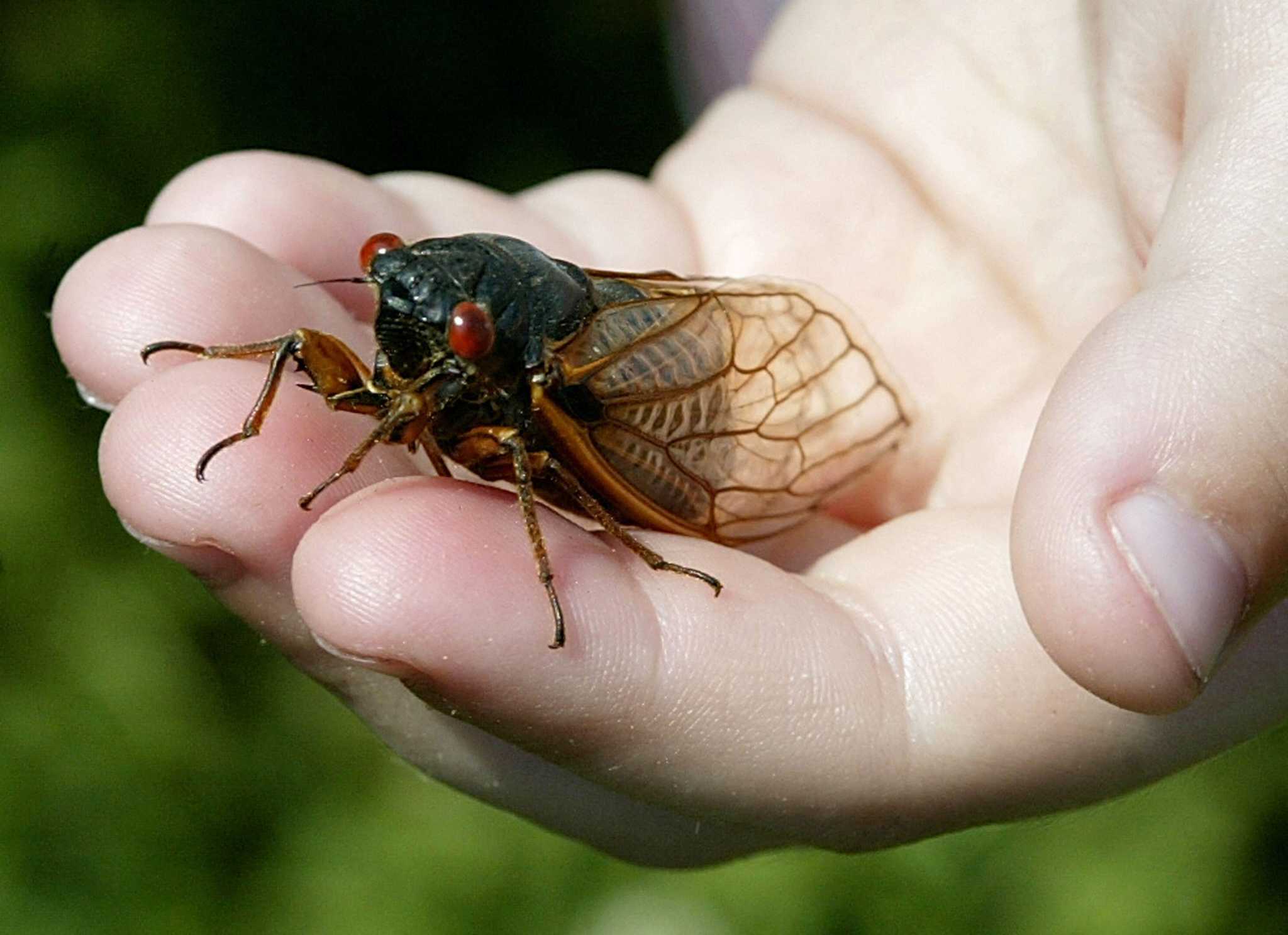
This year, one of the great events in biology takes place, the emergence of the 17-year cicadas. These remarkable creatures have managed to avoid extinction by creating an event every 17 years in the northeast and every 13 years in the south. Their behavior has evolved perfectly to avoid the crushing impact of advancing and retreating glaciers and predators over millions of years.
What does this have to with the emergence of the novel coronavirus, SARS-CoV-2? As I listened this week to Robert Redfield, the former director of the CDC, tell CNN correspondent Sanjay Gupta that, in his opinion, SARS-Cov-2 came from a laboratory in China, the association became clear. His reasoning was that because the virus was so capable of infecting people, it must have originated in a laboratory in China. He believes well-intentioned researchers may have selected out strains that are easier to cultivate for their research, and in this sense designed the deadly SARS-CoV-2 that made its way into the general population, even if accidentally. Based on that reasoning, the 17-year cicadas must also have been designed by man in a laboratory somewhere on Earth.
This is Homo sapien hubris at its worst. In fact, nature is a much more talented biological engineer.
From the Editorial Board
Of all the science that is available about the origin of SARS-Cov-2, that it originated in a laboratory or was a laboratory accident is the least likely explanation. The data is overwhelming that the SARS-Cov-2 originated in bats and acquired the spike protein in a recombinant event in the pangolin, a scaly anteater that some cultures like to use as a medicinal. Once it was able to be transmitted to other humans, the virus was off to the races replicating, mutating and constantly improving its ability to infect a new person. This was done through a process of selection not human design.
And there is more evidence. There are many many more coronaviruses in bats living in caves that might be future infectious agents in humans. We know these viruses have the ability to move from bat to human because studies have shown people living near horseshoe bat caves have antibodies to bat coronaviruses. In other words, they were infected and handled the virus but did not infect others. It took two viruses exchanging parts in another species to allow it to move from person to person. And one of the most important mutations that was acquired after human to human transmission was the one that allows the virus to enter cells in the upper respiratory track more easily and probably accounts for the asymptomatic spread of the virus.
Why does it matter?
If we believe that SARS-Cov-2 is the result of a laboratory accident, then the solutions to prevent this from happening again are inspection of labs, enhanced national security measures and open access to monitoring viral inventories — none of which will protect us from the most likely causes of the next pandemic.
And this is not an excuse for China. I agree that China was the origin of the virus and that the Chinese government suppressed the evidence early on in an attempt to control it before anyone found out. And that is why the World Health Organization (WHO) must have the authority to act independently in all member countries.
By clinging to the notion that it was a laboratory creation or laboratory accident, it puts humans, not nature, in charge of these events. It is human supremacy in a world where we are just another species on a planet with a lot of competing biologies that could wipe out our species.
If we can realize the real threat is nature and viruses, and not a laboratory accident or political enemies, we will be in a position to do what is needed to be prepared for the next pandemic.
We need the WHO empowered not denigrated. We need active and aggressive viral surveillance, viral sequencing and study of animal reservoirs. We need ongoing and well- funded vaccine development and distribution networks. We need a revised public health infrastructure and data tracking program. And we need vaccine diplomacy and cooperation between scientists from all countries because this is an entire planet problem not an American problem.
Klotman, M.D. is president, CEO and executive dean of Baylor College of Medicine.