Sunday, August 1, 2021

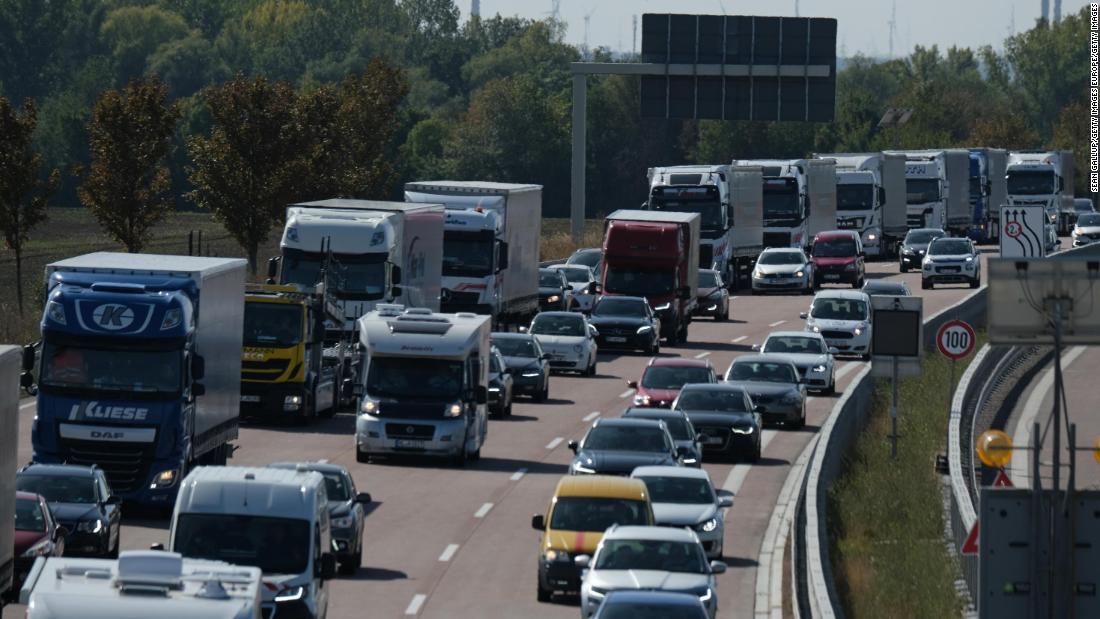
Curbing climate change is auto mechanics, not rocket science - CNN
"Opinion" - Google News
August 02, 2021 at 05:57AM
https://ift.tt/3fkvfDg
Curbing climate change is auto mechanics, not rocket science - CNN
"Opinion" - Google News
https://ift.tt/2FkSo6m
Shoes Man Tutorial
Pos News Update
Meme Update
Korean Entertainment News
Japan News Update
Opinion | Unvaxxed, Unmasked and Putting Our Kids at Risk - The New York Times

For days now, vaccinated Americans have been trying to come to terms with the new advice from the Centers for Disease Control and Prevention about the rapidly spreading Delta variant and a spike of Covid cases in states with high populations of unvaccinated people. Officials encouraged everyone in high-risk areas to start wearing masks in public indoor spaces again and recommended that all teachers and students wear masks in schools.
It’s difficult not to be angry at the irresponsible behavior of those who got us here. For parents with children with health problems or who are too young to be vaccinated (or both), it’s doubly infuriating.
My daughter, Layla, was born three months early because of a life-threatening disorder called HELLP syndrome I developed during pregnancy. She weighed just two pounds at birth. She spent the first months of her life in a neonatal intensive care unit and her first years being shuttled to and from emergency rooms and specialists because her lungs didn’t have a chance to fully develop.
I’ve seen my child be intubated. I’ve had her turn blue in my arms — more than once. I’ve watched nurses revive her.
While some parents worried about getting enough sleep or diaper changes, I was wondering when Layla’s central line IV would be taken out or whether she managed to digest any of the milk they gave her through the feeding tube in her nose. To be able to take your health for granted is a privilege.
As I’ve watched the Delta variant spread, I’ve thought back to Layla’s early years and about my lingering uncertainty for her continued health. I am not alone. There are parents across the country right now who are terrified that their sick children will contract Covid-19 and a cascade of illnesses will overtake them.
This is not a fear that ever fully goes away, even if or when your child recovers. When you have seen your child seriously ill, there is a part of your brain that believes he or she can be taken from you at any time — because you’ve seen it almost happen.
My family lives in New York City, where over 70 percent of adults have gotten at least one dose and over 65 percent are fully vaccinated. But we plan to follow the updated recommendations as though we were in a high-risk state. We’ll do so not only because of the city’s extreme density and our personal story, but also because we care about our community and the health of our neighbors.
Looking at the statistics on how many people willingly go unvaccinated — or refuse to wear masks, even in risky situations — it’s obvious that not everyone is equally conscientious.
It’s true that the reasons so many Americans still remain unvaccinated — even as we see hospitalizations of the unprotected rise — are myriad. Some have fallen prey to misinformation or conspiracy theories, some still don’t realize the vaccine is free and often available at their local pharmacy, and others’ trust in authority has been eroded by institutional failure. But while some Americans are unvaccinated or maskless because of access problems, a majority of the unvaccinated are making a choice.
When I listen to the scorn directed at the Covid vaccine from the yet-to-be-convinced, I think about the hours I spent on the phone begging our insurance company to cover a vaccine that would prevent Layla from getting RSV, a virus that can be deadly in preemies. The insurer refused, and we couldn’t afford the out-of-pocket cost. (Layla ended up in the hospital after contracting it.)
Today, Layla is healthy. But I will never know what long-term impact her lung development had on her, and we have no idea what a Covid infection might do to a kid who used to need machines to breathe. The same is true for children with other underlying health conditions like asthma, or those who are immunocompromised. And while the rate of kids being hospitalized or dying is low, numbers don’t mean anything if it’s your child behind the statistic.
What I do know is this: I’m furious that the physical and mental health of countless American children are at the mercy of the willfully ignorant and the irrationally fearful. It’s enraging to listen to people complain that wearing a mask or getting a simple shot is akin to an assault on their freedom while children who have no choice bear the brunt of their nonsense.
Most of all, I’m tired of hearing about how my anger won’t change hearts and minds, or that I need to respect other people’s choices — even when those choices put others’ health and lives at risk.
This isn’t a matter of simple disagreement or bipartisan bickering: Gross selfishness masked as American individualism is killing our country and traumatizing our children. That’s not “intolerant” or an overreaction; it’s a fact.
Anger is the very least we can do.
The truth is that all of our kids, no matter what their health status, are suffering.
After all, my daughter isn’t thinking about her lungs right now. She just wants to go to birthday parties again. She wants to go to school without plexiglass blocking her view of the blackboard and to be able to eat lunch in the cafeteria instead of quietly in her classroom. She wants to take her mask off — she’d like to see her friends’ faces again.
Those who have the ability to be vaccinated and masked have no reasonable excuse not to be. Either you’re someone who cares about their neighbors and community or you’re not. Either you’re willing to sacrifice for the good of others or you’re not. And it shouldn’t take the thought of sick children to get people to do the right thing.
A few months ago, a mother I didn’t know started chatting with me as our children played nearby. After some pleasantries, she asked if I was vaccinated — a question I assumed she posed because I was standing within a few feet of her. It turns out, however, that she wanted to vent about how she’d never let the vaccine “within a hundred feet” of her family. “We’re healthy,” she scoffed.
How lucky for her.
Jessica Valenti is the author of six books on feminism and publishes the newsletter “All in Her Head.”
The Times is committed to publishing a diversity of letters to the editor. We’d like to hear what you think about this or any of our articles. Here are some tips. And here’s our email: letters@nytimes.com.
Follow The New York Times Opinion section on Facebook, Twitter (@NYTopinion) and Instagram.
"Opinion" - Google News
August 01, 2021 at 10:00PM
https://ift.tt/3yuAkjW
Opinion | Unvaxxed, Unmasked and Putting Our Kids at Risk - The New York Times
"Opinion" - Google News
https://ift.tt/2FkSo6m
Shoes Man Tutorial
Pos News Update
Meme Update
Korean Entertainment News
Japan News Update
Opinion | Democrats still have some options to push through a voting rights bill - The Washington Post

Lawmakers of both parties should have emerged from a rancorous 2020 presidential election determined to ensure that all Americans who want to cast ballots can do so, and that their votes will be counted impartially. Instead, Republican state leaders across the country have pushed to make voting harder and vote-counting more vulnerable to partisan pressure, citing concerns about essentially nonexistent fraud. Congress can preempt these state-level measures, but congressional Republicans have shown little interest in stemming their state-level colleagues’ anti-democratic behavior, or in making voting fairer and easier in states where Republicans are not raising new hurdles to the ballot box.
Democrats still have some options. Their initial attempt at passing voting legislation, the For the People Act, was a sprawling bill that contained such varied provisions as an ambitious public campaign financing scheme and judicial ethics requirements — that is, far more than simple voting improvements. This made it easy for Republicans to argue that the bill was not really about fair elections, but a broader Democratic social reform program.
Democrats should streamline the bill so it is more focused on voting provisions that no one committed to democracy should oppose, such as early voting requirements, universal voter registration, mail-in ballot standards, election security measures and other obvious reforms. Sen. Joe Manchin III (D-W.Va.) has already proposed a rough outline that even includes national voter-identification requirements, extending a hand to Republicans who have long pushed for voter ID. Democrats appear to be preparing a bill based on this framework, which may emerge this week, that they can bring to the Senate floor and dare Republicans to vote down.
If Republicans do that — in effect, expressing disinterest in the notion that an honest poll of public preferences should decide who rules, and approval of state GOP efforts to erode this principle — Democrats should consider reforming the Senate filibuster, which has transformed from a rare blocking maneuver into a routine instrument of obstruction.
Meanwhile, Democrats are preparing a massive infrastructure spending bill designed to bypass the filibuster’s 60-vote threshold, via the Senate’s complex reconciliation rules. They could add some voting provisions to that bill, though their scope would be strictly limited to taxing and spending provisions. In theory, Democrats could offer states money to improve their election systems on the condition they meet certain standards, such as offering a certain number of early voting days. But these measures may have limited impact. Many Republican-led states have already shown they are willing to ignore even massive federal incentives resembling this — think Medicaid expansion under the Affordable Care Act, which states such as Florida and Texas have refused despite huge potential gains in public health and state financial stability. Still, it is worth a shot.
But stuffing a few voting measures into a reconciliation bill would be no substitute for setting broader national standards that all states must meet. The odds may be long, but Democrats must keep trying.
"Opinion" - Google News
August 02, 2021 at 01:28AM
https://ift.tt/37bqzLN
Opinion | Democrats still have some options to push through a voting rights bill - The Washington Post
"Opinion" - Google News
https://ift.tt/2FkSo6m
Shoes Man Tutorial
Pos News Update
Meme Update
Korean Entertainment News
Japan News Update
Opinion: Equity initiatives at stake as conservatives take school board seats - OregonLive

Melissa Goff
Goff served as superintendent of Greater Albany Public Schools from 2019 until last month. She previously headed the Philomath School District and served as assistant superintendent for Portland Public Schools.
I am one of the atypically high number of public school district superintendents who, according to the American Association of School Administrators, have been fired or chose to leave their positions in the wake of the pandemic. While responding to COVID-19 has certainly left us all bone-weary, that’s not why some of us left our jobs. Instead, both in Oregon and nationally, we are leaving as a result of conservative political action committees inserting themselves into our local school board races.
In Newberg, Canby and Grants Pass, candidates running on a radical conservative platform have gained footholds in local school boards, following an eerily similar pattern throughout the country. These candidates build their base with outcries of frustration that schools are not open and with COVID conspiracy theories, luring frustrated parents into voting for change – any change – to get their kids back into the classroom.
But there’s something more sinister at play – racism and the desire to stop efforts to address deep-seated inequities in our communities. The pandemic has served as a devastating yet spectacularly effective Trojan horse for those who want to change far more than a district’s pandemic-related policies.
In Greater Albany Public Schools, three new board members were elected on promises of opening schools and, upon their swearing in, the board immediately took over health and safety decisions. Less than two weeks later, the board dismissed me without cause. Numerous letters to the board have deduced I was targeted for my priorities of equity, diversity and inclusion.
In fact, we are seeing this trend nationwide. As a number of news stories have documented, many of the advocates who do not believe in masks or quarantines are the same social media warriors who condemn equity in schools and who believe that teaching about racial bias in history and institutions is brainwashing white children into hating themselves
They scorn “Critical Race Theory,” which analyzes the impact of racism on the fabric of American life, from law to education. They misunderstand and believe that the theory is being taught in our classrooms rather than used as a tool for those in the system to analyze our collective progress. Here’s one example of how this theory informs our understanding: When the 1954 Brown v. Board of Education ruling ended school segregation, Black teachers lost their jobs as schools merged, leaving a mostly white educator workforce. We know now the importance of diversity among teachers for the academic and social success of students of color. Examining the impact of past decisions and avoiding similar consequences in today’s decisions is essential to understanding how we can improve the learning experience for all our students.
As the push for equity has grown around the country, the radical right has responded by funding school board campaigns by conservative candidates and taking action against superintendents. Since July 2018, 29 Oregon superintendents have left their positions or been fired due to a lack of alignment with school board members on equity, COVID and other issues, according to the Coalition of Oregon School Administrators. In some districts, such as Newberg, board members are challenging existing equity and inclusion initiatives.
The term “equity” can seem vague, and some may not understand what it entails. But equity shows up in many ways, such as diversifying library collections so every student is able to read about protagonists, scientists, and economists who look like them. This type of role modeling expands every student’s understanding of the contributions of diverse people.
Equity includes professional development for teachers, education assistants and bus drivers so they may learn the impact of culture on behavior and ways to connect with students raised differently than themselves. These efforts help every student know that they are valued and understood by the adults who work with them. Students who feel safe learn more effectively.
The truth is not scary to teach or learn. Even the painful parts of our history – such as Oregon’s exclusionary laws and a KKK membership that at one time was the largest in the West – help us understand the how and why of our present day reality. Having these discussions challenges us to do better and to embrace what every individual brings to the table, thus creating smarter students who benefit from what each other has to offer and who learn to view the world with a critical eye.
Removing a superintendent overtly or covertly because of their leadership in equity will not stop the growing movement for inclusion and honest discussion about our country’s troubled past. Efforts to silence those of us fighting for social justice will not be successful in the long run. Attempts to address the systematic inequalities that dog our system should instead inspire sustained commitment by schools to celebrate all families in their communities and drive classroom leaders to continue to create spaces of belonging that value the diverse and multiple perspectives of their students.
Now is not the time for us to pull back. Rather, it is a time for us to collectively press forward into the pivotal conversations about race and equity.
Share your opinion
Submit your essay of 500-600 words on a highly topical issue or a theme of particular relevance to the Pacific Northwest, Oregon and the Portland area to commentary@oregonian.com. Please include your email and phone number for verification.
"Opinion" - Google News
August 01, 2021 at 08:02PM
https://ift.tt/3lhhER1
Opinion: Equity initiatives at stake as conservatives take school board seats - OregonLive
"Opinion" - Google News
https://ift.tt/2FkSo6m
Shoes Man Tutorial
Pos News Update
Meme Update
Korean Entertainment News
Japan News Update
Opinion: Governor must take stronger measures on COVID - OregonLive

Linn Goldberg and Louis Speizer
Goldberg, M.D., is a professor emeritus at Oregon Health and Science University. He lives in Lake Oswego. Speizer, who has a doctorate in physiology, works in the pharmaceutical and biotech industry. He lives in Flemington, New Jersey.
The Oregon Health Authority is recommending mask wearing indoors, with increases in COVID-19 cases and hospitalizations. It’s not enough.
Oregon is caught in a “Mission Accomplished” moment. Like President George W. Bush’s premature announcement that the Iraq War’s objectives were attained, Gov. Kate Brown stopped Oregon’s pandemic precautions of indoor mask-wearing and social distancing too early. Curiously, the governor eliminated the mandates on June 30, 19,000 Oregonians short of her original goal of inoculating 70% of adults with at least one vaccine dose. There were two problems with this approach. Because 20% of Oregonians are under 18, her inoculation goal actually was just injecting 56% of Oregonians – far short of the 70%-90% benchmark needed to achieve herd immunity, as suggested by the American Lung Association. And since both the Pfizer and Moderna vaccines need at least two weeks after the second dose to be fully effective, the governor was lifting restrictions before many of those inoculated Oregonians were fully protected.
The dramatic surge in COVID-19 infections was predictable. When pandemic measures were removed on June 30, Oregon reported 176 cases. Twelve days later there were 507 new infections. On July 22, with 533 new COVID cases and hospitalizations increasing, Oregon’s “health authorities” reported they had no plans to reinstitute COVID-19 restrictions. Oregon Health Authority’s Director Patrick Allen, a non-healthcare professional, made the statement that the rise in infections did not require a state-wide response, and instead directed counties to “consider” their own measures.
Viral infections don’t abide by county boundaries. When Oregonians or those from out-of-state travel from one county to another, they can spread disease. This is a state issue. On July 27, as new infections soared to more than 1000 , the health authority recommended “universal mask use in public indoor settings throughout the state to protect Oregonians from COVID-19,” only after the Centers for Disease Control and Prevention suggested the change. Unfortunately, this is not a mandate. Brown has in recent days announced mask requirements for students and staff in K-12 schools, as well as for visitors and employees in state buildings. This is still insufficient. Not requiring prior pandemic hygiene measures is a potential death sentence for the unvaccinated, and for Oregonians who are immune deficient, including those with certain cancers and people receiving chemotherapy. In addition, children under age 12 are still ineligible for vaccination. Even vaccinated Oregonians are not immune to hospitalizations and deaths, as a small percentage of COVID-19 breakthrough cases occur, and they can unknowingly spread disease as well.
So, what can be done? Oregon should reinstitute all public and business indoor mask-wearing and social distancing of six feet to protect children, the immune-compromised and people not yet vaccinated. To influence those who remain vaccine reluctant, Oregon could take a leadership role and implement vaccine passports similar to France. Passports would enable Oregonians to dine in restaurants or bars and frequent gyms or salons where masks could be removed. Any person who refuses wearing a mask in public and is not vaccinated, should be charged with reckless endangerment, not unlike driving while drunk. These two actions may sway those who are still on the fence toward receiving a vaccination.
Oregon had done a good job compared to other states in controlling the pandemic. Mask mandates are effective. Oregon’s Health Authority is designed to improve our lifelong health. The governor and the health authority should complete this task before more lives are lost.
"Opinion" - Google News
August 01, 2021 at 08:02PM
https://ift.tt/3A3mNAx
Opinion: Governor must take stronger measures on COVID - OregonLive
"Opinion" - Google News
https://ift.tt/2FkSo6m
Shoes Man Tutorial
Pos News Update
Meme Update
Korean Entertainment News
Japan News Update
Can you do something about stubborn unvaccinated people? Yes, you can. - CNN

"Opinion" - Google News
August 01, 2021 at 07:09AM
https://ift.tt/3j5ZlMc
Can you do something about stubborn unvaccinated people? Yes, you can. - CNN
"Opinion" - Google News
https://ift.tt/2FkSo6m
Shoes Man Tutorial
Pos News Update
Meme Update
Korean Entertainment News
Japan News Update
Postingan Populer
-
To say 2020 was a year of constant unexpected events is a huge understatement. No area of our lives was exempt, including events in the pol...
-
Here’s a question: What does Gov. Ron DeSantis of Florida think about Medicare? Medicaid? Social Security? The Affordable Care Act? DeSa...
-
[unable to retrieve full-text content] I just paid $9.99 for a carton of 18 eggs. Will prices ever drop? | Opinion Sacramento Bee ...

