Rechercher dans ce blog

Saturday, April 2, 2022

Opinion: Sasha's story brought the Ukraine war home to me in a shattering way - CNN

Margo Gontar is a Ukrainian journalist who founded the 7,62 project, which tracks Russia's military aggression in Ukraine. She also cofounded the StopFake project in 2014 to tackle Russian disinformation and propaganda. The views expressed in this commentary belong to the author. View more opinion at CNN.

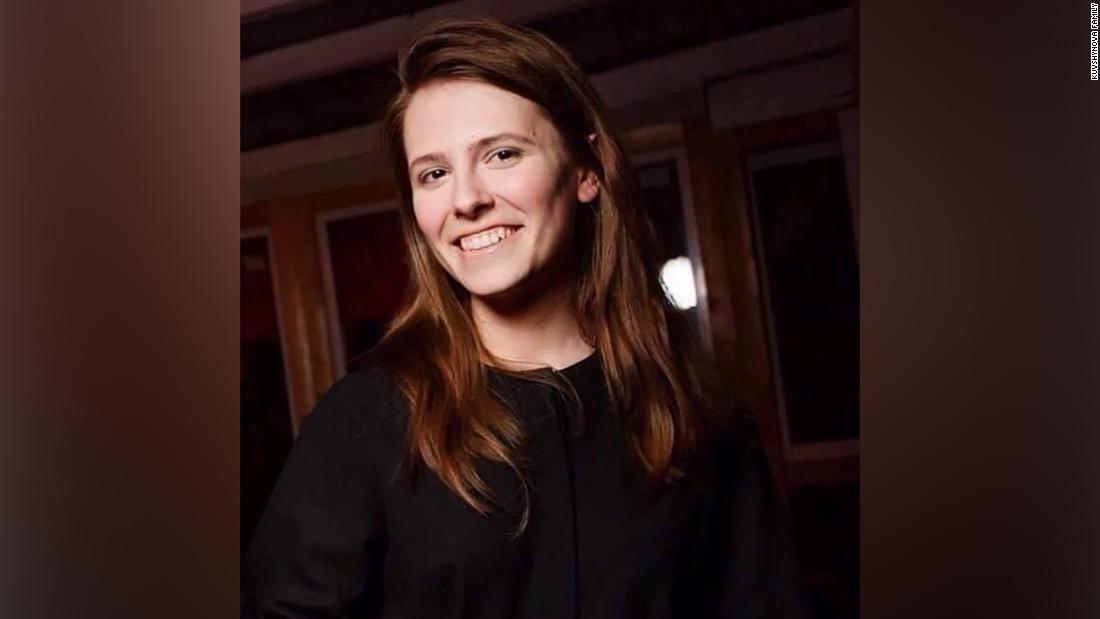
(CNN)I last spoke to Oleksandra Kuvshynova -- or Sasha, as I knew her -- on March 5.

As a Ukrainian journalist working as a consultant for Fox News, she told me that she was so busy and tired covering the Russian invasion that she could barely open her eyes in the morning.
She sent me a selfie that showed her wearing a helmet and bulletproof vest and updated me on her whereabouts. When we last talked, Sasha had just managed to leave the city of Irpin, which had been devastated by Russian attacks. She told me she was lucky to get out of the city safe and sound.
Despite the danger she faced, she cracked a few jokes and sent me memes because "you can't get through it without humor," as she once said.
Nine days later, on March 14, Sasha, along with Irish news cameraman Pierre Zakrzewski, were killed when their vehicle came under fire in a suburb of Kyiv. Fox News Correspondent Benjamin Hall was also injured in the attack.
When I first learned about her death, I couldn't pull my strength together. In the initial hours, disbelief overwhelmed me.
I wanted to pick up the phone and call her.
My mind told me a story I wanted to hear: I would dial her up, and she'd laugh into the speaker and tell me everyone made a mistake. We would arrange to have coffee, and she'd tell me about another escape, another brush with Russian shelling in her quest to do what journalists do -- bring the story to the world.
But then the reality came flooding back, and I knew silence is all I'd get on the other end.
Then came the questions. People kept calling, asking if I knew Sasha, and I realized I did not have a single bad word to say about her. She was bright, beautiful, smart, funny Sasha, who made movies and loved poetry and film. She was always hunting down the facts, boldly joining the Fox News crew to report from the front lines.
It was always nice to spend time with her -- to do business or to have a glass of wine. To just be around her. She was only 24.
Before this, I never understood how people write memorials to their loved ones, but now it feels somehow like the only way to make it through.
It feels vital to capture the memories I have of Sasha: the woman whom I worked on music projects with, drank wine with in our favorite bars; the friend who inevitably became what all Ukrainian journalists must now become -- a war reporter. And because of the war, this light is now gone.
As surreal as it is to think about, writing about my friend's death is just the latest writing I'm doing on this war. Much of my professional life as a journalist has involved chronicling Russia's attacks on my people. I cofounded Stop Fake, a fact-checking organization that was launched in 2014, when the war in Ukraine was still limited to the east. More recently, I've gone from reporting on the Russian troop build-up along the Ukrainian border to covering the daily deluge of war.
And Ukrainian journalists, just like their foreign colleagues, are working hard every day -- in an environment that grows increasingly hostile -- to ensure the world gets a clear picture of what's happening here.
Sadly, Sasha and Pierre were not the only journalists killed in this war. Yevhenii Sakun, a Ukrainian camera operator, died on March 1 when the TV tower in Kyiv was struck by Russian shelling. Brent Renaud, an American documentarian, was killed in a shooting that also injured journalist Juan Arredondo. Russian correspondent Oksana Baulina, who was covering the war for an independent investigative news site, died in Kyiv. And the famed Ukrainian photojournalist Maks Levin was found dead in a village north of Kyiv on Friday, after he was reported missing for more than two weeks, according to Ukrainian officials.
Sky News' chief correspondent Stuart Ramsay also described how he and his team were attacked near Kyiv on February 28. They were ambushed by a saboteur Russian reconnaissance squad, they were later told.
"It was professional, the rounds kept smashing into the car -- they didn't miss", Ramsay recounted.
And then there are those held captive. A Ukrainian journalist Victoria Roshchyna was held by Russian forces in occupied Berdyansk before she was released. A Radio France fixer and interpreter was taken prisoner by Russian troops on March 5 and held for nine days, according to Reporters Without Borders (RSF). During this time, his car was machine-gunned and he was left in an icy cellar, beaten with rifle butts and steel bar, repeatedly tortured with a knife and electricity and subjected to a mock execution and food deprivation for 48 hours, RSF reported.
In a number of cases, it seems that Russians are deliberately targeting journalists, as Mstyslav Chernov of the AP chillingly chronicled from Mariupol.
As an adviser to the Mariupol mayor told me, Russians may be continuously shelling the city in part to prevent people -- including journalists -- from going outside to document what's happening and sharing it. Meanwhile, Secretary of State Antony Blinken said the US is "looking very hard" at whether Russia is deliberately targeting journalists, he told NPR two weeks ago.
And while many brave reporters from around the world have come to report on the war, it's personal for the Ukrainian journalists. Many of us are learning in real time how to cover Russian forces smashing our beautiful houses, destroying our lovely cities. How to cover Russian forces killing our friends.
This war has gone on for more than a month now, and the terrifying and dreadful and sickening dances all around us. For Ukrainians, we've already had front row seats to more than 800 hours of horror, with no end in sight. We don't know when an attack will hit the places we love and remember-- the coffee shops where we used to gather with friends, the corners where we had our first kisses or the parks where we played as kids.
We don't know when the shelling will hit our loved ones, or when it will hit us.
All the scary stories and horror movies we once consumed now seem harmless, fading away in the presence of this real horror: what one human can do to another.
In the weeks before Sasha's death, everything felt surreal. That's just what your brain does: It pretends all this isn't quite real.
You know it is. But you also can't quite believe it. There's a threshold, and it protects you.
It's as if there were a thin glass between you and this enormous, overwhelming suffering. It's still right there -- you can see the wave of devastation, ready to swallow you, but it's slightly distant. If you stretch out your hand, it's almost as if you can touch what's really happening.
But the glass still holds it back, and the overwhelming feelings remain at bay.
And it actually works pretty well.
Until your loved one dies.
The denial is strong, like a thought so painful my mind won't allow itself to follow it all the way to the end.
I know rage will come, too.
Somewhere there will be more grief.
And then the acceptance will come.
Maybe.
But I know that the emptiness I feel -- emptiness where Sasha was -- as well as the feeling that this should've never, ever happened, not here nor anywhere else -- this feeling will never leave.
And for that, I will never be able to forgive -- because not only is Sasha dead, that thin glass protecting me has shattered.
Forever.
My brain can't protect me anymore. Like it can't protect all the others mourning their loved ones killed in this war Russia started in Ukraine.
This belief in the good of humanity can't be restored the way you restore buildings. Nor can it be rebuilt the way Italy plans to rebuild the Mariupol Drama Theater.
I can't bring Sasha back.
Get our free weekly newsletter

Sign up for CNN Opinion's newsletter.

Join us on Twitter and Facebook

At the end of our last chat, she told me how tired she was and how she just wanted some pancakes.
A little later she wrote: "You will not believe. I went down for breakfast -- and there they were! Pancakes!" She wrote then that she smiled like a happy child for the rest of the day.
When I learned she was killed, my first weird thought was: That place where she is right now -- whether it's heaven or Valhalla -- better have some damn good pancakes.
Sasha died attempting to show the world the truth of what's happening every day in Ukraine. And while her job is done, now it's our job to continue the fight.

Adblock test (Why?)


"Opinion" - Google News
April 03, 2022 at 03:52AM
https://ift.tt/TwkH1CA

Opinion: Sasha's story brought the Ukraine war home to me in a shattering way - CNN
"Opinion" - Google News
https://ift.tt/38ehPov
Shoes Man Tutorial
Pos News Update
Meme Update
Korean Entertainment News
Japan News Update

Opinion: Exercise and determination changed the life of this 'couch potato' retiree - Greenville News

Opinion: The Taliban should release its other detainees - CNN

Peter Bergen is CNN's national security analyst, a vice president at New America and a professor of practice at Arizona State University. His forthcoming paperback is "The Cost of Chaos: The Trump Administration and the World." The views expressed in this commentary are his own. View more opinion on CNN.

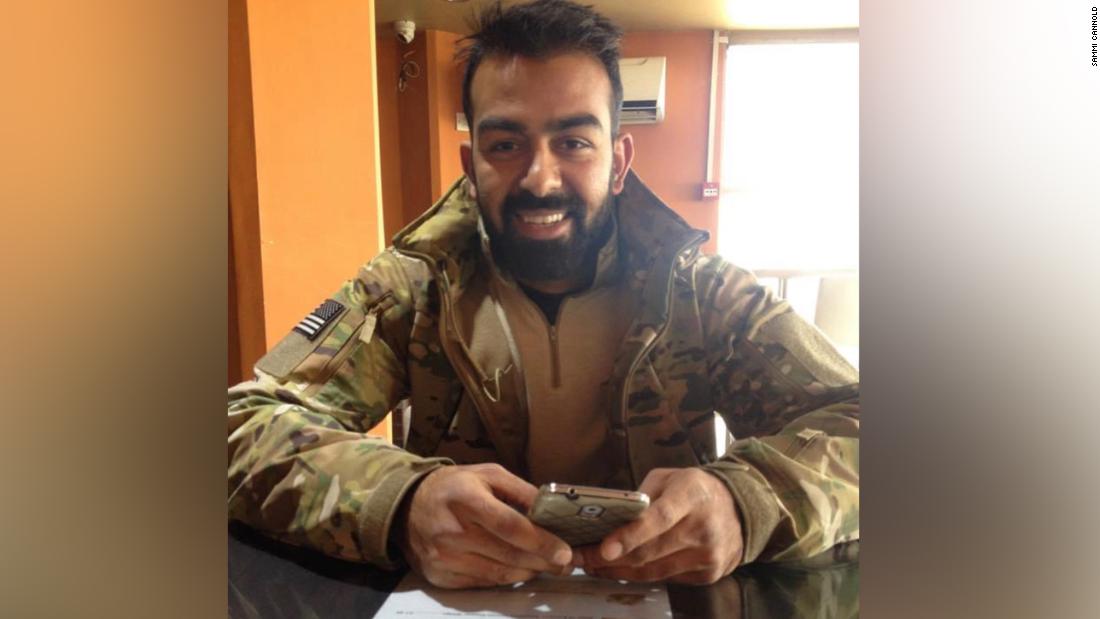
(CNN)On Friday, 27-year-old Safi Rauf, an Afghan-American who had been held captive by the Taliban since mid-December, was released. Rauf, a US Navy reservist, was providing humanitarian aid through Human First Coalition, an organization he founded to help evacuate Americans and at-risk Afghans from Afghanistan.

Also released by the Taliban was Rauf's brother, Anees Khalil, a US green card holder and a British citizen who also works with the Human First Coalition.
On Friday, the same day that the Rauf brothers were released, a "proof of life" video surfaced of Mark Frerichs, an American who was kidnapped more than two years ago and believed to be held by the Taliban and its affiliates before they took over the entire country last August. Frerichs, a Navy veteran and civil engineer, was working on development projects in Afghanistan.
The video was obtained by the New Yorker, and Frerichs' sister confirmed his identity.
Along with Frerichs, the Taliban has also detained British citizen Peter Jouvenal, a businessman and former television journalist who filmed the first television interview with Osama bin Laden for CNN in 1997. Jouvenal and I have been friends since we first worked for CNN together in Afghanistan nearly three decades ago.
He was taken into custody by the Taliban in mid-December, around the same time that four other British citizens were also detained.
Jouvenal's family and friends, who worried his detention could have been an error, released a statement in February, saying, "He is a Muslim, knows Afghanistan better than most foreigners, is married to an Afghan (they have three daughters), and speaks both main languages. He is being held without charge ... Before his arrest, he was working openly and had frequent meetings with senior Taliban officials."
If the Taliban sincerely want to be treated as the responsible de facto government of Afghanistan, they should release the British and American citizens that they continue to hold.
Get our free weekly newsletter

Sign up for CNN Opinion's newsletter.

Join us on Twitter and Facebook

The Islamic holy season of Ramadan is beginning around the world, which is traditionally a time for charity and reconciliation. The Taliban should use this occasion to release the six detainees that they are holding.
And if they aren't willing to do so, the British and American governments should also leverage the considerable aid that they are continuing to give to humanitarian organizations in Taliban-controlled Afghanistan to secure the release of their detainees.

Adblock test (Why?)


"Opinion" - Google News
April 02, 2022 at 09:56PM
https://ift.tt/lTNaKcX

Opinion: The Taliban should release its other detainees - CNN
"Opinion" - Google News
https://ift.tt/38ehPov
Shoes Man Tutorial
Pos News Update
Meme Update
Korean Entertainment News
Japan News Update
Friday, April 1, 2022

Opinion: The silent threat in your burger wrapper - CNN

Marta L. Tellado is the president and CEO of Consumer Reports. The views expressed in this commentary belong to the author. View more opinion at CNN.

(CNN)This year marks the 60th anniversary of Rachel Carson's "Silent Spring," a seminal book that laid out in plain prose the catastrophic harms we were introducing to nature, and to ourselves, by regularly using chemical pesticides such as DDT. Its publication ignited and inspired an environmental movement. People were understandably outraged by what Carson, a trained biologist, had revealed, and the outcry led to national legislation and helped form the Environmental Protection Agency.

Despite that progress, today, there is another chemical threat that experts have increasingly sounded the alarm about in recent years: the widespread use of PFAS, short for per-and polyfluoroalkyl substances.
For those of us without chemistry degrees, PFAS (pronounced pea-fahs), were invented in the 1930s and initially used in non-stick pans. These chemicals, which are used to increase resistance to grease, oil, water and heat, now show up in everything from cosmetics to waterproof clothing and stain-resistant rugs.
Last week, a new study from Consumer Reports found high levels of PFAS in food packaging from fast-food chains, restaurants and grocery stores including Burger King, Chik-fil-A and Stop & Shop.
Companies, in an attempt to prevent grease or liquids from seeping into the bags that hold your fries or the bowl you eat your salads out of, frequently turn to materials that contain PFAS in higher levels than our experts support. This is all the more alarming considering the uptick in takeout orders during the pandemic.
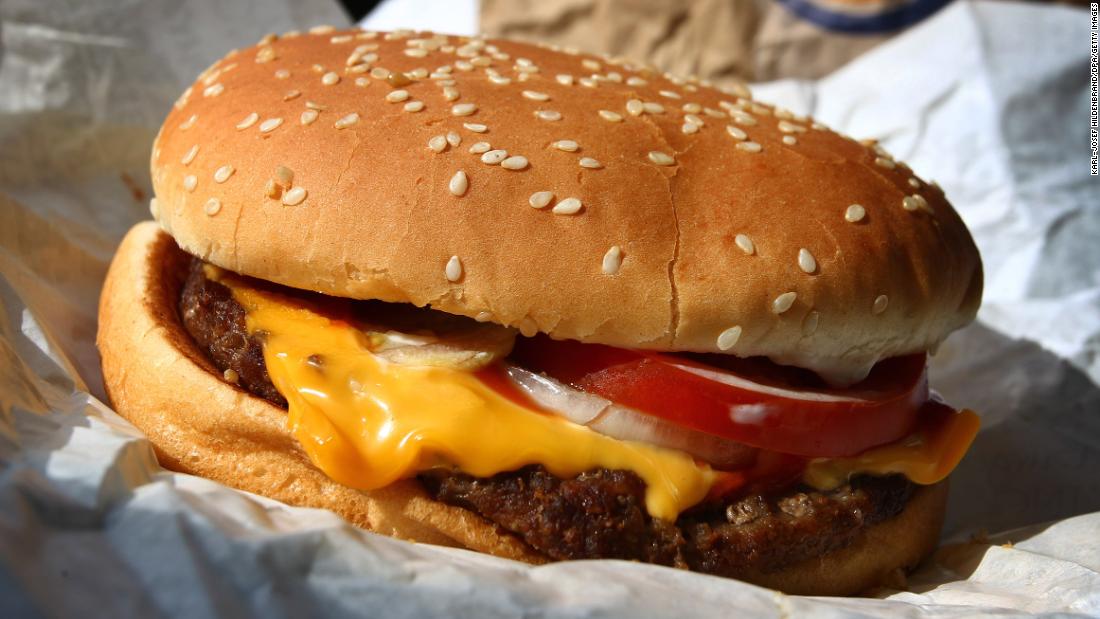
While your food might not start out with PFAS in it (although that is certainly a possibility too), these chemicals can migrate from the wrapper into your burger or your fries. That's not exactly the special sauce any of us were hoping for.
Since PFAS, also known as "forever chemicals," don't break down, they are everywhere. PFAS can be found in 97% of Americans' blood, according to one report by the Centers for Disease Control and Prevention's National Health and Nutrition Examination Survey. And some studies suggest that water supplies for more than 200 million people in the United States are likely contaminated with PFAS. My colleagues at CR recently conducted a test that found even bottled water can contain PFAS levels that exceed expert recommendations.
What's more, when products with PFAS are thrown away, the chemicals can seep into water and soil (or even end up in the air if incinerated). Worst of all, they're connected to very serious health concerns, from cancer to cholesterol levels.
Given this threat to people's health, we need to sound the alarm, demand a course correct and press for change to pressure companies and the federal government to curb these dangerous substances.
We know from testing that companies can reduce their PFAS levels -- many are just choosing not to. After Burger King and Chick-fil-A learned CR would be publishing our new study, they publicly committed to phasing out the use of these chemicals in their food packaging. Nathan's Famous followed suit, saying it would reduce the use of PFAS with a new package design to be released at the end of the year, while a spokesperson for Stop & Shop told CNN that a specific brand of bamboo paper plates found to have PFAS would be removed from all store locations. More companies need to follow their lead and commit to being part of the solution, not the problem.
We also need government leaders to establish strong limits on these chemicals, especially when it comes to our food and water. Last year, the US House of Representatives passed legislation that would require the EPA to establish PFAS limits in drinking water, declare them hazardous substances and regulate its discharge into waterways. The bill is sitting in the Senate, which should act quickly to pass it.
Lawmakers can also draft common sense laws banning the intentional use of PFAS in food packaging and other products, while Congress can pass President Biden's 2023 budget proposal, which includes approximately $126 million to combat PFAS contamination and better understand its impact.
There are plenty of other threats to our health, well being and safety that are not so easy to test in the lab. In the case of PFAS, we have clear data and evidence of something we know is damaging.
Get our free weekly newsletter

Sign up for CNN Opinion's newsletter.

Join us on Twitter and Facebook

In "Silent Spring," Carson describes the 1960s as "an era dominated by industry, in which the right to make a dollar at whatever cost is seldom challenged." Six decades later, that damning assessment still holds true. Consumers should not simply accept the status quo and leave their health at the mercy of corporations looking to increase profit margins.
As with the deadly pesticides of Carson's time, we must come together to end the threat of "forever chemicals" today. It is time to stand up and demand corporate and government leaders to do more to prioritize the safety of people before profits.

Adblock test (Why?)


"Opinion" - Google News
April 02, 2022 at 04:03AM
https://ift.tt/9UdX4ea

Opinion: The silent threat in your burger wrapper - CNN
"Opinion" - Google News
https://ift.tt/tuyK6rh
Shoes Man Tutorial
Pos News Update
Meme Update
Korean Entertainment News
Japan News Update

Opinion: Displacing and Jailing My Neighbors Does Not Make Me Safer - City Limits

“Our elected officials are threatening hard-fought reforms designed to counteract the historic – and present – racism in law enforcement that targets my neighbors and eventually will target my son. Meanwhile, they fail to invest in our communities.”

Michael Appleton/Mayoral Photography Office

I am a public defender. But more than that, I am a Black woman and a mother raising a three-year-old boy in East Harlem. When I watch him ride his bike down the sidewalk, filled with joy, saying hi to our neighbors, my heart swells with pride and love. Then just as quickly, when we inevitably pass a police officer on my block, my heart breaks. It breaks because I look at this curious active boy, and I wonder how many years he has before he is viewed as a suspect. How long can I let him enjoy the lights and sirens of a police car, before I have to start explaining that the police are not here to protect him? How long before I have to explain that he is the person the police are here to watch? That he is not protected, but rather the one who they are protecting other people from? 

I have lived in East Harlem for almost two decades. For all these years, I have walked home alone late at night and at every other hour. I have never felt unsafe. I have never been harmed. As a public defender serving this community, I am deeply aware that the police view my neighborhood as “high crime” and that we are subjected to targeted surveillance. I know that people are arrested and accused of violent crimes in my neighborhood. But as a resident of this community, violence has never been a part of my life.

I am never afraid for myself or my family. But I am afraid that as my son grows up, he will face violence. But not from his neighbors – from the police. While the data shows that there is only a 0.6 percent chance of being a victim of violent crime in New York City, my son will have a 1 in 3 chance of being arrested because of the color of his skin. For a Black man, it is far more likely that he will face arrest, rather than be a victim. When the news of yet another death on Rikers Island has occurred, I do not think that at least my son is safe in his community. Instead, my heart breaks for another tragic and preventable loss. I think about that person’s mother and his family. I fear that my son will one day face the same fate.

I believe there is reason to continue to fear. Our elected officials are threatening hard-fought reforms designed to counteract the historic – and present – racism in law enforcement that targets my neighbors and eventually will target my son. Meanwhile, they fail to invest in our communities.

East Harlem has been able to withstand the tide of gentrification that swept across our city. But I see the signs that we won’t last much longer. Just this month a treatment center and a family-owned grocery store on my block were shut down because a developer is knocking down the buildings to put up another high rise. The family that owned the store are my neighbors, there is now a “For Sale” sign outside of their home. When I walk from my home in East Harlem to my office in Central Harlem, I see this pattern on repeat. The residents of the shelters that are now closed are in the street, the small business owners are moving. These are the issues that impact my community.

If our elected officials truly want to keep us safe, small businesses need support.  Families need access to affordable, stable, and dignified housing.  We need functioning shelters, treatment centers, and programs. These are the things that have been proved to reduce crime and promote safety in communities.

But instead of talking about the root causes of instability, instead of asking what resources our community needs, our leaders are heeding the siren call to undo much needed criminal justice reform. Jailing my neighbors does nothing to keep me safe. The data proves this. What my community needs, what my family needs, is to reform policing, invest in my neighbors, and treat us as equals. We do not need polices that revert to over-policing and more investment in the rich.

Alice L. Fontier is the managing director at Neighborhood Defender Service of Harlem

Adblock test (Why?)


"Opinion" - Google News
April 01, 2022 at 11:21PM
https://ift.tt/Q9LReno

Opinion: Displacing and Jailing My Neighbors Does Not Make Me Safer - City Limits
"Opinion" - Google News
https://ift.tt/tuyK6rh
Shoes Man Tutorial
Pos News Update
Meme Update
Korean Entertainment News
Japan News Update

Opinion | Our farmers need our help - The Washington Post

The searingly honest March 30 news article about the California drought, “In its third year, California’s drought strangles farming,” painted a brutal and accurate portrait of what’s happening to farmers and farm communities. The article focused mostly on California’s Central Valley, but it’s worth pointing out that the entire West is in a similar situation. Eighty percent of our country’s fruits, nuts and vegetables are grown west of the Rockies.

That means that if nothing is done, the devastation being experienced in the farm community will soon be felt by all Americans at the grocery store. With all the global insecurity, this is a terrible time to create food insecurity at home. And yet that is exactly what we’re doing.

As noted in the article, by doing nothing, the government is making a choice to strangle farming, and that is likely not what most Americans want.

Without support for Western farming, we are abandoning a safe, diverse, affordable food supply that will force more imports and higher prices on top of current inflation.

The government needs to make farming a priority by balancing various water uses. By the time the grocery stores are empty, it will be too late.

Mike Wade, Sacramento

The writer is executive director of the California Farm Water Coalition.

The incisive article on the impacts of California’s drought accurately captured the dire situation now facing San Joaquin Valley growers and farmworker communities. But a bigger, more nuanced story needs to be told.

Agriculture in the valley is industrial in scale, dominated by large corporate entities and predicated on control of state and federal project water. San Joaquin agribusiness is not a forlorn victim. It is a prime mover in the current tragedy.

Agriculture — primarily industrial agriculture — uses 80 percent of California’s developed water while contributing about 2 percent to the state’s economy. And much of that water is used on “impaired” lands in the San Joaquin Valley.

Western San Joaquin Valley soils are heavily laced with toxic selenium. Farmers irrigate their crops with state and federal project water delivered from the Sacramento-San Joaquin Delta. This water is slightly brackish, and salt accumulates around the root zone of irrigated crops through the course of each growing season. This salt must be periodically flushed with more project water, taking both salt and selenium with it. The resulting “drain water” subsequently flows down the San Joaquin River and back to the delta, imperiling fish and wildlife.

Water is a public trust resource. It ultimately belongs to the people, not a handful of powerful agribusiness magnates. More dams won’t solve California’s water crisis, but taking impaired lands out of production and reforming state water policy will.

Carolee Krieger, Santa Barbara, Calif.

The writer is executive director of the California Water Impact Network.

Adblock test (Why?)


"Opinion" - Google News
April 01, 2022 at 11:14PM
https://ift.tt/KVHbehd

Opinion | Our farmers need our help - The Washington Post
"Opinion" - Google News
https://ift.tt/tuyK6rh
Shoes Man Tutorial
Pos News Update
Meme Update
Korean Entertainment News
Japan News Update

OPINION: I'll help Mayor Bronson make Anchorage better - Anchorage Daily News

By Randy Sulte

Updated: 8 hours ago Published: 8 hours ago

The people of Anchorage know our city should function better — much better. What has occurred during the past three years, the decline and decay of our hometown, has been heartbreaking to watch, and it’s unacceptable to us and our families.

We know crime and homelessness are severe problems the current Assembly has not effectively addressed over the past several years. We can see with our own eyes the boarded-up businesses, vagrancy and vandalism. This is what the current Assembly, including John Weddleton, has inflicted on us and small businesses across our city through its misguided policies, and it’s time for change.

That change started with Dave Bronson being elected to the mayor’s office. But Dave needs help to bring sane and sensible policies back to Anchorage. He can’t do it if the Assembly is fighting him at every turn.

My opponent in the South Anchorage District 6 race for Assembly is on the record in this newspaper saying things are going well in Anchorage government. He says the Assembly is getting along with the newly elected mayor. He says homelessness is being solved.

Weddleton says government is working well. He says you should not believe what you hear about dysfunctional government. He says all of this is normal, and that this Assembly is working cooperatively with the mayor.

The woman who was stabbed on Feb. 14 in the Loussac Library probably doesn’t agree with Weddleton, who is also on record saying that all people must be allowed to use the library, “no matter how vile.”

That woman is now paralyzed from being stabbed in her spine as she simply returned books to the library just feet away from where the Assembly meets. She was an innocent citizen whose life will never be the same.

The evidence shows that nine members control the Assembly — Weddleton among them. He alone could have shown leadership and stopped any of the numerous veto overrides.

The record shows that nine members of the Assembly, who Weddleton agrees with the majority of the time, are constantly searching for ways to sideline Mayor Bronson. They pepper his offices with endless and petty public records requests. They look for anything they can find that would distract and hobble him from being able to succeed in helping Anchorage get back on its feet. We need to work together despite our differences.

I am the conservative candidate running for Anchorage Assembly in South Anchorage. I have the support of Mayor Bronson. I will work to lower property taxes, fight the rising crime rates, and help rebuild the small businesses of Anchorage that the current Assembly has devastated.

I am not going to stand by and watch this dysfunctional and unproductive Assembly take the city down. I won’t align with the nine who are more interested in agendas than problem-solving.

Instead, I’m going to stand for what is fair, sensible and productive to help Anchorage get back on its feet.

Weddleton is wrong. If everyone on the Assembly was getting along with the mayor, and if everything in Anchorage is getting better, I would not see a need to run for Assembly. Our city needs all of us to stand up and defend it against an Assembly that has become hostile to the very citizens it serves.

Voters know better. Our eyes are open. I urge South Anchorage to vote as if their lives depend on it this year.

Randy Sulte is a candidate for District 6 on the Anchorage Assembly.

The views expressed here are the writer’s and are not necessarily endorsed by the Anchorage Daily News, which welcomes a broad range of viewpoints. To submit a piece for consideration, email commentary(at)adn.com. Send submissions shorter than 200 words to letters@adn.com or click here to submit via any web browser. Read our full guidelines for letters and commentaries here.

Adblock test (Why?)


"Opinion" - Google News
April 01, 2022 at 01:30PM
https://ift.tt/buMNAh8

OPINION: I'll help Mayor Bronson make Anchorage better - Anchorage Daily News
"Opinion" - Google News
https://ift.tt/tuyK6rh
Shoes Man Tutorial
Pos News Update
Meme Update
Korean Entertainment News
Japan News Update

Search

Featured Post

I just paid $9.99 for a carton of 18 eggs. Will prices ever drop? | Opinion - Sacramento Bee

[unable to retrieve full-text content] I just paid $9.99 for a carton of 18 eggs. Will prices ever drop? | Opinion    Sacramento Bee ...

Postingan Populer