Rechercher dans ce blog

Sunday, April 3, 2022

OPINION: Be prepared to put your mask on again - Indiana Daily Student

On Feb. 25, the Centers for Disease Control and Prevention announced Americans living in counties with decreased COVID-19 community transmission could visit public indoor places without their masks on. At the time, that encapsulated 70% of all Americans.

This wouldn’t be the first time the CDC has changed its mask guidance. In May 2021, it dropped its recommendation of mask-wearing for vaccinated adults. A cycle seems to be repeating. As case numbers ebb and flow, the agency is more likely to revise its mask recommendations.

But this begs numerous questions. What if cases don’t stay down? What if a new variant emerges? Will mask guidance change again?

The short answer is yes, mask guidance will likely evolve as we adapt to mutations of the virus. And as we revert to maskless public interaction, we must be willing to put our masks back on if guidance changes.

We’ve already seen requirements change in the wake of new variants. When delta became the primary variant in the U.S. last summer, it was apparent that vaccinated people were still transmitting the virus. This was contradictory to prior CDC knowledge, and chief medical advisor Dr. Anthony Fauci said the situation had changed since the revised policy was announced in May 2021. After just a few weeks of freedom, masks were once again recommended.

I remember being somewhat frustrated that I had to put my mask back on. I had just visited New York City and traveled a bit in the early summer months, and I hadn’t gotten sick. Why was it any different now?

What I failed to realize is that COVID-19 mutates quickly, and with mutations come additional precautionary measures. The delta variant stunned health professionals because of how much more transmissible it was than previous dominant strains of COVID-19. To slow case numbers in a variant that was still infecting vaccinated people, the CDC was in a compromising position, forcing them to revise previous recommendations.

We saw the same thing happen with the omicron variant this past winter. My primary source of excitement when getting the COVID-19 vaccine was that I could spend time with family and friends without worrying about getting them sick. Dr. Fauci even made a statement in October 2021 reassuring Americans that we could safely enjoy Halloween, Thanksgiving and Christmas with our families.

But the rapid spread of the highly-transmissible omicron variant in December 2021 posed a new risk to gathering with loved ones. The variant cast a shadow over holiday excitement. When I returned to my hometown, many plans got canceled and parties got rescheduled as people attempted to ward off any sickness. Health officials’ recommendations seemed to tighten restrictions once again.

That said, we must remember mask guidance has changed before and it will change again. The CDC has acknowledged that as cases and hospitalizations rise and fall, specific sections of the country will face adjusted mask recommendations.

In an age when Republican representatives call mask mandates “draconian” on the floor of the House of Representatives, I worry not every American will be willing to re-mask if asked. But I urge people to take the time to understand the logic behind newly recommended precautions. 

I am growing just as tired of pandemic life as everyone else, but if donning a mask in the future will keep others from getting sick, I will wear my KN-95 with pride.

Chris Sciortino (he/him) is a junior studying theater and public relations. He is involved with the Queer Student Union and College Democrats at IU.

Adblock test (Why?)


"Opinion" - Google News
April 04, 2022 at 12:08AM
https://ift.tt/jZOCy56

OPINION: Be prepared to put your mask on again - Indiana Daily Student
"Opinion" - Google News
https://ift.tt/8oztfnj
Shoes Man Tutorial
Pos News Update
Meme Update
Korean Entertainment News
Japan News Update

Opinion: US needs more leaders with the guts to stand up to purists on the left and the right - CNN

Charlie Dent is a former Republican congressman from Pennsylvania who served as chair of the House Ethics Committee from 2015 until 2017 and chair of the House Appropriations Subcommittee on Military Construction, Veterans Affairs and Related Agencies from 2015 until 2018. He is a CNN political commentator. The views expressed in this commentary are his own. View more opinion on CNN.

(CNN)Congress is a rough place. Partisan tensions regularly boil over into nasty debates with overheated rhetoric that contaminate American politics. An especially pungent ugliness erupts volcanically during the nomination process for vacancies to the US Supreme Court.

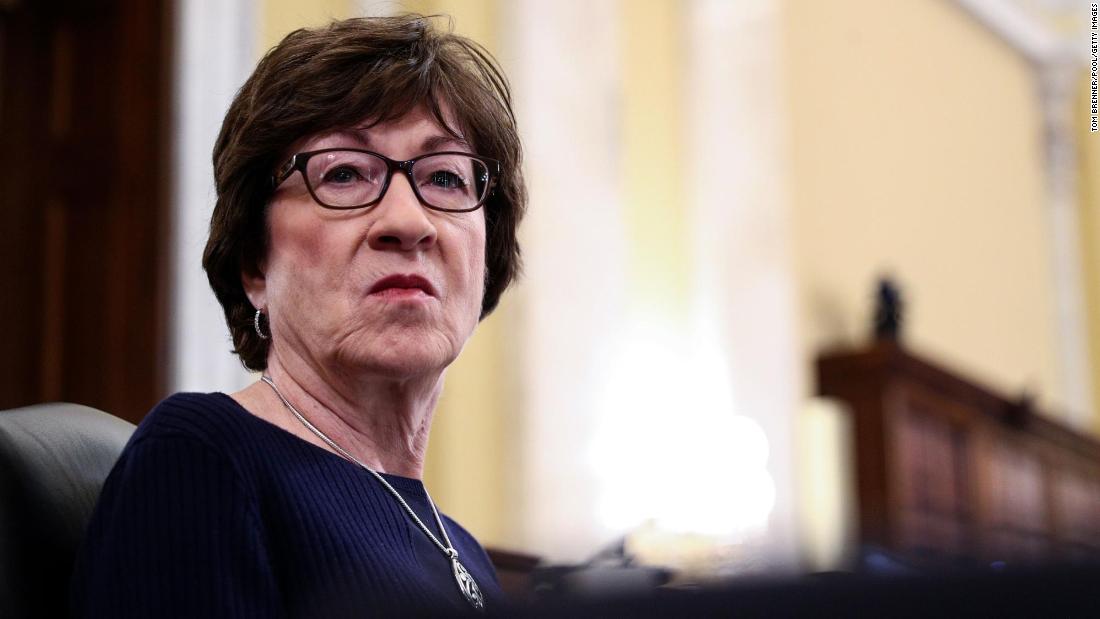
Enter US Senator of Maine Susan Collins, who routinely works to rise above the partisan fray in Congress, and she has done so once again in her announced support of the nomination of Judge Ketanji Brown Jackson to the Supreme Court. Of course, don't expect partisans on the political fringes, who dominate so much of today's political debate with their enablers in a media echo chamber that amplifies the most shrill voices, to appreciate Sen. Collins' statesmanship. No, she will be pummeled for her courageous leadership.
During the October 2013 government shutdown, I led backbench, bipartisan efforts in the House to reopen the government. It was a difficult time and legislative leaders in both parties obstructed bipartisan efforts to end the standoff. At that time some congressional Republicans recklessly followed then-freshman Senator Ted Cruz in his gambit to defund Obamacare without a coherent plan to do so, as Republican leaders caved to extreme elements in this futile effort that had no chance of success.
Democrat leaders, leveraging a political opportunity, refused to enter bipartisan negotiations to reopen government, believing Republicans would be forced to come to terms dictated by Senate Democrats and President Barack Obama. I was infuriated and frustrated by Republican recklessness that caused the shutdown in the first place and Democratic political calculation that undermined bipartisan attempts to reopen the government.
It was then that Sen. Collins called me and asked how she could help. She did not push a "Senate knows best" solution. Instead, she listened and provided thoughtful counsel and desperately needed support. This is what the senator does; she helps.
Last year she entered the fray with House and Senate problem solvers from both parties to enact the most consequential legislative achievement of this Congress that will improve roads, bridges, water systems, ports, rural broadband and more thanks to the bipartisan infrastructure law.
Throughout her distinguished Senate career, Collins has acted as a legislative bridge builder, always ready to go where most others fear to tread. She is refreshingly open to working in good faith with others who may have perspectives different than her own. Not surprisingly, Maine voters have rewarded the good Senator by electing her five times to the Senate by wide or comfortable margins in a state that leans Democratic.
In 2020 we were told regularly Sen. Collins was on political life support, that she had finally gone too far by antagonizing the soft voters she needed to prevail in the Pine Tree State. Virtually every 2020 public poll had her trailing by substantial margins -- except the one that mattered on Election Day, winning by roughly 9 points and well outside the margin for error. Simultaneously, Joe Biden won Maine by 9 points over Donald Trump, whom Collins voted later to convict during his second impeachment in the aftermath of the January 6 attack on the Capitol.
So it should come as no surprise that Sen. Collins stepped up on Judge Jackson's nomination. Her simple eloquence met the moment. "In my view, the role the Constitution clearly assigns to the Senate is to examine the experience, qualifications, and integrity of the nominee. It is not to assess whether a nominee reflects the ideology of an individual Senator or would rule exactly as an individual Senator would want," she said in a statement last week. And she's right.
Collins understands the Senate's advise and consent role as America's founders intended. She further elaborated: "In my meetings with Judge Jackson, we discussed in depth several issues that were raised in her hearing. Sometimes I agreed with her; sometimes I did not. And just as I have disagreed with some of her decisions to date, I have no doubt that, if Judge Jackson is confirmed, I will not agree with every vote that she casts as a Justice. That alone, however, is not disqualifying. Indeed, that statement applies to all six Justices, nominated by both Republican and Democratic Presidents, whom I have voted to confirm." Bravo.
Collins has voted for six of the nine current justices serving on the United States Supreme Court, four Republicans and two Democrats. These days it is rare for a senator to defer to the president of the opposite party on a Supreme Court nomination. Most senators typically disqualify a Supreme Court nominee of the opposing party on ideological grounds, even as they acknowledge the strong qualifications and good character of the nominees themselves.
Some would suggest Collins is a throwback to a bygone era of bipartisan comity. To the contrary, she represents the future if the Senate and country are ever able to move beyond the partisan trench warfare that defines our times. What has changed over the years is the number of pragmatic centrists in Congress, which have shrunk, along with the number of competitive House districts, while those who embrace the party line have grown.
No doubt Collins' critics on the right and left fringes will not be sending her thank you notes for supporting Judge Jackson, for whom she previously voted to serve on the US Court of Appeals last summer.
Who can ever forget the hyperventilating of her detractors during the Brett Kavanaugh Supreme Court confirmation process? Collins was smeared and called a "gender traitor," "rape apologist" and other nasty things by partisan hacks, flacks and hypocrites. They simply could not accept her refusal to disqualify then-judge Kavanaugh over a 35-year-old allegation of sexual misconduct at a high school party somewhere in suburban Washington -- which Kavanaugh denied. Collins was merely applying the same discerning judgment about the characteristics that should serve to disqualify a nominee for the Supreme Court.
Get our free weekly newsletter

Sign up for CNN Opinion's newsletter.

Join us on Twitter and Facebook

But, adding insult to injury, Collins, whose long career is marked by a strong record in support of women's reproductive rights, was slammed by the Planned Parenthood Action Fund for her Kavanaugh vote with this appreciative line: "It's clear that she [Collins] has turned her back on those she should be championing." I suppose it's merciful they didn't call her a gender traitor.
The great challenge facing Congress and America is the demand for conformity by the self-designated chiefs of the ideological purity police on the left and right, who cannot abide non-conformists like Sens. Collins and Lisa Murkowski, Joe Manchin and Kyrsten Sinema. What's worse, the purists always demand members of their own tribe adhere to litmus tests and expect members of the opposing party to show courage by breaking ranks to support the purists' position.
The purists, of course, never have the courage to break ranks, preferring the safety of following the herd -- even when the herd is mindlessly heading for a cliff.
America needs more leaders with guts, and we have one in Sen. Susan Collins. The nation would be well served if we had several dozen more like her in office.

Adblock test (Why?)


"Opinion" - Google News
April 04, 2022 at 02:51AM
https://ift.tt/qHLz4Db

Opinion: US needs more leaders with the guts to stand up to purists on the left and the right - CNN
"Opinion" - Google News
https://ift.tt/8oztfnj
Shoes Man Tutorial
Pos News Update
Meme Update
Korean Entertainment News
Japan News Update

OPINION: Greek Life is not what you think - Arizona Daily Wildcat

When people think of the “college experience,” oftentimes the first things that come to mind are beer bongs and shots of cheap vodka on a Saturday night. With that comes people's negative stereotypes of fraternity parties and Greek Life. 

I hear people say all the time that students in sororities or fraternities are more concerned about when the next party is than they are about their seven-page paper due Monday morning. Because of this stigma around party culture, the numerous benefits of the Interfraternity Council and Panhellenic Association are frequently overlooked.

There are many aspects of being part of a sorority or fraternity that are hard to see from the outside. For example, the greek community focuses heavily on community service and philanthropic involvement with the events each house organizes every semester. What many people don’t know is that each fraternity and sorority supports a specific cause and thousands of dollars are raised each year for organizations like Girls on the Run, Alzheimer’s Association, Ronald McDonald House and so many more. 

When I was coming into college, getting involved through Greek Life was something that really appealed to me because I knew I would have the opportunity to give back to my community and be part of something bigger than myself. After only one semester at the University of Arizona, I feel that sense of community more than ever. Every house supports one another by showing up to events and contributing to these philanthropic fundraisers. 

MORE FROM THE DAILY WILDCAT

“Participating in other chapters’ philanthropy events and events around Tucson was one of my favorite things in the entire world,” said Devin Douglas, former president of the sorority Gamma Phi Beta. “It’s so fun being able to do activities that simultaneously benefit philanthropies. You’re having fun while raising money for a great cause; it’s one of those things that really brings everybody together.” 

The organization and turnaround time that the greek chapters achieve with their events is extremely impressive, especially since all the houses are run by a group of full-time students mostly under the age of 22. This leads to the many leadership opportunities that are offered by each chapter, which teach members vital skills that they can carry into their professional life. 

Reflecting on her time as chapter president, Douglas connected the similarities that running a sorority has to running a business. 

“You have to make sure you’re spending wisely and you’re handling your members wisely. You learn how to interact with a very wide range of people and how to handle different situations,” Douglas said. 

This experience is something that will benefit young adults in any career they choose after college. Learning how to work under pressure and making challenging decisions at a young age are skills fraternity and sorority members are lucky to gain. 

The sense of togetherness within all the greek chapters is another thing I noticed right away. People join a sorority or fraternity because they want to find like-minded people to spend their time with. Jackson Byrne, a freshman pre-business student, just joined the Sigma Phi Epsilon fraternity and talked about the time he spends with his brothers. 

“There are times because you’re in the same house people would feel like you have to hang out with them, but every day we choose to hang out with each other outside of the house,” Byrne said. 

This does not just include partying either. Byrne said members of the fraternity spend time studying together in the library, pushing each other in the gym and grabbing a bite to eat on University Boulevard. Because of this, you can build a strong bond with everyone in your chapter, outside of the loud party scene.

Above all else, the most beneficial aspect of joining Greek Life is the plethora of academic support given by not only the individual chapters but the IFC and Panhellenic Association as a whole. Each chapter holds its members to a high academic standard, such as maintaining a high GPA and participating in study hours and there are specific steps that must be taken if that standard is not met. 

Jenna Hartman, a freshman pre-business student in Kappa Kappa Gamma, is part of the academic board for her chapter. Her role is to meet with members who are falling below Kappa’s GPA requirement and create an academic progress plan for each member. The sole purpose of this is to provide extra help to the women of the sorority so they can thrive academically. 

“Greek Life has a lot of extra resources that I would not be aware of if I was not in it,” Hartman said.

This is because when you are connected to so many people with the same goal, you have access to support you would otherwise have to seek out.

After having such a positive experience being part of the greek community, I would encourage anyone who has thought about joining but didn’t, to give it a chance. Once you look past the stereotypes of Greek Life, you can better understand that there is a lot more to being part of a sorority or fraternity than partying. Community involvement, leadership development and academic support are just the beginning.


Follow Isabelle Freguia on Twitter


96EB3606-39EB-416E-8160-D33D3AA869EC.jpeg
Isabelle Freguia

Isabelle Freguia is a freshman at the University of Arizona majoring in journalism with a public relations minor. She is originally from Seattle but moved to La Quinta, California over the summer. She is very passionate about writing and hopes to work for a fashion magazine one day!

Adblock test (Why?)


"Opinion" - Google News
April 03, 2022 at 10:31PM
https://ift.tt/xSntELc

OPINION: Greek Life is not what you think - Arizona Daily Wildcat
"Opinion" - Google News
https://ift.tt/8oztfnj
Shoes Man Tutorial
Pos News Update
Meme Update
Korean Entertainment News
Japan News Update

Opinion | The Oscars moment we should be talking about - The Washington Post

At first glance, I was relieved to see Michele L. Norris’s March 30 op-ed, “Oscars in the spotlight for all the wrong reasons.” I thought, finally, a piece about the truly inspirational moment at the Oscars: when Lady Gaga and Liza Minnelli took the stage.

After witnessing the juvenile playground antics of Chris Rock and Will Smith, we were reminded of the grace and dignity human beings can display. Lady Gaga selflessly attributed the burst of applause that erupted upon their entrance to Ms. Minnelli, “a true show business legend.” Then she allowed Ms. Minnelli to present an Oscar with poise and dignity. “I got you,” Lady Gaga assured her.

This was the moment to spotlight — the moment we witnessed the best in humanity. Our capacity to be kind and generous, our ability to protect each other, our calling to show grace.

Randi Adleberg, Springfield

Adblock test (Why?)


"Opinion" - Google News
April 03, 2022 at 10:42PM
https://ift.tt/OdGbeR9

Opinion | The Oscars moment we should be talking about - The Washington Post
"Opinion" - Google News
https://ift.tt/8oztfnj
Shoes Man Tutorial
Pos News Update
Meme Update
Korean Entertainment News
Japan News Update

Opinion: State Democrats' focus on governing pays off - Yakima Herald-Republic

Though polls and pundits are predicting nationwide doom for Democrats in this fall’s elections, leaders of the Washington Legislature’s majority party don’t seem worried.

In separate talks with the Yakima Herald-Republic’s editorial board last week, Democratic leaders of the House and Senate say they’re focused on governing, not politicking. And coming off an ambitious 2022 session, they can point to a stack of legislation that backs up their story.

They can also point to the fact that much of what they accomplished in the jam-packed 60-day session came with bipartisan support.

“We always try to be bipartisan,” Senate Majority Leader Andy Billig of Spokane told us Wednesday, “that’s the first choice.”

With a 29-20 Democratic majority in the Senate and a 57-41 advantage in the House, however, they don’t really have to be.

Still, with Ds in the driver’s seat and bipartisan commitment to a number of overarching state goals — including efficient transportation, quality education and public safety — lawmakers can rightly take credit for a list of accomplishments that many of them are calling “historic.”

The list is long, but Democrats are particularly proud of a few that have already generated a great deal of public discussion:

  • Expanding by $5 billion the state’s revised budget to $64.1 billion. Among other things, that helps extend state much-needed resources to school districts around the state for nurses, counselors and other non-teaching help.
  • A sweeping 16-year, $17 billion transportation package will pay for building, repairing and roads and bridges — including several big-ticket projects in the Yakima Valley. It also includes money for improving rail service, public transit, and numerous bike and pedestrian projects.
  • The Legislature also revised earlier police reforms to address the concerns of law enforcement leaders who claimed those efforts to safeguard citizens’ civil rights had brought confusion and unacceptable risks to keeping the peace. New legislation seeks to balance the concerns of police and social activists.

“I think we did all right by folks,” House Whip Marcus Riccelli of Spokane said during Tuesday’s session with the YH-R editorial board.

Given the political leanings on this side of the state, though, we suspect a lot of voters might be skeptical of Riccelli’s assessment. While many folks around here are grateful for the state’s help with schools, roads and other necessities, others recoil at new rules for gun safety, higher fees instead of lower taxes and an emphasis on greener energy that some see as excessive.

Therein lies the dilemma of being an elected official these days: How to persuade the public that your party — that either party, for that matter — has the public’s best interests at heart? And that strict party-line voting probably isn’t in anyone’s best interests in the long run?

We think Sen. Marko Liias, D-Mukilteo, is on the right track. No matter what party gets the credit, he said during Wednesday’s talk, public trust in the state is the most important objective.

“I want people to know that their state government is there,” he said. “I want people to know: We’re focused on making progress.”

You might not like everything the Legislature accomplished this session — we’re not sure we do, either — but we’re encouraged whenever we see governing win out over politicking.

From where we sit, it looks like a lot of governing got done this time around.

Adblock test (Why?)


"Opinion" - Google News
April 03, 2022 at 03:00PM
https://ift.tt/Azo8Jkv

Opinion: State Democrats' focus on governing pays off - Yakima Herald-Republic
"Opinion" - Google News
https://ift.tt/8oztfnj
Shoes Man Tutorial
Pos News Update
Meme Update
Korean Entertainment News
Japan News Update

Saturday, April 2, 2022

Commentary: Laying the groundwork for civil discourse | Columnists | fredericksburg.com - Fredericksburg.com

israelob.blogspot.com

The current state of civil discourse makes one point of agreement clear: there is virtually no civil discourse.

The focus is no longer on resolving issues but using them to discredit and marginalize those with whom we do not agree. Unfortunately, we are seeing more of this at the local level. How do we as a community get beyond this attitude and refocus on arriving at solutions to the issues of the day?

Before a conversation can begin we must make information available for the public to consider. Information posted in the media usually relates to public meeting schedules. These provide basic information but little context and sometimes are hard to understand. In most cases the public is not provided relevant information until the night of the hearing. This eliminates any semblance of public discourse. Only when the public has an opportunity to review all relevant information can we expect to have a constructive dialogue.

Let’s start with newsletters and information sheets included with utility bills. Let’s put together podcasts, or use Facebook live to provide updates. Survey Monkey could be used to help determine what information may be needed or clarified. These are a few things local government could use to better prepare the community. The public must be allowed the time to digest information before having to comment on it.

People are also reading…

The local press must also expand their efforts to provide information. It is not enough to just report on a vote after the fact. The media should inform and encourage the community to participate before a vote. Just quoting officials is not enough. Asking follow-up questions to officials so they will expand on, or defend their statements, provides more insight on the issue at hand. Give citizens a chance to get beyond the superficial.

Of course, an even better approach is for elected officials to go directly to the public.

There are many civic and community organizations—neighborhood associations, rotary clubs, parent/teacher groups, and professional organizations. They are all venues that provide elected officials the opportunity to directly engage the public. Elected officials must be prepared to meet outside their chambers, at times convenient to those they serve, to put the issues and options forward, to listen, and receive community input in a more informal setting.

These are also opportunities to take advantage of the expertise within our community. All parties need to be given the opportunity to participate, and all must give others’ positions the consideration they expect for theirs.

Diversity of views is necessary if we are to successfully overcome challenges. Different views present us with concepts we may not have considered, test our positions, and help us refine them. By addressing concerns and answering questions from others who may take issue with our position builds understanding and consensus. To paraphrase Thomas Paine, it is through argument and debate the best solutions come forward. As long as they are focused on the issues

Regardless of race, gender, age, or viewpoint, everyone has something to contribute. We must be prepared to listen, to ask questions, and consider alternatives. We can disagree but should do so respectfully. Explaining why without derogatory adjectives. The issues are up for discussion not the speaker. The democratic process is not supposed to be about victory or defeat; but rather about coming to a community consensus on the solutions for the challenges we face.

There will never be, nor should we expect complete agreement. After a decision is made, participants should feel they were provided with the necessary information, they were listened to with respect, had their concerns addressed and their questions answered, and they at least understand the final decision.

It is through this process that we can move forward as a community and manage the challenges ahead.

Matthew J. Kelly is an at-Large member of the Fredericksburg City Council.

Adblock test (Why?)


"discourse" - Google News
April 03, 2022 at 09:30AM
https://ift.tt/1niy8gH

Commentary: Laying the groundwork for civil discourse | Columnists | fredericksburg.com - Fredericksburg.com
"discourse" - Google News
https://ift.tt/l6VYFZr
https://ift.tt/ORBJGu2

Opinion: Sasha's story brought the Ukraine war home to me in a shattering way - CNN

Margo Gontar is a Ukrainian journalist who founded the 7,62 project, which tracks Russia's military aggression in Ukraine. She also cofounded the StopFake project in 2014 to tackle Russian disinformation and propaganda. The views expressed in this commentary belong to the author. View more opinion at CNN.

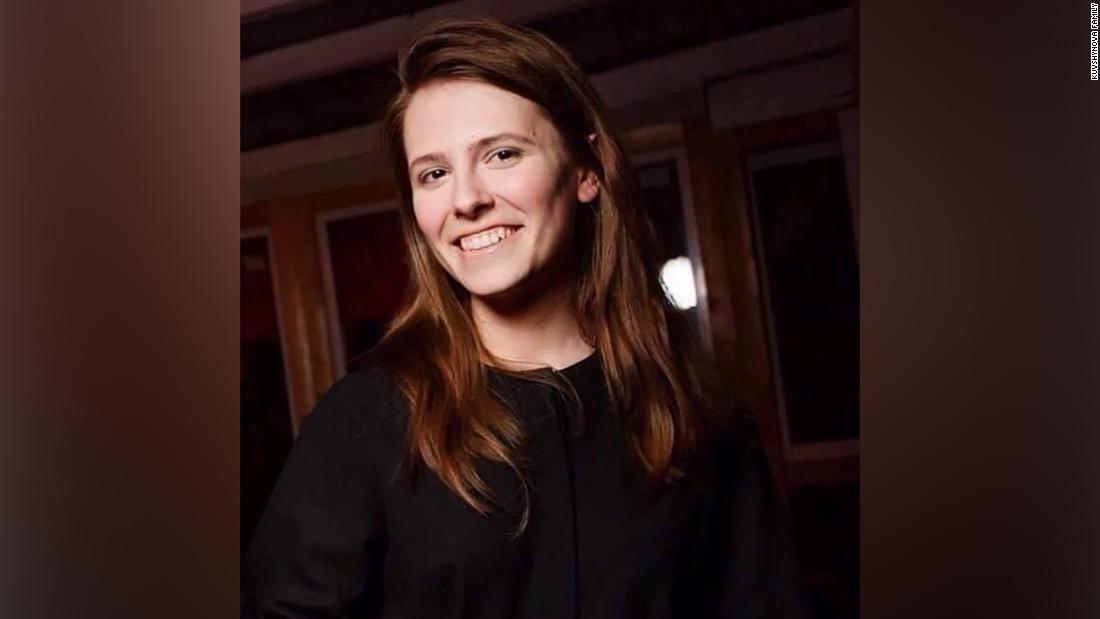
(CNN)I last spoke to Oleksandra Kuvshynova -- or Sasha, as I knew her -- on March 5.

As a Ukrainian journalist working as a consultant for Fox News, she told me that she was so busy and tired covering the Russian invasion that she could barely open her eyes in the morning.
She sent me a selfie that showed her wearing a helmet and bulletproof vest and updated me on her whereabouts. When we last talked, Sasha had just managed to leave the city of Irpin, which had been devastated by Russian attacks. She told me she was lucky to get out of the city safe and sound.
Despite the danger she faced, she cracked a few jokes and sent me memes because "you can't get through it without humor," as she once said.
Nine days later, on March 14, Sasha, along with Irish news cameraman Pierre Zakrzewski, were killed when their vehicle came under fire in a suburb of Kyiv. Fox News Correspondent Benjamin Hall was also injured in the attack.
When I first learned about her death, I couldn't pull my strength together. In the initial hours, disbelief overwhelmed me.
I wanted to pick up the phone and call her.
My mind told me a story I wanted to hear: I would dial her up, and she'd laugh into the speaker and tell me everyone made a mistake. We would arrange to have coffee, and she'd tell me about another escape, another brush with Russian shelling in her quest to do what journalists do -- bring the story to the world.
But then the reality came flooding back, and I knew silence is all I'd get on the other end.
Then came the questions. People kept calling, asking if I knew Sasha, and I realized I did not have a single bad word to say about her. She was bright, beautiful, smart, funny Sasha, who made movies and loved poetry and film. She was always hunting down the facts, boldly joining the Fox News crew to report from the front lines.
It was always nice to spend time with her -- to do business or to have a glass of wine. To just be around her. She was only 24.
Before this, I never understood how people write memorials to their loved ones, but now it feels somehow like the only way to make it through.
It feels vital to capture the memories I have of Sasha: the woman whom I worked on music projects with, drank wine with in our favorite bars; the friend who inevitably became what all Ukrainian journalists must now become -- a war reporter. And because of the war, this light is now gone.
As surreal as it is to think about, writing about my friend's death is just the latest writing I'm doing on this war. Much of my professional life as a journalist has involved chronicling Russia's attacks on my people. I cofounded Stop Fake, a fact-checking organization that was launched in 2014, when the war in Ukraine was still limited to the east. More recently, I've gone from reporting on the Russian troop build-up along the Ukrainian border to covering the daily deluge of war.
And Ukrainian journalists, just like their foreign colleagues, are working hard every day -- in an environment that grows increasingly hostile -- to ensure the world gets a clear picture of what's happening here.
Sadly, Sasha and Pierre were not the only journalists killed in this war. Yevhenii Sakun, a Ukrainian camera operator, died on March 1 when the TV tower in Kyiv was struck by Russian shelling. Brent Renaud, an American documentarian, was killed in a shooting that also injured journalist Juan Arredondo. Russian correspondent Oksana Baulina, who was covering the war for an independent investigative news site, died in Kyiv. And the famed Ukrainian photojournalist Maks Levin was found dead in a village north of Kyiv on Friday, after he was reported missing for more than two weeks, according to Ukrainian officials.
Sky News' chief correspondent Stuart Ramsay also described how he and his team were attacked near Kyiv on February 28. They were ambushed by a saboteur Russian reconnaissance squad, they were later told.
"It was professional, the rounds kept smashing into the car -- they didn't miss", Ramsay recounted.
And then there are those held captive. A Ukrainian journalist Victoria Roshchyna was held by Russian forces in occupied Berdyansk before she was released. A Radio France fixer and interpreter was taken prisoner by Russian troops on March 5 and held for nine days, according to Reporters Without Borders (RSF). During this time, his car was machine-gunned and he was left in an icy cellar, beaten with rifle butts and steel bar, repeatedly tortured with a knife and electricity and subjected to a mock execution and food deprivation for 48 hours, RSF reported.
In a number of cases, it seems that Russians are deliberately targeting journalists, as Mstyslav Chernov of the AP chillingly chronicled from Mariupol.
As an adviser to the Mariupol mayor told me, Russians may be continuously shelling the city in part to prevent people -- including journalists -- from going outside to document what's happening and sharing it. Meanwhile, Secretary of State Antony Blinken said the US is "looking very hard" at whether Russia is deliberately targeting journalists, he told NPR two weeks ago.
And while many brave reporters from around the world have come to report on the war, it's personal for the Ukrainian journalists. Many of us are learning in real time how to cover Russian forces smashing our beautiful houses, destroying our lovely cities. How to cover Russian forces killing our friends.
This war has gone on for more than a month now, and the terrifying and dreadful and sickening dances all around us. For Ukrainians, we've already had front row seats to more than 800 hours of horror, with no end in sight. We don't know when an attack will hit the places we love and remember-- the coffee shops where we used to gather with friends, the corners where we had our first kisses or the parks where we played as kids.
We don't know when the shelling will hit our loved ones, or when it will hit us.
All the scary stories and horror movies we once consumed now seem harmless, fading away in the presence of this real horror: what one human can do to another.
In the weeks before Sasha's death, everything felt surreal. That's just what your brain does: It pretends all this isn't quite real.
You know it is. But you also can't quite believe it. There's a threshold, and it protects you.
It's as if there were a thin glass between you and this enormous, overwhelming suffering. It's still right there -- you can see the wave of devastation, ready to swallow you, but it's slightly distant. If you stretch out your hand, it's almost as if you can touch what's really happening.
But the glass still holds it back, and the overwhelming feelings remain at bay.
And it actually works pretty well.
Until your loved one dies.
The denial is strong, like a thought so painful my mind won't allow itself to follow it all the way to the end.
I know rage will come, too.
Somewhere there will be more grief.
And then the acceptance will come.
Maybe.
But I know that the emptiness I feel -- emptiness where Sasha was -- as well as the feeling that this should've never, ever happened, not here nor anywhere else -- this feeling will never leave.
And for that, I will never be able to forgive -- because not only is Sasha dead, that thin glass protecting me has shattered.
Forever.
My brain can't protect me anymore. Like it can't protect all the others mourning their loved ones killed in this war Russia started in Ukraine.
This belief in the good of humanity can't be restored the way you restore buildings. Nor can it be rebuilt the way Italy plans to rebuild the Mariupol Drama Theater.
I can't bring Sasha back.
Get our free weekly newsletter

Sign up for CNN Opinion's newsletter.

Join us on Twitter and Facebook

At the end of our last chat, she told me how tired she was and how she just wanted some pancakes.
A little later she wrote: "You will not believe. I went down for breakfast -- and there they were! Pancakes!" She wrote then that she smiled like a happy child for the rest of the day.
When I learned she was killed, my first weird thought was: That place where she is right now -- whether it's heaven or Valhalla -- better have some damn good pancakes.
Sasha died attempting to show the world the truth of what's happening every day in Ukraine. And while her job is done, now it's our job to continue the fight.

Adblock test (Why?)


"Opinion" - Google News
April 03, 2022 at 03:52AM
https://ift.tt/TwkH1CA

Opinion: Sasha's story brought the Ukraine war home to me in a shattering way - CNN
"Opinion" - Google News
https://ift.tt/38ehPov
Shoes Man Tutorial
Pos News Update
Meme Update
Korean Entertainment News
Japan News Update

Search

Featured Post

I just paid $9.99 for a carton of 18 eggs. Will prices ever drop? | Opinion - Sacramento Bee

[unable to retrieve full-text content] I just paid $9.99 for a carton of 18 eggs. Will prices ever drop? | Opinion    Sacramento Bee ...

Postingan Populer