Rechercher dans ce blog

Sunday, October 30, 2022

Opinion: Obama just gave Democrats their perfect closing message - CNN

Editor’s Note: Dean Obeidallah, a former attorney, is the host of SiriusXM radio’s daily program “The Dean Obeidallah Show” and a columnist for The Daily Beast. Follow him @DeanObeidallah. The opinions expressed in this commentary are his own. View more opinion on CNN.

CNN  — 

Former President Barack Obama took to the road this weekend to help Democratic candidates in the key battleground states of Michigan and Wisconsin. Obama served up the perfect closing question for voters: “Who will fight for your freedom?”

Dean Obeidallah

The answer clearly is the Democratic Party, and the former President delivered that message, pointing to threats to reproductive rights and same-sex marriage by some Republicans.

Voter turnout is traditionally considerably lower in the midterms, so the top priority is getting your political base out to vote. The 2018 midterms had a record turnout of 53%, but compare that to the more than 66% who turned out for the 2020 presidential election.

With little over a week to Election Day, Democratic leaders and strategists are searching for the most effective way to inspire voters to cast a ballot for their candidates. Some have argued Democrats should focus on the economy, which many polls show is a top concern among voters.

But in an impassioned plea on my SiriusXM show last week, the always blunt Rick Wilson, co-founder of the Lincoln Project super PAC, urged Democrats to “scare the sh*t out of voters about what Republicans are going to do, because what they are going to do is scary as sh*t.”

Both messages certainly resonate. But the one that seems to move so many Democrats — as I’ve repeatedly heard from listeners to my show — is what Obama told crowds Saturday in the Midwest as well as Friday in Georgia: Democrats are fighting to save our freedoms from extremism within the GOP.

California Gov. Gavin Newsom highlighted this theme months ago with a headline-grabbing ad slamming Republicans, especially Florida Gov. Ron DeSantis.

In the ad released on July Fourth, Newsom told Florida voters, “Freedom is under attack in your state.” He urged Floridians “to join the fight — or join us in California, where we still believe in freedom: freedom of speech, freedom to choose, freedom from hate and the freedom to love.” Newsom closed his appeal with the words, “Don’t let them take your freedom.”

When that ad first aired, it received a tsunami of praise from Democrats online and from my listeners. Just last week, I replayed that ad on my show, and again listeners responded with how powerful they thought it was and urged Democrats to embrace it. Then came Obama’s speeches Saturday doing just that.

Obama implored the crowd at his first stop in Michigan: “Who will fight for your freedom? Is it a bunch of Republican politicians and judges who think they should get to decide when you start a family or how many children you have, who you marry or who you love?” He then added, “Or is it leaders like (Michigan Democratic Gov.) Gretchen Whitmer who believe that the freedom to make these personal decisions belong to every American, not politicians in Washington?”

A short time later, at a rally in Milwaukee, Obama again posed that question while flanked by Wisconsin Democratic Gov. Tony Evers and Democratic US Senate candidate Mandela Barnes: “Is it Republican politicians and judges who think they should get to decide when you start a family or how many children you should have, or who you marry or who you love?” Obama continued, “Or is it Democratic leaders who believe that the freedom to make these most intimate personal decisions belong to every American, not politicians, mostly men, sitting somewhere in Washington?”

The 44th President then put it pointedly: “That’s the choice in this election; that’s what you have to decide.”

Obama did address the challenges of inflation and the economy. After acknowledging the pain caused by rising prices, he noted, “Who’s going to do something about it? Republicans are having a field day running ads talking about it, but what is their actual solution to it?”

Obama pointed out that inflation is a global issue – not a uniquely American one – as a result of problems caused by the pandemic and Russia’s war with Ukraine. There’s no easy solution because if there were, leaders of each country would’ve reduced inflation already.

Get our free weekly newsletter

Recent polls find voter interest in this election is on the higher end for a midterm. But Democrats still must energize their base. Saying inflation causes pain without offering a solution doesn’t get anyone to the polls. But doubling down on extremists in the GOP coming for your freedoms does move people.

If Democratic candidates are in search of a closing message that will invigorate their voters, they should follow the lead of Obama, twice elected as President.

Make it clear to voters that Democrats will fight for your freedoms. After all, inflation is temporary, but losing your freedom may be permanent.

Adblock test (Why?)


"Opinion" - Google News
October 31, 2022 at 06:24AM
https://ift.tt/JVOaCfR

Opinion: Obama just gave Democrats their perfect closing message - CNN
"Opinion" - Google News
https://ift.tt/hABSF34
Shoes Man Tutorial
Pos News Update
Meme Update
Korean Entertainment News
Japan News Update

Bare-Bones Religious Freedom - Public Discourse

israelob.blogspot.com

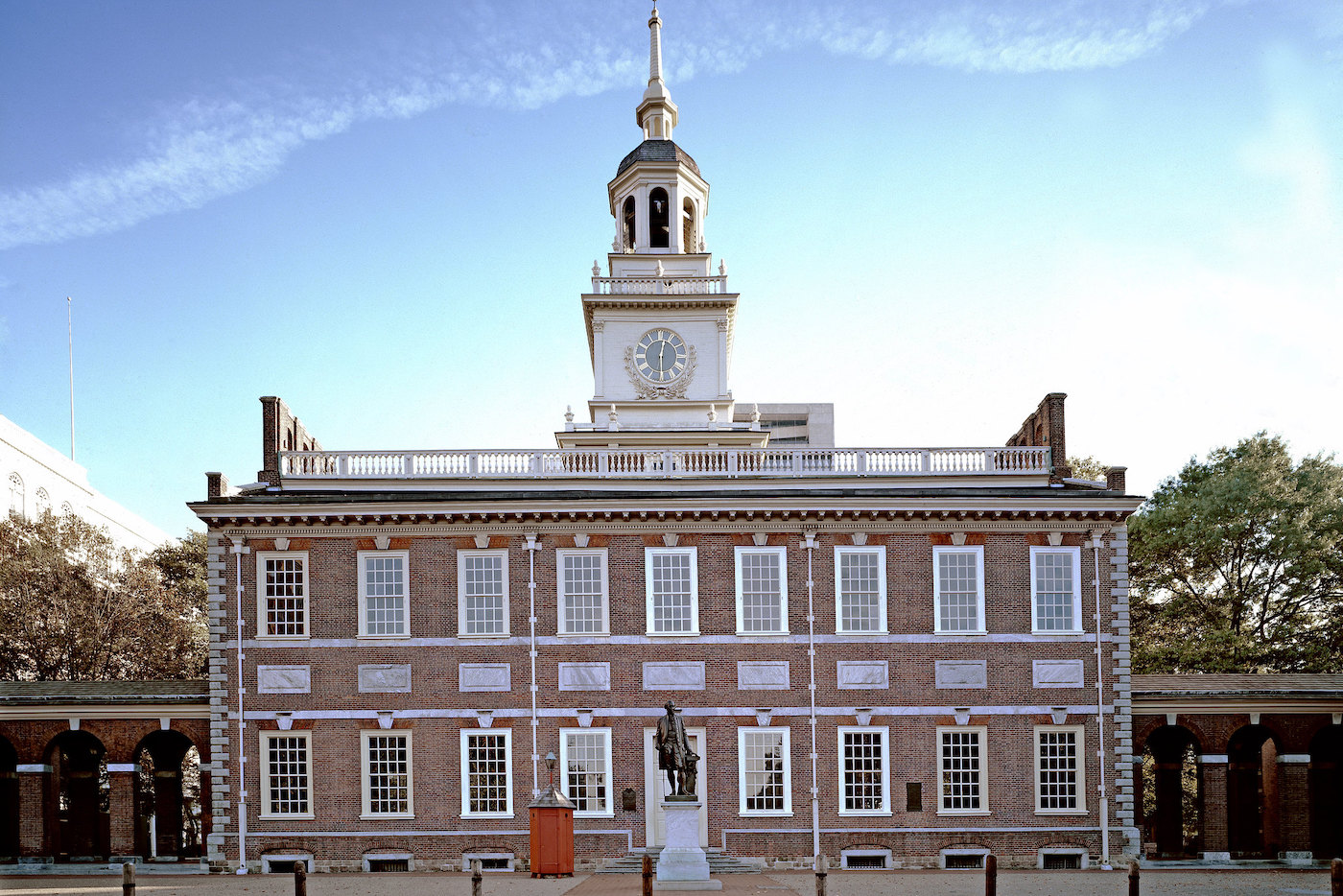
Notre Dame professor Phillip Muñoz’s “natural rights” account of religious freedom generates prescriptions that will be satisfying to nobody—not even, it seems, to himself. The minimalist First Amendment defended in Muñoz’s Religious Liberty and the American Founding (2022), would forbid governments to act like or delegate power to churches or to interfere with “worship as such.” No meddling with the Mass “as such.” Beyond those strictures, governments would be constitutionally free to fund and favor religion, or to restrict and discriminate against religion. The Christian baker who objects to celebrating a same-sex wedding would find no protection in Muñoz’s First Amendment. Indeed, the Constitution would not even protect the Catholic Church from liability under a general antidiscrimination law for its male-only priesthood.

Hardly anyone will find these outcomes attractive, and Muñoz himself seems not especially happy with them either. Muñoz is not at all hostile to religion or religious freedom, and his interpretation allows legislatures to provide broader protections. He embraces the constitutional prescriptions because he believes a faithful interpretation of the Constitution compels them. Muñoz’s central premise is that the Constitution should be interpreted according to the “natural rights” logic that was prevalent in the Founding period; and he tries to follow this logic to its conclusions, come hell or high water. His unappealing prescriptions reflect a kind of courageous integrity.

I admire that integrity, but I also think it is profoundly misguided. In a short review, there is no way to do justice to the scope and intricacy of Muñoz’s account, so I will try only to explain in simplified terms where I think the central error lies. Before undertaking this mostly critical discussion, though, I must acknowledge (too summarily, alas) the book’s considerable virtues. Muñoz’s account exhibits impressive scholarship; it provides a lucid explanation of the Founders’ natural rights thinking; and the examination of constitutional texts is methodical and informative. The analysis of the legislative history of the Establishment Clause is as meticulous as any I have seen.

These are notable accomplishments. And yet . . .

Religious Freedom As a (Narrow) Natural Right

Suppose a scholar were to show that the authors of an ancient legal document were deeply committed to, say, astrology. That would be an interesting historical fact, and it conceivably might shed light on the document, even if we now regard astrology as nonsense. But we may be skeptical if the scholar proceeds to argue that those authors misunderstood their own document in places because they misapplied astrological principles. And we will be more skeptical still if the scholar goes on to argue that we should resolve current controversies under the still authoritative document by extending the authors’ (spurious) astrological reasoning to the present, including to questions that they never considered.

This is basically what Muñoz does in this book, invoking not astrology but rather “natural rights.” He argues, for example, that although the Founding generation saw no constitutional problem in legislative prayer, they were mistaken; unbeknownst to them, their own natural rights logic condemns the practice. And he spends the last third of the book explaining what “the natural rights construction” would dictate with respect to a host of current constitutional controversies: this is where he reaches the counterintuitive prescriptions noted above.

To some readers, of course, my analogy will seem unfair, even absurd. Astrology and “natural rights” are hardly comparable.

Or are they?

As Muñoz explains, “natural rights” were thought to be derived from—or, rather, reserved in—social compacts whereby individuals agreed to exchange the unregulated but vulnerable freedom of the pre-political “state of nature” for civil society and government. A right to religious freedom was among these reserved “natural rights.” Muñoz laments that hardly anyone today thinks in “natural rights” terms; that is because, he suggests, we have lost confidence in the power of reason to lead us to sound conclusions in matters of governance and justice. Well, that may be one reason why “natural rights” thinking has gone out of fashion. But another is that such reasoning seems to lack cogency. It is like trying to answer practical legal questions by interpreting a fairy tale.

Just as a matter of history, after all, the story of a pre-political state of nature culminating in universally agreed on social compacts seems to be a flagrant fiction. And although fictions have their uses, they are also inherently squishy. The social contract is a made-up thing; consequently, I can make up a social contract that contains or excludes whatever terms I want, and so can you. So could Thomas Hobbes, and John Locke, and Jean-Jacques Rousseau—and Thomas Jefferson.

Muñoz himself emphasizes that although natural rights thinking was pervasive in the Founding generation, thinkers of the period differed radically in their understandings of what religious freedom entailed. Given the fictional nature and the consequent malleability of the social contract, this is just what you would expect. So why would anyone suppose that any genuine disagreement about law or government could be persuasively settled by hypothesizing such a contract? And why would anyone feel compelled to hold to a profoundly unattractive version of religious freedom just because that is what some rendering of the fictional social contract dictates? Why not just imagine a more friendly or sensible contract?

“Natural Rights” (Il)logic

Muñoz believes, however, that there is a kind of natural-rights logic that leads to his minimalist version of religious freedom. Here is the logic, as I understand it: Some rights that would exist in a state of nature are inherently inalienable, because it would simply be impossible for contracting parties to relinquish them. So any social contract would necessarily recognize these particular, impossible-to-relinquish rights. And religious freedom—albeit in an exceedingly narrow conception—is, or was, or would be, one such inalienable right.

And why would it be impossible for hypothetical contracting parties to relinquish this right of religious freedom? Citing seminal statements by Jefferson and Madison, Muñoz suggests that all of us necessarily believe, and cannot help believing, whatever the evidence seems to us to support. Even if you wanted to, therefore, you could not transfer power over your beliefs to government. In that sense, your aboriginal right to believe whatever you actually do believe is literally inalienable. Because this right could not be ceded away in any government-creating social contract, government accordingly can have no jurisdiction in the realm of religious belief– a realm that Muñoz quietly extends to worship.

Conversely, according to Muñoz, you could grant to government the power to regulate conduct– even religiously-motivated conduct. In a pre-political situation you might enjoy a right to conduct yourself according to your religious convictions, but that right is not inalienable. So the natural-rights logic of religious freedom provides no basis for concluding that hypothetical contractors would reserve a free exercise right covering religious conduct.

There is much that might be said about this argument. But even within the artificial confines of a social-contract thought experiment, the argument, if I have understood it correctly, seems doubly infirm. It does not support even Muñoz’s narrow categorical right covering “worship as such.” Suppose we stipulate that people have no control over their religious beliefs (a contestable point, actually), and hence could not relinquish a right to believe as they see fit. The right would cover beliefs, but it is not clear why this right would extend to worship. Governments cannot dictate what people believe in their minds and hearts, let us say; but governments surely can regulate—and often have regulated—how people worship.

On the other hand, even if a broader religious freedom right extending to conduct would not meet the impossibility-of-relinquishment requirement for inalienability, contracting parties who placed great value on religion might nonetheless choose to protect their ability not just to worship but also to live in accordance with their religious beliefs—even if such protection could not be absolute. This is not merely an abstract possibility: Muñoz explains that proponents of an “expansive liberalism” version of natural rights (including Madison) did hold that “religion itself, not just religious worship, lies beyond the legitimate jurisdiction of government.” Given the fictional nature of the social contract, who can say they were wrong?

Natural Rights and Constitutional Interpretation

In sum, the logic of natural rights need not leave us with only Muñoz’s freedom to worship. For argument’s sake, though, let us stipulate that Muñoz is right: a natural rights approach would support a narrow categorical right covering only religious worship. Even so, and even if we agree on a strict “original meaning” approach to constitutional interpretation, what is the warrant for imposing this narrow conception on the Constitution? Why couldn’t the Framers have constitutionalized more than, or less than, this meager right?

Muñoz addresses the question by trying to show that the original public meaning of the Free Exercise Clause tracked his natural rights interpretation. In doing so, he vigorously criticizes scholars like Michael McConnell and jurists like Justice Samuel Alito who have interpreted the provision more broadly to support “free exercise exemptions” or accommodations. Muñoz’s discussion is detailed and illuminating. But does he show that the broader accommodationist interpretation is mistaken? I don’t think so.

In a short review, once again, I cannot address the finer points of Muñoz’s argumentation. But consider three main sites of skirmish. First, state constitutions. McConnell and Muñoz agree that state constitutions are a valuable source for understanding Founding-era thinking. And McConnell (and Justice Alito) note that several state constitutions contained “public peace” provisions declaring that the practice of religion could be restricted only if “repugnant to the peace or safety of the State” (as the Georgia constitution put it). Such qualifications would seem to be limitations on otherwise protected religious conduct, not mere worship. Muñoz responds that several state constitutions did not contain any such qualifications. The language of these constitutions looks more categorical, and since categorical protection for religious conduct would obviously be impractical, Muñoz infers that the right must have been narrower in scope.

But this inference seems frail. Muñoz’s response does not really account for the state constitutions that did explicitly contain “public peace” limitations. And he himself repeatedly insists that the Founding generation understood that rights inherently contain their own limitations. So even for the constitutions with more categorical-looking language, it is equally plausible to suppose that these constitutions simply took the “public peace” limitation for granted and thus left it implicit.

Second, consider the legislative history of the Free Exercise Clause itself. Some of the earlier versions or proposals expressly used the term “worship,” as did Madison’s own initial version. But the final version—the one that was actually forwarded to the states, ratified, and placed in the Constitution—dropped the term “worship” and referred instead to “the free exercise thereof”—i.e., of religion. The “exercise” of religion, it would seem, is not limited to worship. In persuasively arguing against “no preference” interpretations of the Establishment Clause, Muñoz notes that some earlier versions were worded in “no preference” terms but that the final version deleted this language; and he infers that the Framers considered but rejected the “no preference” idea. The same logic would seem to apply to his own claim that the Free Exercise Clause covered only worship, not conduct or “exercise.” In other words, why is the “no preference” excision indicative of the Framers’ intent, but not the preference for the more expansive “exercise” over the more minimalist “worship”?

Third, Muñoz makes much of the fact that in drafting what became the Second Amendment, the framers considered including a specific provision exempting religious pacifists from military service: such an exemption was approved in the House of Representatives but deleted in the Senate. Muñoz thinks that Congress’s deliberation of this pacifist exemption means that the Framers didn’t build free exercise exemptions into the First Amendment. If the First Amendment already contemplated free exercise exemptions, Muñoz argues, such a provision would have been superfluous. Moreover, nobody in Congress even noted a connection between the Second Amendment’s proposed exemption for religious pacifists and the Free Exercise Clause.

But it is difficult to draw any strong inferences from these facts. For one thing, we don’t know whether anyone in Congress noticed a possible connection between the amendments; the pacifist exemption was deleted in the Senate, where debates were not recorded. So who knows? The Senate might have deleted the provision because the senators thought it superfluous.

Less speculatively, the Religion Clauses, like the Bill of Rights in general, were framed and advanced by people (like Madison), as Muñoz explains, who believed them unnecessary but were trying to appease critics and fend off calls for a second constitutional convention. So discussion of the ostensibly unnecessary provisions was mostly complacent and exceedingly brief; few legislators bothered to speak at all. Consequently, very little can be inferred from what was said or, a fortiori, from what was not said.

Given congressional complacency and the paucity of direct evidence, it may be that the historical record does not conclusively support an interpretation mandating free exercise exemptions; indeed, McConnell never claimed otherwise. But in contending that the record establishes the opposite conclusion—namely, that the framers rejected such a right—Muñoz goes beyond what the evidence warrants.

The Framers’ Achievement

Nothing in the preceding discussion should be taken as disparaging the Framers and their achievement, or even their natural rights vocabulary. Every generation needs to address issues of governance and law, and hence will look for some framework or vocabulary for thinking about such matters. By the late eighteenth century, the more Aristotelian and Thomistic approaches of earlier centuries had been discarded as unduly “scholastic”; and the purely Christian or biblical approach had become unacceptably “sectarian” in Enlightened circles. A “natural rights” approach may have seemed like an eligible replacement. Its very malleability made it useful for expressing conclusions defensible on less fictional grounds.

Moreover, although the Founders thought in “natural rights” terms, that approach hardly exhausted their intellectual repertoire. Madison’s argument for religious freedom in his seminal Memorial and Remonstrance, for example, contained explicit social contract language, to be sure; but it also contained much else that was not dependent on the fictions of a state of nature and a social contract. If the Father of the Constitution did not restrict himself to a social contract approach, why should we?

The enduring implication of calling religious freedom a “natural right,” as Muñoz explains, was that religious freedom is an inherent human right that is not merely a concession of government. We can surely applaud that conclusion without embracing, or confining ourselves to, the specific “state of nature/social contract” thinking that the Founders sometimes used to express that idea.
Adblock test (Why?)


"discourse" - Google News
October 31, 2022 at 07:00AM
https://ift.tt/tJ65Tln

Bare-Bones Religious Freedom - Public Discourse
"discourse" - Google News
https://ift.tt/k48tiHI
https://ift.tt/L86x3nj

Opinion: What's the obstacle to pushing broadband into underserved areas? The humble utility pole - The Colorado Sun

High-speed internet for every home and business in this country has been elusive for the last 20 years despite efforts by administrations on both sides of the aisle — until now. Thanks to the incredible work by the Biden Administration and leaders like U.S. Sens. John Hickenlooper and Michael Bennet, Colorado and the rest of America have a historic opportunity to close its digital divide once and for all.

The Bipartisan Infrastructure Package allocates $65 billion to connect the remaining 6% of American homes without access to high-speed internet, including some of the most rural and remote areas of Colorado. With more than 6% (approximately 350,000 residents) of Coloradans lacking access to broadband according to BroadbandNow, it is crucial that we ensure that part of this historical investment allocated for federal broadband funding be used to connect unserved Coloradans.

As an educator and Adams 12 Five Star Schools Board of Education member, I saw the first-hand effects that the pandemic had on learning for students across our state. While some students had parents or care providers who were able to stay at home with their children, helping them navigate online and at-home learning, the vast majority of parents had to continue working in order to pay their rent or mortgages and to put food on the table for their families, leaving them in a crunch to act both as a remote teaching assistant and a provider for their family.

Furthermore, too many families did not have access to broadband internet going into the pandemic. Because of this, students were forced to walk to school parking lots and connect to the school’s internet in order to continue attending school through the pandemic.

Now that we have this once-in-a-generation opportunity to level the digital playing field, we need the federal government to remove barriers to success – our elected leaders in Colorado can make sure their hard work does what it is intended by updating our nation’s outdated pole access rules. Successful, expeditious broadband expansion will require that much-needed changes be made regarding utility pole access.

Utility poles play a critical role in our communications infrastructure, and this has only grown more true with our increasing reliance on the internet. For unserved areas — communities without access to any high-speed internet infrastructure — the most efficient way to get them online is for internet service providers to attach their technology to existing poles

However, most broadband providers do not own utility poles; small utilities, co-ops, electric companies, and other entities do. Therefore, providers must get permission to access poles and pay a fee to affix their technology.

All of that would be fine if there was a functional system governing access to poles.

Unfortunately, the permitting process can be complicated and opaque. Not all pole owners share the same sense of urgency as unserved Coloradans do for broadband access. Even though providers have shown that they are willing to pay for the costs associated with their new pole attachments, in some cases, disputes arise over the cost for access. These disputes can go on for many months before they are heard and subsequently resolved.

Without a system to resolve disputes or fast-track pole access, this process can drag out, subsequently leaving unserved communities stuck without internet access and therefore the critical services they need, including remote learning, telehealth, and more.

Rural Americans are 10 times more likely to lack broadband access than those in urban areas. To put this into perspective: while 6% of the country overall lacks access to broadband infrastructure, that figure rises to more than 24 percent in rural areas. Furthermore, more than one in six people living in poverty have no internet access.

Coloradans and Americans alike need solutions that bring transparency and reform a broken, outdated system, otherwise the millions of Americans who are meant to be helped by the infrastructure bill will face the same connectivity challenges that have been holding them back for generations.

Congress can build on its admirable work on infrastructure by taking action to speed up access to poles and resolve disputes over pole replacements so we can take advantage of this opportunity to bring high-speed internet to every home and business. Many Americans are counting on our leaders in order to get connected. Congress should establish clear rules for resolving disputes between pole owners and providers quickly so that broadband infrastructure expansion isn’t needlessly delayed.

The Bipartisan Infrastructure Law holds great promise to finally get every house and business access to high-speed internet. We need leaders in Washington like Sens. Hickenlooper and Bennet to make sure we create the correct conditions that allow this law to do what it was meant to do.


Lori Goldstein lives in Westminster.

The Latest

Adblock test (Why?)


"Opinion" - Google News
October 30, 2022 at 02:30PM
https://ift.tt/CJrwVAm

Opinion: What's the obstacle to pushing broadband into underserved areas? The humble utility pole - The Colorado Sun
"Opinion" - Google News
https://ift.tt/1c4r6kd
Shoes Man Tutorial
Pos News Update
Meme Update
Korean Entertainment News
Japan News Update

Saturday, October 29, 2022

Opinion: Democrats just can't seal the deal with young Americans - CNN

Editor’s Note: Kristen Soltis Anderson, a CNN Political commentator, is a Republican strategist and pollster and author of “The Selfie Vote: Where Millennials Are Leading America (and How Republicans Can Keep Up.)” The views expressed in this commentary are her own. Read more opinion articles on CNN.

CNN  — 

Democrats have sensed that younger voters might stay home in November and have turned to “Dark Brandon” for help in times of trouble.

For those who do not know – and my own polling suggests that is most everyone reading this – “Dark Brandon” is a meme of President Joe Biden, rendered as an all-powerful hero (or villain, depending on your perspective). It started as a right-wing catchphrase before Democrats appropriated it to praise the President.

The meme reached the height of its powers, whatever those may be, when the Democratic group Building Back Together released a hallucinogenic 30-second ad earlier this month featuring the meme of President Biden, lasers coming out of his eyes and all. The message? Biden is an exciting and successful hero on issues like student loan debt. Or rather, “if you’re unenthused about Biden and the Democratic Party, please don’t be.”

I’ve sounded the alarm for years that Republicans are in trouble with younger voters and are in danger of losing them for good. This remains the case, as many polls show younger voters still have quite negative views of the GOP.

But even though Millennials and Gen Z Americans tend to lean leftward on a host of economic and cultural issues such as LGBTQ rights and the size of government, it is clear that in this midterm election, Democrats have not energized the youth vote and may not be able to count on young people as a key part of their coalition.

Voters under 30 are not exactly enamored with how things are going in America these days. Two-thirds of them say that the economy is bad, according to CBS News/YouGov polling. And accordingly, less than a quarter “strongly approve” of the job Biden is doing. Only 31% say they are “very enthusiastic” about voting in the midterms, compared to two-thirds of voters 65 and older. And only one in six say they are paying a “great deal” of attention to the midterms.

This isn’t terribly unusual. Younger voters usually drop off in larger numbers than older voters when you go from a big presidential election to a lower-key midterm. According to CNN’s exit polls, voters under 30 only made up 13% of all voters in the 2018 midterms, compared to 17% in the 2020 general election.

However, my own firm’s analysis suggests that voters under the age of 30 could fall to only 10% of the electorate in 2022 –a year where we expect overall turnout to be historic for a midterm at over 125 million votes.

While young voters aren’t likely to turn out in huge numbers to power a “red wave,” it isn’t hard to imagine them costing Democrats their majorities by staying home.

Democrats didn’t always need younger voters to win. In fact, younger voters were a relatively evenly split voter group for much of the 1990s and 2000s. But in the 2006 midterm, before then-Sen. Barack Obama (D-IL) had even announced his bid for the presidency, young voters began bleeding away from the GOP in big numbers. Exit polls showed voters under the age of 30 breaking for Democrats by a 22-point margin in House races in that election, which swept Nancy Pelosi into the speakership for the first time.

Young voters continued to oppose the GOP even in “red wave” years. The 2010 election, by all accounts a great year for Republicans, saw voters under age 30 still break for Democrats by a 16-point margin. By the time the “blue wave” of 2018 came along, we were seeing blockbuster turnout among young voters in elections that they previously sat out. Additionally, those voters broke for Democrats by an absolutely enormous 35-point margin.

But then Donald Trump lost the presidency and Biden – not necessarily a favorite among younger voters – became the leader of the nation and the Democratic Party. Even before he was the Democratic presidential nominee, his polling among young voters always left something to be desired; only one third of voters under 30 held a favorable view of him before the 2020 election.

Issues of importance to many young voters have taken a backseat and our political class continues to age. As a result, in the last few years, there has been a fascinating depolarization along generational lines. Previously, if I knew your age, I could somewhat easily make an educated guess about how you’d vote. That is less likely to be the case today, largely because young voters have become more disillusioned with Democrats.

Get our free weekly newsletter

What is especially troublesome for Democrats is that this is all happening against a backdrop of young Americans being increasingly vocal about their politics. Companies are grappling with Gen Z and Millennial employees who seem keener than ever to work for employers that align with their political and cultural worldview. I regularly hear from business leaders who know that younger consumers are voting with their wallets and opting for products and services that match their values.

If younger Americans are increasingly focused on issues and wanting change, but they aren’t turning out to vote in midterms, that represents a huge missed opportunity for those who want to see greater youth participation in politics. And in this election, it could cost Democrats their majorities.

Adblock test (Why?)


"Opinion" - Google News
October 30, 2022 at 03:56AM
https://ift.tt/uCU8zVw

Opinion: Democrats just can't seal the deal with young Americans - CNN
"Opinion" - Google News
https://ift.tt/1c4r6kd
Shoes Man Tutorial
Pos News Update
Meme Update
Korean Entertainment News
Japan News Update

Opinion: The relentless bravery of Iranian protesters is a moral test for the Western world - CNN

Editor’s Note: Frida Ghitis, (@fridaghitis) a former CNN producer and correspondent, is a world affairs columnist. She is a weekly opinion contributor to CNN, a contributing columnist to The Washington Post and a columnist for World Politics Review. The views expressed in this commentary are her own. View more opinion on CNN.

CNN  — 

On the 40th day after Mahsa Amini died while in the custody of the Iranian regime’s intrusive morality police, protests sparked by her death grew even more widespread, more defiant, more determined.

Frida Ghitis

They also added to the moral imperative for the rest of the world to do more.

In Amini’s birthplace of Saqqez, where the 22-year-old also known as Zhina is now buried, thousands of people defied the police and turned out to mark an important day in the mourning process, even as security forces fired live bullets and tear gas to stop them.

Demonstrations also took place in numerous other cities: In Isfahan, women waved black scarves in the air, chanting “Azadi, Azadi!” (“Freedom, freedom!”) in Farsi. In Shiraz, young women walked confidently on city sidewalks without veils, their hair flowing in the air in violation of Iranian law. In Amol, where authorities have already shot and killed protesters, unarmed men and women marched directly toward armed security forces, kneeled, put their hands up, and declared themselves ready to die for their cause.

While Amini’s death has become the trigger for this uprising, it is the mandatory headscarf, or hijab, that’s become its symbol, because her run-in with the morality police was so familiar to so many women. She was visiting Tehran from her hometown in Iran’s Kurdish region last month when she was detained for, allegedly, not properly wearing her hijab – a degrading experience familiar to Iranian women who are routinely harassed for minor clothing infractions. Authorities later claimed Amini died of an illness while at a “re-education center.” Her family says she was perfectly healthy.

In the weeks since, the regime has killed hundreds of peaceful protesters, among them many children and idealistic young women.

One of the teenagers whose bravery and death has become a rallying cry is Nika Shahkarami, a 16-year-old who disappeared last month after waving her hijab in the air at a protest in Tehran, and then setting fire to another headscarf in front of a small crowd.

Nika later turned up dead. Though Iran’s government and state media have claimed her death had nothing to do with the uprising, a CNN investigation found video and witness testimony showing she was hunted down by plain clothes Basiji militias – security forces utilized by the regime to crack down on demonstrators – following her protest. Eyewitnesses told CNN they saw Nika among groups of protesters being detained later that night. That was the last time she was seen, days before her battered body was returned to her grieving family. Now her mother, too, is rallying protesters.

The courage of Iranians, young and old, risking it all for a chance at freedom, is defying the predictions of jaded foreign observers. Recalling previous failed protests, many have argued that the strength of this one, with its shouts “Women, life, freedom,” was little more than a doomed social media mirage.

But the protests are persisting. Seven weeks in, they have lasted longer than any uprising since the 1979 revolution toppled the Pahlavi regime and brought to power today’s theocracy. And these protests are different from their predecessors. In 2009, the Green Movement supported a reformist candidate. In 2019, demonstrators called out harsh economic conditions.

This time, women, and the men who have joined them, are crying out, “Death to the dictator.” This is not about reform. This is about fundamental change.

Let’s be honest. From the first day of protests, this has been inspiring, but also terrifying to watch. We have seen what the Islamic Republic is capable of. We fear for the safety of these brave people, and it can seem irresponsible to encourage them. The odds, after all, are stacked against them. And yet, they have made the choice to continue the fight. They deserve our solidarity.

As a group of 12 female foreign ministers declared in an October 26 statement, “we have a moral obligation” to support this women-led movement. But the people demanding their freedom in Iran need more than symbolic backing – even if symbols matter.

The United States and other Western powers have always worried about backing Iranian protesters, because the regime already dismisses those who oppose them as tools of the West. The Obama administration allowed such concerns to muzzle its response during the 2009 protests. The Biden administration is trying to avoid making the same mistake. Already, Washington has spoken out repeatedly in support of the protest movement. On Wednesday, the State Department announced new sanctions against Iranians involved in repressing demonstrations.

That’s a good start. Anyone – regime officials, the Basiji militias, the Iranian Revolutionary Guard Corps – involved in crushing the protests should be banned from entering the US. Other countries should follow suit.

But much more can be done.

Germany this week announced that, given the situation, there can be no “business as usual,” with Iran, launching a wide-ranging diplomatic response that includes a review of bilateral trade and financial relations, support for nongovernmental organizations monitoring crimes against protestors and expanded protections for “particularly vulnerable Iranians,” among other efforts.

The US, its other allies, democracies across the world and any country that rejects the regime’s actions should join in isolating Iran diplomatically. Diplomatic relations should continue, but as long as Iran is killing protesters, relations should be downgraded. And Iran must be expelled from the UN Commission on the Status of Women. Its presence there is a travesty.

Then there’s the matter of the abandoned 2015 nuclear deal – the Joint Comprehensive Plan of Action, or JCPOA – which the Biden administration has been working to reinstate. Currently, negotiations to revive the deal, designed to delay Iran’s ability to build a nuclear weapon, are stuck because Iran keeps raising the stakes. Secretary of State Anthony Blinken has said he foresees no return to the JCPOA in the “near term.” Such phrasing likely means the goal of reviving it has not died entirely.

Get our free weekly newsletter

The US and its allies want to keep Iran from having a nuclear weapon, an unimpeachable objective. But restarting the deal could bring hundreds of billions of dollars to the regime that is currently killing peaceful protesters, arming Russia with killer drones used to slaughter innocent Ukrainians and continuing to support terrorist groups across the Middle East. At the very least, the wisdom of reviving the nuclear deal must be reevaluated.

The relentless bravery of the Iranian women, of the Iranian people, is a timely moral test for the rest of the world. They deserve more than they have received.

Adblock test (Why?)


"Opinion" - Google News
October 30, 2022 at 05:32AM
https://ift.tt/8j0U2WZ

Opinion: The relentless bravery of Iranian protesters is a moral test for the Western world - CNN
"Opinion" - Google News
https://ift.tt/1c4r6kd
Shoes Man Tutorial
Pos News Update
Meme Update
Korean Entertainment News
Japan News Update

Search

Featured Post

I just paid $9.99 for a carton of 18 eggs. Will prices ever drop? | Opinion - Sacramento Bee

[unable to retrieve full-text content] I just paid $9.99 for a carton of 18 eggs. Will prices ever drop? | Opinion    Sacramento Bee ...

Postingan Populer