Saturday, May 30, 2020

Opinion: Could coronavirus change our obsession with school testing and accountability? - The Colorado Sun
If there is one thing we’ve learned from schooling in the era of COVID-19, it is that schools serve a greater role in society than the narrow purpose of academic instruction.
Without schools, our economy would fail to prosper, and our children will not be as healthy and safe. Despite the wide range of purposes, schools are evaluated with a focus on testing — something I hope to see change when we return to school buildings next year.
Could one bright side of this pandemic be a shift in how the public evaluates schools and educators? Will this experience change our obsession with testing and accountability?

Testing is used to determine student promotion to the next grade, to group them into classes and to evaluate whether they have learned the appropriate amount of information.
Tests are also used to evaluate teachers. Colorado Senate Bill 10-191 requires that 50% of teacher evaluations be based on measures of student outcomes, such as standardized test scores.
Test scores are also used to hold schools accountable for success, as reflected in the School Performance Framework, a report card for each school and district. In the past few years, the federal government reauthorized the No Child Left Behind Act to the Every Student Succeeds Act, changing requirements to allow states to use multiple measures of student success.
Despite the opportunity to measure student success with a more holistic set of measures, most states have not taken advantage of the multiple measures, including Colorado.
Despite these accountability efforts, dissatisfaction has emerged in students, whose engagement has wavered; in families, who have opted out of tests; in teachers, who have higher rates of job turnover; and in school leaders, who have short tenures in the career.
READ: Colorado Sun opinion columnists.
Decades of accountability reform have not led to substantial differences in student learning or closed the achievement gap.
A single Colorado Measures of Academic Success, or CMAS, test score cannot capture the importance of the teacher who goes the extra mile to assuage student fears, make them feel loved or to make them laugh in times of stress.
School accountability scores don’t reflect all that leaders and teachers do to ensure kids are safe and well-fed. Educators and families have been saying this for years, but the hope is that policymakers will take this opportunity to redefine accountability to include a wider array of ways schools serve students and families.
This could be the opportunity to rethink how to evaluate the success of schools without relying heavily on a test.
In her daily Facebook live update on April 2, DPS Superintendent, Susana Cordova said this is an opportunity to not worry about seat time, attendance and grades.
She emphasized the importance of connecting with the students, easing their worries and helping them develop new routines. All of these actions are important for teachers to consider whether meeting with students face-to-face or remotely.
Similarly, Jefferson County superintendent, Jason Glass, in his message to the community announcing the transition to remote learning suggested that this was a great opportunity to focus on competency-based learning.
Competency-based learning is usually touted for being more learner-centric and for measuring learning by individual student gains rather than standardized, aggregated CMAS testing.
Already registered? Log in here to hide these messages.
Other local superintendents have echoed the sentiment that teachers and leaders must attend to students’ emotional states before engaging in learning and have seen the opportunity for innovation as a result of this unplanned disruption.
This experience has helped reveal all that schools do to support students beyond just preparing them to pass a test. CMAS standardized testing was canceled this spring.

Next year, it will be difficult to hold students accountable for passing current versions of the test, based on several months of interrupted curriculum.
It seems like the perfect opportunity for Colorado and other states to use what they’ve learned in this experience to disrupt the current system and to redefine accountability to include the whole host of purposes public schools serve in their communities and society as a whole.
Erin Anderson is an assistant professor of educational leadership and policy at the Morgridge College of Education at the University of Denver.
The Colorado Sun is a nonpartisan news organization, and the opinions of columnists and editorial writers do not reflect the opinions of the newsroom. Read our ethics policy for more on The Sun’s opinion policy and submit columns, suggested writers and more to opinion@coloradosun.com.

Already registered? Log in here to hide these messages.
The latest from The Sun
"Opinion" - Google News
May 30, 2020 at 09:58AM
https://ift.tt/2XKjX1O
Opinion: Could coronavirus change our obsession with school testing and accountability? - The Colorado Sun
"Opinion" - Google News
https://ift.tt/2FkSo6m
Shoes Man Tutorial
Pos News Update
Meme Update
Korean Entertainment News
Japan News Update
Trump's menacing message follows 1960s script - CNN
"Opinion" - Google News
May 30, 2020 at 11:13AM
https://ift.tt/2zJ6rU6
Trump's menacing message follows 1960s script - CNN
"Opinion" - Google News
https://ift.tt/2FkSo6m
Shoes Man Tutorial
Pos News Update
Meme Update
Korean Entertainment News
Japan News Update
George Floyd's Death, Protests, Coronavirus: America Is a Tinderbox - The New York Times

The last two and a half months in America have felt like the opening montage in a dystopian film about a nation come undone. First the pandemic hit and hospitals in New York City were overwhelmed. The national economy froze and unemployment soared; one in four American workers has applied for unemployment benefits since March. Lines of cars stretched for miles at food banks. Heavily armed lockdown protesters demonstrated across the country; in Michigan, they forced the Capitol to close and legislators to cancel their session. Nationwide, at least 100,000 people died of a disease almost no one had heard of last year.
Then, this week, a Minneapolis police officer was filmed kneeling on the neck of a black man named George Floyd. As the life went out of him, Floyd pleaded that he couldn’t breathe, echoing the last words of Eric Garner, whose 2014 death at the hands of New York policemen helped catalyze the Black Lives Matter movement. Floyd’s death came only days after three Georgia men were arrested on charges of pursuing and killing a young black man, Ahmaud Arbery, whom they saw out running. A prosecutor had initially declined to charge the men on the grounds that their actions were legal under the state’s self-defense laws.
In Minneapolis protesters poured into the streets, where they met a far harsher police response than anything faced by the country’s gun-toting anti-lockdown activists. On Wednesday night, peaceful demonstrations turned into riots, and on Thursday Minnesota’s governor called in the National Guard.
For a moment, it seemed as if the blithe brutality of Floyd’s death might check the worst impulses of the president and his Blue Lives Matter supporters. The authorities were forced to act: All four of the policemen involved were fired, police chiefs across the country condemned them and William Barr’s Justice Department promised a federal investigation that would be a “top priority.” Even Donald Trump, who has encouraged police brutality in the past, described what happened to Floyd as a “very, very bad thing.”
But on Thursday night, after a county prosecutor said his office was still determining if the four policemen had committed a crime, the uprising in Minneapolis was reignited, and furious people burned a police precinct. (One of the officers was arrested and charged with third-degree murder on Friday.) On Twitter, an addled Trump threatened military violence against those he called “THUGS,” writing, “When the looting starts, the shooting starts.”
Whether Trump knew it or not, he was quoting a racist phrase from the 1960s used by George Wallace, among others. The president later tried to tamp down outrage by saying he was just warning of danger — the Trump campaign has hoped, after all, to peel off some black voters from the Democrats — but his meaning was obvious enough. This is the same president who on Thursday tweeted out a video of a supporter saying, “The only good Democrat is a dead Democrat.”
The Trump presidency has been marked by shocking spasms of right-wing violence: the white nationalist riot in Charlottesville, Va., the massacre at the Tree of Life synagogue in Pittsburgh, the mass shooting targeting Latinos in El Paso. But even as the country has simmered and seethed, there hasn’t been widespread disorder. Now, though, we might be at the start of a long, hot summer of civil unrest.
So many things make America combustible right now: mass unemployment, a pandemic that’s laid bare murderous health and economic inequalities, teenagers with little to do, police violence, right-wingers itching for a second civil war and a president eager to pour gasoline on every fire. “I think we’re indeed in a moment where things are going to get a lot more tense before they get more peaceful,” said the University of Michigan historian Heather Ann Thompson, who won the Pulitzer Prize for her 2016 book “Blood in the Water: The Attica Prison Uprising of 1971 and Its Legacy.”
Already the Minneapolis protests have spread to other cities. On Thursday night, someone fired a gun near a crowd of demonstrators in Denver and more than 40 people were arrested in New York City. Seven people were shot at a protest in Louisville, Ky., where crowds had turned out to demand justice for Breonna Taylor, an unarmed black woman who was shot by police in her own apartment in March.
These demonstrations were sparked by specific instances of police violence, but they also take place in a context of widespread health and economic devastation that’s been disproportionately borne by people of color, especially those who are poor. “Sociologists have studied collective behavior, urban unrest for decades, and I think it’s safe to say that the consensus view is that it’s never just about a precipitating incident that resulted in the unrest,” Darnell Hunt, dean of social sciences at U.C.L.A., told me. “It’s always a collection of factors that make the situation ripe for collective behavior, unrest and mobilization.”
Keith Ellison, Minnesota’s progressive attorney general, told me that lately, when he goes out walking or running in Minneapolis, he feels a “coiled sort of anxiousness ready to spring.” Many people, he said, “have been cooped up for two months, and so now they’re in a different space and a different place. They’re restless. Some of them have been unemployed, some of them don’t have rent money, and they’re angry, they’re frustrated.”
That frustration is likely to build, because the economic ruin from the pandemic is just beginning. In some states, moratoriums on evictions have ended or will soon. The expanded unemployment benefits passed by Congress as part of the CARES Act run out at the end of July. State budgets have been ravaged, and Republicans in Washington have so far refused to come to states’ aid, meaning we’ll likely soon see painful cutbacks in public jobs and services.
“Where people are broke, and there doesn’t appear to be any assistance, there’s no leadership, there’s no clarity about what is going to happen, this creates the conditions for anger, rage, desperation and hopelessness, which can be a very volatile combination,” said Keeanga-Yamahtta Taylor, an assistant professor of African-American studies at Princeton. “I would not at all be surprised to see this kind of reaction elsewhere over the course of the next several months.”
But if America feels like a tinderbox at the moment, it’s not just because of pressure coming from the dispossessed. On Wednesday, the journalists Robert Evans and Jason Wilson published a fascinating and disturbing look at the “boogaloo” movement — “an extremely online update of the militia movement” — on the investigative website Bellingcat. “The ‘boogaloo Bois’ expect, even hope, that the warmer weather will bring armed confrontations with law enforcement, and will build momentum towards a new civil war in the United States,” Evans and Wilson write. They add, “In a divided, destabilized post-coronavirus landscape, they could well contribute to widespread violence in the streets of American cities.”
The boogaloo movement’s surreal iconography includes Hawaiian shirts — often mixed with combat gear — and igloos. (The idea is that “luau” and “igloo” sound like “boogaloo.”) People associated with the subculture had a significant presence at the lockdown protests, but some, motivated by hatred of the police and a love of bedlam, took part in the Minneapolis demonstrations as well. (According to Evans and Wilson, while much of boogaloo culture is steeped in white supremacy, there’s a “very active struggle within some parts of this movement as to whether or not their dreamed-of uprising will be based in bigotry.”) Ellison told me he saw boogaloo bois holding a flag with an igloo on it at the Wednesday night protest in Minneapolis.
Most American presidents, faced with such domestic instability, would seek de-escalation. This is one reason civil unrest, for all the damage it can cause to communities where it breaks out, has often led to reform. Change has come, said Thompson, when activists have “created a situation where the people in power actually had to act in order to bring back some meaningful public peace.”
Now, however, we have a president who doesn’t much care about warding off chaos. “In every other time when protest has reached a fever pitch because injustices very much needed to be remedied, the country ultimately tried to find a new equilibrium, tried to address it enough to reach some sort of peace,” said Thompson. “We now have a leadership that’s been crystal clear that it’s perfectly OK if we descend into utter civil war.”
Some of the tropes are familiar, but we haven’t seen this movie before. No one knows how dark things could get, only that, in the Trump era, scenes that seem nightmarish one day come to look almost normal the next.
The Times is committed to publishing a diversity of letters to the editor. We’d like to hear what you think about this or any of our articles. Here are some tips. And here’s our email: letters@nytimes.com.
Follow The New York Times Opinion section on Facebook, Twitter (@NYTopinion) and Instagram.
"Opinion" - Google News
May 30, 2020 at 08:30AM
https://ift.tt/2XfdLjd
George Floyd's Death, Protests, Coronavirus: America Is a Tinderbox - The New York Times
"Opinion" - Google News
https://ift.tt/2FkSo6m
Shoes Man Tutorial
Pos News Update
Meme Update
Korean Entertainment News
Japan News Update
Friday, May 29, 2020
Opinion: Still essential; still at risk - CT Post
-
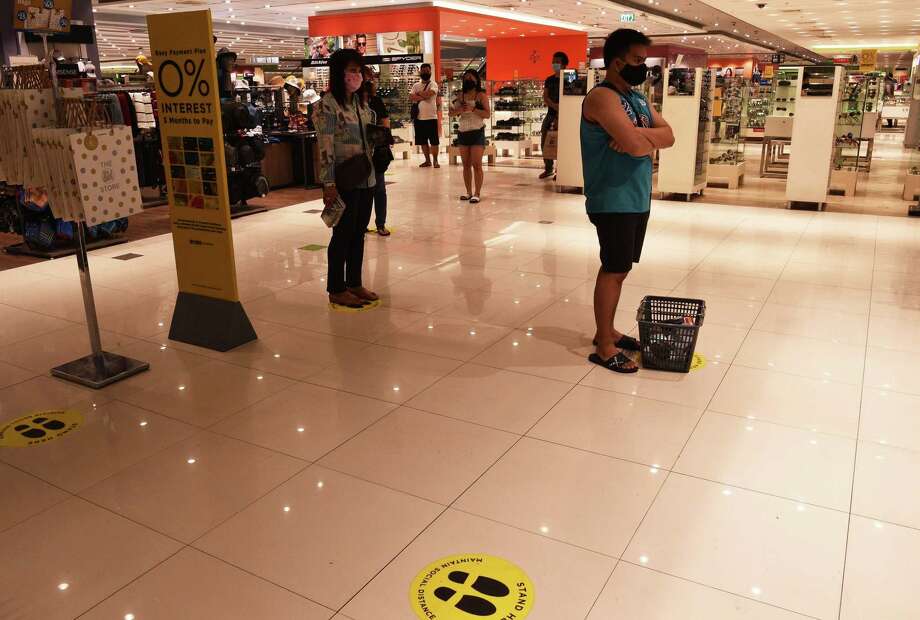
Customers observing social distancing measures while waiting in a line to pay a cashier at a mall
Photo: Getty ImagesCustomers observing social distancing measures while waiting in a line to pay a cashier at a mall
Customers observing social distancing measures while waiting in a line to pay a cashier at a mall
Customers observing social distancing measures while waiting in a line to pay a cashier at a mall
For the past eight weeks, Connecticut has asked tens of thousands of workers in the state much more than they ever bargained for. During a health emergency that almost no one expected or was quite prepared for, authorities deemed many retail workers as essential and asked them to stay on the job while most of us remained confined to our homes.
Claire is one of these workers. For the past three years, Claire has worked for a well-known pharmacy chain in the Connecticut River valley. A quiet job, selling last-minute groceries and paper products and helping fill prescriptions; the kind of worker that represents the backbone of our economy, but often does not receive the recognition they deserve.
Coronavirus changed that overnight.
The store became a sudden hive of activity, an essential lifeline for its community. Staffing, however, was scaled back, and Claire found herself working often with a skeleton crew. They heard from management about receiving extra pay or a bonus during an emergency, but weeks went by without any additional compensation. Traffic was higher than it had ever been, and demand for many products required constant restocking. She found herself working longer shifts and little support; she only received protective equipment once the state mandated its use. Some of her colleagues became sick with symptoms of Coronavirus. At one point, Claire was sidelined after she felt unwell, and tested for COVID -19. She had to stay home without pay until she received the results.
For the past few weeks, we have heard many stories like Claire’s. Essential workers asked to stay on the job, often forced to work longer hours with little to no notice, not knowing if their missing coworker stayed home to take care of a child or because they are sick with corona. Cashiers, store managers and warehouse workers that saw how their jobs quickly became unnerving, risky, almost dangerous, living in the shadow of a dangerous infection. The vast majority of them stayed on the job despite all their concerns, for little or no extra pay.
Claire’s situation is in fact far from unique. Last month, we conducted a small survey among retail workers in our state. It was a small sample, not a scientific poll, but the stories the 164 workers that responded told us made clear that we might have called these jobs essential, but we have been far from treating them as such. Two-thirds of respondents had not seen any extra pay at all during this public health emergency. Almost three-quarters had been asked to make last-minute changes to their schedule at least once a week. With schools closed, they scrambled to get childcare, run errands, make sense of their lives. More than a third stated that they cannot decline a shift without fear of retaliation.
The most worrisome aspect of these working conditions is that they are not new. In fact, they are entirely consistent with what we heard from workers before the health emergency, occupying the same jobs, doing the same essential tasks that draw so much praise now but went barely noticed three months ago. Low pay, little recognition, unstable schedules, little control of their lives. These past several weeks we have praised their commitment and appreciated how important they are to our communities. They kept our communities together facing risk every day at work, even though they did not sign up for it. In return, only some of them received little compensation while essential retail stores saw higher profits.
As Connecticut slowly reopens and learns to live with the virus, we should keep these workers in mind. Some retail stores have already decided to discontinue small pay increases, yet retail workers will still face the same risks. Our state must fight to ensure that things do not go back to the old normal. Not for them.
The workers that have been essential during the health emergency will remain essential after it. If we value their work, if we respect what they have done for us these last few months, we should ensure that their jobs provide them with the financial resources and stability they need. No more last-minute scheduling, changing shifts and sitting by the phone not knowing when they will be called it for work. No more staying a bit longer with little regard to the needs of their families. No more loud praise and recognition for less than a living wage.
The average wage for a cashier in Connecticut is $11.73 an hour. If we care about them and rely on them as much as we say they do, it is time to make sure they also have a job they can rely on, with predictable hours and decent pay.
Carlos Moreno is deputy director of Connecticut Working Families Party.
"Opinion" - Google News
May 30, 2020 at 11:00AM
https://ift.tt/3dc8C0V
Opinion: Still essential; still at risk - CT Post
"Opinion" - Google News
https://ift.tt/2FkSo6m
Shoes Man Tutorial
Pos News Update
Meme Update
Korean Entertainment News
Japan News Update
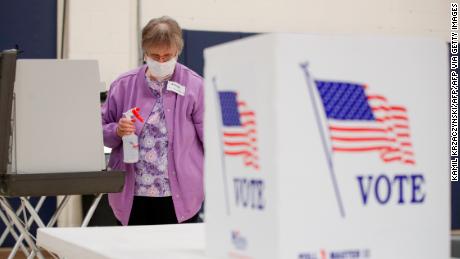
Trump is at war with the truth, not Twitter - CNN
"Opinion" - Google News
May 30, 2020 at 07:34AM
https://ift.tt/3eyKMgc
Trump is at war with the truth, not Twitter - CNN
"Opinion" - Google News
https://ift.tt/2FkSo6m
Shoes Man Tutorial
Pos News Update
Meme Update
Korean Entertainment News
Japan News Update
Guest Opinion: The 'unmasking' of Palo Alto - Palo Alto Online

A resident of our fair town recently posted the following rejoinder to busybodies (like me) who complain about people who refuse to wear face masks in public: "I was hiking in Foothills Park yesterday; I needed all the oxygen my lungs could breathe in. I could not have managed that hill if I was wearing a mask."
As a runner, I can confirm, dear neighbors, that the hiker in question is in good company. A very large number of our fellow citizens are also ignoring this simple public health directive.** Accordingly, although I address my comments to the anonymous poster, I invite the rest of the town to listen in.
To begin with, I would respectfully suggest that these are exactly the type of folks — huffing and puffing, sneezing and wheezing — who should be wearing a mask, if not for their own health, then for the rest of us. At the very least, it can be worn around the neck and raised to cover nose and mouth when, like Oedipus, we encounter a stranger on the path.
If that's too much to ask, and one finds oneself gasping for air in the foothills, here's a quick mental exercise to try: Picture yourself — or one of your parents — gasping for air in an Intensive Care Unit, strapped to a gurney, plugged into a ventilator, shrouded in a plastic tent, surrounded by health care workers dressed as if they have just come from outer space, as your lungs slowly (or quickly) turn into a brick and your family pays their final respects to you on Zoom.
I am mildly asthmatic and I know a bit about breathing: COVID-19 is worse. A lot worse.
Perhaps our maskless hiker is thinking, "But I'm young and healthy and I'm not shedding any toxic, virus-laden droplets, so why should I inconvenience myself?" My response is simple: Nobody knows that. Period. Full Stop. Even someone tested last week has no idea whether they were subsequently exposed to this deadly virus and are at risk of infecting others.
Look up the word "asymptomatic" in the dictionary. Did any of those well-documented "super-spreaders" of the virus deliberately set out to infect their fellow churchgoers, family members or teammates? Unlikely.
Yes, it's an imposition, but let's put it in perspective. I grew up hearing stories about World War II and the "impositions" my parents' generation were asked to endure as the war raged: blackouts in London; Victory Gardens in Chicago; ration cards; donations of everything from blood plasma to scrap metal in support of the common effort.
By contrast, wearing a face mask in public doesn't seem like a lot to ask. Hyperbole, you say? There seems to be some misconception that, because we appear to have "flattened the curve," the war against the coronavirus has been won. Sorry to puncture that particular fantasy, but the point of flattening the curve is not to shorten but precisely to extend the length of the pandemic so as not to overwhelm the health care system in its early stages (as happened in New York and Milan).
It's worth recalling, in this regard, that the Spanish flu of 1918 came in waves: The first was relatively mild and many politicians dismissed it as seasonal flu (sound familiar?). With people's defenses down and their immune systems compromised, the second wave struck in September and went on to kill between 50 and 100 million people, depending on who you read and how you count.
It's only May. Barring a miracle (or a presidential decree), this highly infectious virus will be with us for a long time. About a thousand Americans are dying from it every day. The Fake News calls it "an incalculable loss." I agree.
Our pervasive sense of denial is abetted by the sheer unreality of it all: gentle breezes are blowing; melodious birds are singing; fragrant flowers are blooming; the foothills beckon ... and by the time this column is published, 100,000 Americans will have lost their lives and 40 million will have lost their livelihoods.
I finally begin to understand the genius of the Surrealists with their melted clocks and improbable contrasts: Lautréamont's "chance juxtaposition of a sewing machine and an umbrella on a dissecting table" suddenly feels banal and everyday.
So please, reluctant face coverers, spare us the dissecting table (and the autopsy table) and wear the damn mask. It's not that hard, and refusing to do so is anti-social, irresponsible and unethical.
Let's all do it for ourselves, for our neighbors, and for the doctors, nurses, paramedics and ambulance drivers who are, literally, dying to help us out if we, or the stranger who passes us on the hiking trail, gets sick.
Barry Katz is a longtime resident of Palo Alto's Ventura district. He is a long-distance runner, a mild asthmatic and prides himself on being an asymptomatic public nuisance.
** Editor's note: Santa Clara County strongly recommends that people wear masks outside of their home but does not require masks to be worn while engaging in recreational activities. The order states, however: "People are recommended to have a face covering with them and readily accessible when exercising, even if they're not wearing it at that moment."
Find comprehensive coverage on the Midpeninsula's response to the new coronavirus by Palo Alto Online, the Mountain View Voice and the Almanac here.
"Opinion" - Google News
May 29, 2020 at 08:57PM
https://ift.tt/3eyaHV4
Guest Opinion: The 'unmasking' of Palo Alto - Palo Alto Online
"Opinion" - Google News
https://ift.tt/2FkSo6m
Shoes Man Tutorial
Pos News Update
Meme Update
Korean Entertainment News
Japan News Update
Postingan Populer
-
To say 2020 was a year of constant unexpected events is a huge understatement. No area of our lives was exempt, including events in the pol...
-
Here’s a question: What does Gov. Ron DeSantis of Florida think about Medicare? Medicaid? Social Security? The Affordable Care Act? DeSa...
-
[unable to retrieve full-text content] I just paid $9.99 for a carton of 18 eggs. Will prices ever drop? | Opinion Sacramento Bee ...

