Fast forward 14 years, and Americans are facing an election unlike any other we've experienced.
In an effort to better understand and gauge the strength of conservative voters in Texas ahead of the 2020 contest, I recently posed two questions to my radio audiences in the Houston and Dallas/Fort Worth areas: Why are you voting for President Donald Trump, and what do you want from Washington, DC?
The responses I received coalesced around two themes. The first was the preservation of our liberties and freedoms guaranteed under the Constitution. The second was a fervent desire for the federal government to get the hell out of our way.
Many conservatives are devoted to the idea that the government that governs least, governs best. One listener, Frank, called in and told me he and his wife voted at a packed polling place in the Woodlands, a community just north of Houston. He explained that his vote for Trump was an expression of his conservative values and said, "Less government is best."
He was concerned, as am I, that Democrats have expanded the authority of the government beyond what the founding fathers intended. Take Obamacare, as an example. It's highly unlikely the founders envisioned a government would force its citizens, under threat of tax, to buy a product they may or may not want. And Trump's move to strike down this provision of the bill was exactly what Frank and I believed necessary to preserve one aspect of our freedoms.
Another listener, Karl, from Itasca, Texas, a small community outside the Dallas/Fort Worth metroplex, told me that he'd prefer Trump because, "I want to remain free in this nation."
It's a sentiment that many on the right share, and it highlights the divide between conservatives, who champion the rights of the individual, and liberals, who are willing to limit some of those rights in service of what they consider the "collective good."
Ironically, it's the American conservative who understands the sage advice often attributed to the Chinese philosopher Lao Tzu: "Govern a great nation as you would cook a small fish. Do not overdo it."
For many Texas conservatives, it's worrying that Democrats have been far more critical of Trump's response to what he calls the "China virus," than they have been of China's withholding of critical information that exacerbated the spread of the pandemic. As of writing this article, Democrats on the campaign trail have not placed a strong emphasis on holding China responsible for its role in concealing intel at the start of the pandemic.
Texas state Sen. Paul Bettencourt also called in to the show and expressed pride in Trump's achievements on the courts, including the confirmation of Justice Amy Coney Barrett to fill the vacancy left by the late liberal Justice Ruth Bader Ginsburg on the Supreme Court.
Like Bettencourt, many conservatives have watched in horror as the courts, stacked by liberals during the Obama years, have turned into political entities. From abortion to voting integrity to national security, liberal judges have worked to stymie laws and executive orders issued by Republicans, arguing in many cases that they violate the US Constitution.
To demonstrate the absurdity of their logic, one court said that even though it is illegal for foreign nationals to vote in US elections, it was unconstitutional to ask for proof of citizenship when someone registered to vote. The judges who decided the case? Judges Mary Beck Briscoe, Monroe McKay and Jerome Holmes, who were nominated by Presidents Bill Clinton, Jimmy Carter and George W. Bush, respectively.
From the right's perspective, it has been Democrats who have used the courts to advance their political agenda when they can't get that agenda passed in Congress. Even Ginsburg said the Roe v. Wade decision, legalizing abortion, might have come to soon. "My criticism of Roe is that it seemed to have stopped the momentum on the side of change," she said in remarks at the University of Chicago Law School.
Conservative critics would take it would one step further and argue that Roe led to increased rancor in the country because we never had the chance, as a people, to debate the issue and pass a legislative solution.
When it comes to what conservatives want from our federal government, David, from Midlothian, Texas, expressed frustration with the tumult and vitriol in Washington, DC. He told me that he recognized that we "couldn't go back" to a more unified time, but he wished lawmakers would be more "respectful" of one another.
In my view, tensions have escalated largely because of Democrats, who destroyed many of the norms that have kept the peace in Washington for decades.
It was Democrats who first went nuclear, when they removed the filibuster for most presidential nominees in 2013. It was Democrats who ignored GOP input and passed Obamacare, which has done little to lower the costs of premiums and deductibles for many many Americans, according to a 2020 analysis from The Kaiser Family Foundation. In fact, since 2008, Kaiser reports that "average family premiums have increased 55 percent, twice as fast as workers' earnings (26%) and three times as fast as inflation (17%)." And it was Democrats on the Senate Judiciary Committee this month who, in a brazen, yet predictable act of incivility, boycotted the vote to advance the nomination of Barrett, a highly qualified judicial thinker and legal mind.
Of course, Texas conservatives aren't looking to eliminate government. Rather, we seek a government that is a servant of "we the people." Former President Ronald Reagan once said government should "stand by our side, not ride on our back." That's a clever way of saying that government should limit its involvement to its clearly delineated constitutional functions.
This vision of government is in alignment with many of my conservative listeners, who believe that Democrats and their democratic socialist allies wish to place an unfair financial burden on every American, and at the cost of our rights and liberties.
When Trump was elected, many of us marveled at how we elected our second "Citizen President." Trump was not a lifelong politician or creature of the government establishment. He brought a fresh energy and perspective to politics. And like many of our listeners, I worry that if he loses on November 3, we may never have another citizen president like him again.
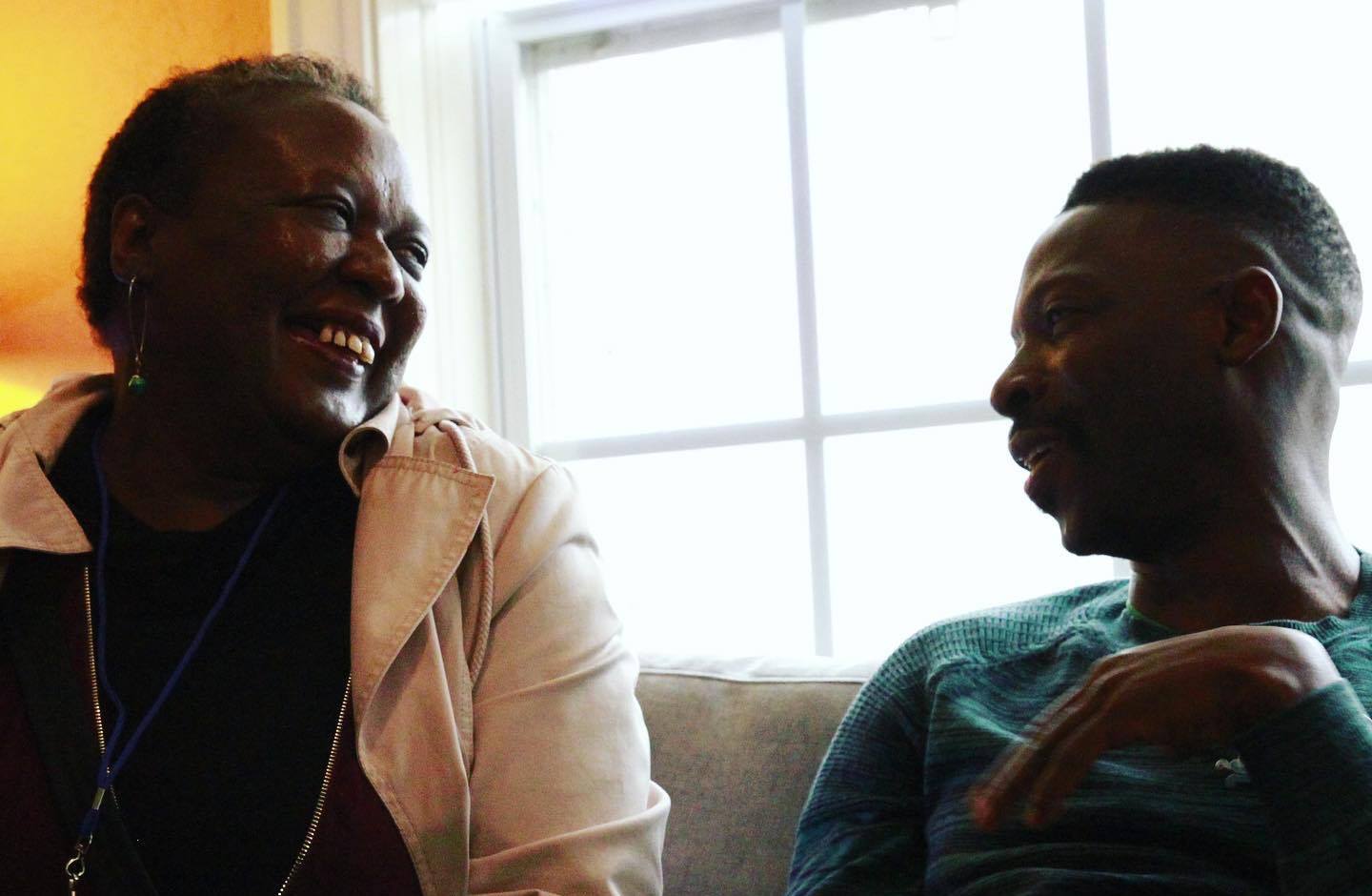
On the series “So Soul San Francisco Black Art Salon,” newly available on Youtube after a long history of being staged in Bay Area venues, co-hosts and theater cornerstones Edris Cooper-Anifowoshe and Rotimi Agbabiaka appear behind a kitty-cat coffee mug and in front of a cherry-stained panel with jade-colored ceramic (in Agbabiaka’s case) and before a Zoom backdrop of a cityscape from their guest’s home country (in Cooper-Anifowoshe’s).
Both are comfortable settings for the hosts’ charms. Agbabiaka’s delivery and heartfelt delivery recall Mr. Rogers’ soothing timbre. Anifowoshe’s banter with guests about mutuals, stage shows gone by, and vows of future collaborations make her interviews seem like you’re dropping in on a chat between friends, which you are.
Good vibes—but the most reassuring aspect of the project is the strong global community of Black artists that “So Soul San Francisco” highlights.
“Instead of getting depressed by the limitations of our new virtual reality, we wanted to celebrate our increased ability to gather beyond the physical borders of this city or this country,” Agbabiaka tells 48 Hills over email. “We also felt it important, at this time of sustained (and often quite narrow) discussion about race and Blackness in the American theatre, to open up that discussion geographically and ideologically.”
These gracious Zoom sets are far from the first stages to host “So Soul.” The series was started by Cooper-Anifowoshe at the Sugar Shack Performance Gallery & Cultural Center, a Black art space she owned and operated in the Lower Haight. Initially funded by the SF Arts Commission, more recently the series has been staged at Brava For Women In The Arts by the Black Artists Contemporary Cultural Experience, a company in which Cooper-Anifowoshe is producing artistic director and Agbabiaka is a producing artist.
The COVID-friendly debut online episode of “So Soul” was released September 18 through BACCE’s Youtube page. It features each host chatting up a Berlin-based artist—drag cabaret performer George N Roses, a.k.a. Lola Rose, and West End and Royal Shakespeare Company actor Colin Griffiths Brown.
“POC deserve to see the rest of the world,” N Roses continues. “I’m trying to convince everybody to move over.”
In episode two, “So Soul”‘s hosts join forces to speak with Dr. Niyi Coker, director of San Diego State University’s department of theater, television, and film. Coker shares impactful memories of working during an artistic heyday of Ife, a center of Yoruba faith in southwestern Nigeria—before dramatic defunding impacted much of the country’s academic institutions. The far-ranging discussion also covers the “humanization” of linguistic links between AAVE and African languages, and global Black theater, of course.
“We have way more in common than we have in terms of difference,” Coker concludes.
The exchanges have brought up subjects that have surprised even the show’s hosts. “We’ve been finding that these chats give us a chance to learn so much more about people we thought we already knew,” Agbabiaka says.
Though in-person theater productions are still out of reach due to COVID-19 health restrictions, increasing numbers of productions from across the world are being made available to online audiences. Berlin’s Schaubuhne Theatre put screenings of its past productions on the internet when the pandemic hit, inspiring Agbabiaka and Cooper-Anifowoshe, with what Agbabiaka calls, “the rich intelligence and fearless creativity of their work.” Agbabiaka recently released a radio play version of Seeing Red, the 2018 San Francisco Mime Troupe production whose original script he wrote. Another source of coronavirus era inspiration for the “So Soul” co-hosts was San Francisco’s Drag Alive Twitch channel and “Youtube gardening tutorials are giving us life as we’re both cultivating pandemic gardens,” Agbabiaka says.
Now, the two are planting their own seeds with “So Soul”‘s online incarnation.
“Just put out what you feel led to and hope that it speaks to someone on their couch or in their garden,” says Agbabiaka. He teases that the next episode (which will air November 21), will feature a China-based Black actor’s take on the recent Beijing production of A Raisin in the Sun directed by Ying Da. If the prospect of an internationally Black take on cultural appropriation speaks to you, perhaps you’ll tune in.
"discourse" - Google News
October 29, 2020 at 05:11AM
https://ift.tt/37Peihp
Internationally Black series 'So Soul San Francisco' opens up global arts discourse - 48 Hills
"discourse" - Google News
https://ift.tt/2KZL2bm
https://ift.tt/2z7DUH4
It's a rare public correction by a justice that comes as the court is facing multiple appeals on voting access and mail-in ballots in the days before the presidential election.
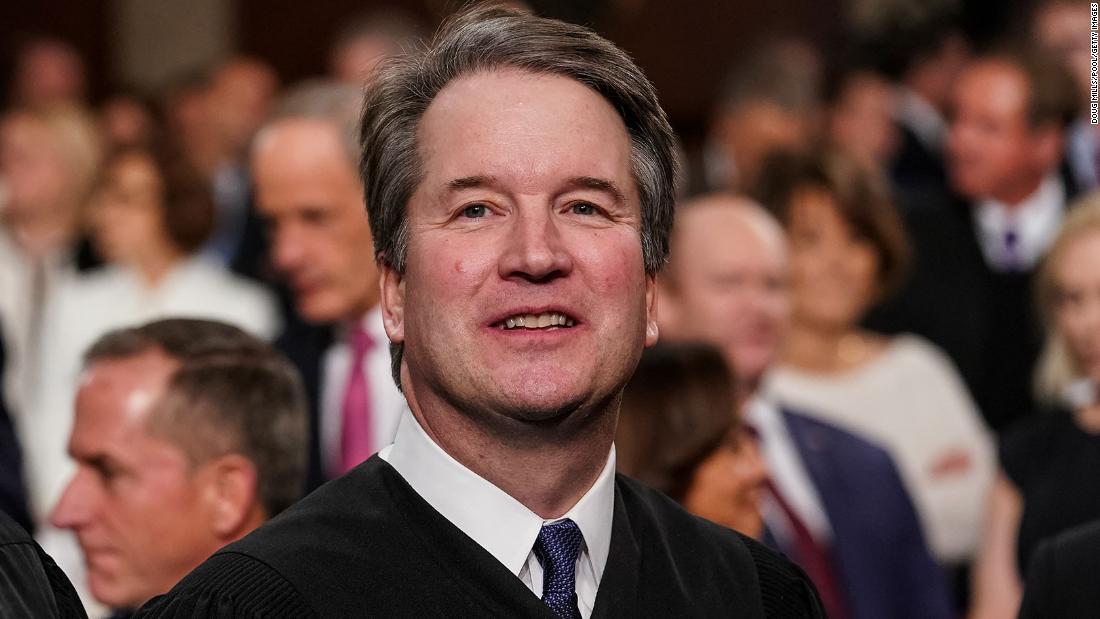
Kavanaugh's error came Monday night, when the court rejected a Democratic bid to allow Wisconsin to count ballots returned up to six days after Election Day. Kavanaugh wrote a concurring opinion that cited Vermont as a state that hadn't made changes to its "ordinary election rules."
However, Vermont had made significant changes, Secretary of State Jim Condos said when he formally asked Kavanaugh in a letter on Wednesday to correct the concurring opinion.
Vermont, Condos explained, had for the first time sent mail-in ballots to every registered voter and also began counting votes earlier than in previous years. Those actions meant Vermont did not have to change its Election Day deadline to receive mail-in ballots, Condos said.
Kavanaugh was using Vermont as an example of a state exercising its ability to change -- or not change -- election rules and deadlines.
Kavanaugh wrote on Monday: "To be sure, in light of the pandemic, some state legislatures have exercised their Article I, §4, authority over elections and have changed their election rules for the November 2020 election. Of particular relevance here, a few States such as Mississippi no longer require that absentee ballots be received before election day. ... Other States such as Vermont, by contrast, have decided not to make changes to their ordinary election rules, including to the election-day deadline for receipt of absentee ballots."
The variation, Kavanaugh said, "reflects our constitutional system of federalism. Different state legislatures may make different choices."
Late Wednesday, without comment or explanation, Kavanaugh issued a revised opinion, changing the phrase "ordinary election rules" to "ordinary election-deadline rules."
It now reads: "Other States such as Vermont, by contrast, have decided not to make changes to their ordinary election-deadline rules, including to the election-day deadline for receipt of absentee ballots."
Kavanaugh's concurring opinion in the Wisconsin case set the battle lines for how the Supreme Court should consider post-election lawsuits that could determine the outcome of the presidential race. The justice also suggested that state courts may not have the last word in interpreting state election rules and mirrored President Donald Trump's language about wanting votes to be counted on Election Day, despite what will be a major backlog of mail-in ballots in key states.
States that require mail-in ballots to be returned by Election Day, Kavanaugh wrote, "want to avoid the chaos and suspicions of impropriety that can ensue if thousands of absentee ballots flow in after Election Day and potentially flip the results of an election."
This story and its headline have been updated with the revised opinion issued by Justice Kavanaugh.
Our small but mighty mountain community has been making smart investments in our youngest kids and families for nearly 15 years. These investments have made our community more accessible for working families and have ensured all children get a strong start in school. Proposition EE builds on Summit County’s success and gives the rest of Colorado the chance to benefit from universal preschool, which is why we’re proud to support EE.
This measure will close a tax loophole on dangerous and addictive vaping products and increase our state’s tobacco tax. The revenue will be dedicated to a new program that will ensure every 4-year-old in Colorado has the chance to attend preschool in the year before kindergarten — not just those whose families can afford it.
We know from the success of our local programs that expanding access to quality early education is critically important to young learners and family budgets. We’re excited that Proposition EE can expand this opportunity statewide, including to communities that could never afford to fund a program locally. For places like ours that have invested locally in early education, this new state investment will leverage and build upon our strong local programs, allowing us to serve even more families in Summit County.
But the benefits of Proposition EE are greater than just preschool. It will help to create a healthier Colorado, too.
Research shows that for every 10% increase in the price of cigarettes, we see a 3% to 5% decline in consumption overall and a 7% decline among price-sensitive youths. Increasing the tax alone is an important step to reducing consumption, but EE also will dedicate new funding to public health programs proven to help smokers and vapers quit and educating youths to prevent them from ever starting. Driving down the use of these dangerous and deadly products is a win for our community’s health.
Proposition EE is a progressive measure that will help to create a healthier, brighter future for all Colorado. Reducing consumption of dangerous tobacco and nicotine products has a very clear benefit to the health and safety of communities that have been targeted by the tobacco industry for decades — specifically youths and low-income people. Further, by investing the revenue generated by the tax into quality preschool, we have the chance to ensure all kids start school prepared to succeed, a strategy proven to help close achievement gaps and promote equity in education.
The revenue is locked in state law and will be audited annually, so voters can have peace of mind that the money will be spent as promised.
At a time of significant social unrest and political divisiveness, it is refreshing to see something on the ballot that is bipartisan, positive and constructive. Perhaps that is why Proposition EE has earned the support of Republicans and Democrats at the state and local levels, health and education leaders, rural and urban organizations, business and labor leaders and everyday voters.
Please join us in voting “yes” on EE.
Thomas Davidson is a term-limited Summit County commissioner. Lucinda Burns is the executive director of Early Childhood Options, a local nonprofit dedicated to improving the quality, affordability and availability of early childhood programs.
Can We Get Along? Resilience Can Help Promote Civil Discourse
By Victor Rogers | October 27, 2020• Atlanta, GA
Click image to enlarge
For a variety of reasons 2020 has been stressful, frightening, and just plain exhausting. Because of the coronavirus pandemic, some of us have lost loved ones. Many are working from home, and others are unemployed. Wildfires ravaged the west coast as hurricanes and tornadoes battered the Southeast. Protests against racism and police brutality were held around the globe.
And, of course, there is next week’s election, which in some cases has pitted relatives and friends against each other.
At times it seems impossible to talk about politics and current events without ending in a shouting match and hurt feelings. Is it possible to have a civil discussion with someone who doesn’t share the same views?
“A need to focus on being right often leads to missed opportunities to understand one another,” said Tiffiny Hughes-Troutman, licensed psychologist and director of the Center for Assessment, Referral, and Education (CARE) at Georgia Tech. “Seeking to understand another’s viewpoint does not equate with agreeing with them; it promotes psychological flexibility and a growth mindset.”
Psychological flexibility means recognizing and adapting to various situational demands, and being proactive instead of reactive in acknowledging and owning one’s response.
“It is natural to want to assert our own beliefs, but also very healthy to accept that someone else may hold a different opinion despite your efforts to change them,” Hughes-Troutman said.
Sonia Alvarez-Robinson, executive director of Georgia Tech Strategic Consulting, agrees.
“This time of disagreement and discourse is challenging all of us,” she said. “But we need to keep our focus on what unites us at Georgia Tech — our common mission to develop leaders who advance technology and improve the human condition. Regardless of the outcome of the election, our mission remains solid. No matter which candidate we support, vote for, or agree with, our students are our first priority and we need to keep that front and center.”
Alvarez-Robinson said vigorous disagreement with another person can often feel like an adverse event, and if prolonged it becomes a chronic stressor.
“We often have physiological responses to being in conflict with another person — our heart rate goes up, we might have pain in our gut, we might have skin irritations, or even have trouble breathing. These are all signs of stress and distress,” she said.
Stressors caused by conflict can also have a negative impact on personal and professional relationships.
“Research has shown that diversity brings richness, new ideas, insights, and growth that does not happen in a homogeneous group,” said Alvarez-Robinson, who has a doctorate in human and organizational behavior. “Yet studies have also shown that diversity of values, especially when they are deeply rooted, can make productivity and group efficacy more difficult.”
Alvarez-Robinson is the principal empowerment officer of Tech’s Resilience Employee Resource Group. She suggests using resilience as a skill to help grow from the difficulties experienced through discourse. “Resilience can help groups manage diversity of values while also healing from hurt that is created when people become emotionally charged in their disagreements.”
Alvarez-Robinson suggests employing the following coping strategies during this stressful time:
Quiet your mind. We are bombarded with messages, information, stories, opinions, and our mind is trying to make sense of all of it. Use meditation and other mindfulness techniques to quiet the noise that can keep you from thinking clearly.
Keep Reality in Perspective. Uncertainty can cause anxiety and fear, which can lead us to create our own worst imaginings of what will happen next. It is important to discern between fear that is imagined and danger that is real. Here we need to prepare for the worst but expect the best.
Engage in self-care. Heightened negative emotions can make us feel beaten down and depleted in our energy. We need to rejuvenate, recharge, and restore our positive emotions by taking care of ourselves. Get out into nature, manage media consumption, set boundaries, and say kind things to ourselves.
Put worries in their place. There is a lot to worry about, but worrying can only be productive if we put it into its place. List the things that you are worried about and put them into one of three buckets: what I can’t control (then you have to release it), what I can partially control (then figure out what you will do about it), and what I totally control (then make a plan to take action to resolve it).
Hughes-Troutman added, “It is essential to acknowledge our feelings and aim for a balanced and healthy perspective to prevent stress levels from escalating.”
"discourse" - Google News
October 27, 2020 at 02:00PM
https://ift.tt/2HM6bHZ
Can We Get Along? Resilience Can Help Promote Civil Discourse - Georgia Tech News Center
"discourse" - Google News
https://ift.tt/2KZL2bm
https://ift.tt/2z7DUH4
But there are problems with the program, starting with the cost. The test is not cheap, especially for those looking to test themselves and family more than once. At Costco, the kit costs $129 for the most basic version and $139 for the fancy version that includes video instructions. Federal law mandates that private insurers, Medicare and Medicaid cover Covid-19 tests without any cost to the patient. Whether they will pay fully for a more bells and whistles program such as that provided by Costco likely will vary plan to plan.
That price is actually cheaper than buying the at-home kit directly from AZOVA, the company that administers the program, which charges at least $20 more. AZOVA is also encouraging pharmacies to offer the kits. In a blog entry titled, "Four ways to generate revenue when you offer Covid-19 testing in your pharmacy and on your website," lists some tips on how pharmacies can maximize profits, including receiving a $22 to $29 administration fee for in-pharmacy tests and $5 for each test ordered online and conducted at home, noting that "you don't need to do anything but add a link to your website" to get the five bucks a pop.
As for the speed of the result -- sorry, you'll have to wait at least a couple days. The term "home test" evokes the home pregnancy test approach where the wait for the big reveal is measured in minutes. However, for the Covid-19 test, the "home" refers only to where you collect the specimen, not where you run the test. This is performed by a lab reached by (hopefully) overnight mail.
AZOVA promises a result by email one to three days after receipt of the kit in an approved lab. But there is an additional lag in the time of one to three days for the kit to be delivered to you at home if you order it online. In other words, order on Monday and get your test result at the earliest on Wednesday but as late as the weekend. (Costco advertises a slightly quicker turnaround between ordering the kit and receiving it at your home.) So those who would want to use the test for assurance prior to seeing the family or returning to the office need to plan many days in advance.
Which brings us to accuracy. The involved companies claim the test is excellent, with the website advertising 98% sensitivity and 99% specificity, meaning almost every case is detected by the test with very few false positives. But we don't know how accurate a test really is until people have used it in real life conditions, rather than under perfected lab conditions. OraSure experienced this difference when its home test for HIV, once approved, showed a higher false positive rate than clinical trials had shown.
And that was the good old days, before the Trump administration weakened the process for how lab tests can gain emergency use authorization (EUA) through the FDA. In the name of swiftness, the FDA decided to allow qualified labs themselves to determine whether their test worked. No longer is the company's data subjected to FDA scrutiny prior to issuing EUA. It is possible therefore that some tests that would not have received FDA emergency authorization six months ago are now receiving a greenlight.
Plus, there is the simple fact that a test performed today may accurately show no infection, but by the time the result is available -- days later -- the same person may have become infected. The immediacy of the test result, therefore, is crucial for both personal and public health decisions.
So here we are, eight months into the pandemic and still waiting for an accurate, fast, cheap, readily available test -- the game-changer first promised in April. The at-home version in its current form may be helpful for worried families but will not be a game-changer from a public health perspective.
But having several companies trying to solve a problem the Trump administration should have resolved long ago, similar to governments in South Korea, China, Germany and other countries, is a faintly hopeful sign.
The collaborating companies seem to understand that the basic principle for controlling the Covid-19 pandemic is the same as for every infectious disease: it is necessary to have a rapid and reliable test to identify who is potentially infectious. Otherwise we are simply trying to swat flies in a pitch-dark room, hitting and missing, missing and hitting, with no hope of knowing anything at all about the effectiveness of our efforts. This single profound limitation more than anything else has led us into America's historic public health catastrophe.