Rechercher dans ce blog

Wednesday, December 30, 2020

Tel Aviv mayor should lay off the nationalist discourse - Haaretz.com

israelob.blogspot.com

They say about Tel Aviv Mayor Ron Huldai that he is not liked very much. I like him quite a lot. I liked seeing him show up at Café Tamar on his bicycle on Friday to suffer the curses of the legendary Sarah, the owner, about the lack of public toilets in the city. I like seeing him in Yarkon Park on Fridays, walking with his friends – just like a regular guy. But more than anything else, Huldai is an excellent mayor, an enthusiastic hardworking man, a decent and honest liberal who has made the city what it is. Like most of the residents of Tel Aviv-Jaffa, I owe him gratitude for everything he has done for the city.

His maiden speech on Tuesday as the leader of a party was excellent, too. Huldai demonstrated more care and sincerity than any of the politicians in his camp. Mummified in a Soviet-era suit two sizes too big for him, he asked the left the question of questions: “Are you so desperate, so much so that you think Sa’ar and Elkin are the ones who represent your values?”

How Bibi pushed a 4th election and 3rd lockdown, and how we exposed his secret flights. LISTEN

Subscribe

His entry into national politics is expected to bring back at least a little of the spirit of the dwindling camp. Huldai can symbolize hope, even a faint one. That is why one sentence he included in his speech was so grating – and it totally contradicted the values he spoke of, and the promise called Huldai. His reputation is built in part on enlightenment, secularism and humanism – which has strengthened over his years in office.

No other person in government did as much as he has for the asylum seekers, for opening up the city on Shabbat and its freewheeling cultural life. In Jerusalem police removed a protest statue. In Tel Aviv it stands in a city square. Hamis Abulafia died? Huldai eulogized him as a friend: “I will miss you a lot.” When people talk about the state of Tel Aviv, a place of enlightenment, they’re referring to the state of Huldai.

And then came his speech on Tuesday, with the sentence: “A clear Jewish majority … That is us.” The brigadier general in him escaped, the fighter pilot and kibbutznik from Hulda reared their heads – and with them the ugly Israeli nationalism that crosses the political spectrum. “A clear Jewish majority” – and all the enlightenment faded away.

After all, you called your party “The Israelis,” so why again the foolish longing for a Jewish majority? What’s wrong with Israelis who are not Jews? In what way was your friend Hamis inferior? And what if Hamis had been elected mayor? And if the Arabs were equal partners, and their brothers and sisters in the territories, under Israeli control, would that be a threat to the country, more threatening than having a racist majority?

If any party leader in Western Europe were to call to preserve a “clear German majority” or a “clear Christian majority” they would be condemned as racist – and it is doubtful whether they would dare to say it. But in Israel nationalism is a value, even in the most enlightened camp’s eyes.

Why, Ron, is a clear Jewish majority so important? What’s wrong with an Israeli majority? What’s bad about equality? How would your friend Hamis have felt to hear these words? And what about all the other residents of Jaffa? How should Arab citizens of the country feel about this lust for Judaization? And what is a Jewish state? Like the Islamic Republic of Iran or Pakistan? Except for them and Israel, there are no other countries that describe themselves by their religion, or the nationality of their residents. There is no such thing as a Jewish state. There is only a democratic country – or not.

It is doubtful whether Huldai, like any Israeli, knows what they are talking about when they talk about a Jewish state. A country that doesn’t have public transportation on the Sabbath? Huldai is against that. Where they celebrate Tu Bishvat? Where they speak Hebrew? Where they learn Talmud in school? All of this is possible even without a Jewish majority. But Huldai, like almost all Israelis, continues to recite what they taught him on the kibbutz and in the IDF, without making himself account for what he is saying: A call for a Jewish majority is the call of dark nationalists. So give it up Ron, it’s just not you.

Let's block ads! (Why?)


"discourse" - Google News
December 31, 2020 at 06:08AM
https://ift.tt/3826mJv

Tel Aviv mayor should lay off the nationalist discourse - Haaretz.com
"discourse" - Google News
https://ift.tt/2KZL2bm
https://ift.tt/2z7DUH4

COVID-Fury and the Lockdown Tears: A Discourse on the Economic Implications of Lockdowns - BBN Times

israelob.blogspot.com

COVID-Fury and the Lockdown Tears: A Discourse on the Economic Implications of Lockdowns

COVID-Fury and the Lockdown Tears: A Discourse on the Economic Implications of Lockdowns

In November 2020, the British government reluctantly announced that the country would enter into a 3-tier lockdown system which would only last until 4 December 2020.

Anyone with a healthy dose of common sense, having followed real science and the dramatic developments of COVID-19 knew rather instinctively that it would never be possible to get out of lockdown within a short period of only 4 weeks. After all, the first UK lockdown in March of 2020 lasted longer than 3 months, announced by Prime Minister Boris Johnson in a televised address on the 23rd of March. Eventually, once the COVID-19 death rate declined and the infections curve flattened, that dreadful first lockdown officially “ended” on the 4th of July through the partial easing of lockdown restrictions. Everyone presumed this to be the end of it – the Corona pandemic - only to be shocked by the announcement of a painful but desperate second lockdown in November 2020.

And it’s understandable, no one, especially the British government wanted to spoil the Christmas holidays and dampen the festive spirits. Prime Minister Boris Johnson and Health Secretary Matt Hancock simply did not have the courage to announce to the British people that the second lockdown would last for months; it would have been political suicide for anyone making that announcement. But sure enough, not a week later after that dreaded announcement, another televised announcement followed that a “careful extension” of the second lockdown might occur. Before the echoes of that announcement silenced, London was forced to enter the unpalatable “economically-devastating-but-necessary” Tier 3 lockdown. And merely a week afterwards, London and the Southeast were declared Tier 4 and everything shut down completely once again. A devastating blow to the UK economy as a whole because the month of December - the most important month on the retail and hospitality economic calendar - was regretfully missed as all “non-essential” shops and businesses were shut down by law until further notice. With the COVID-19 spiralling out-of-control and currently overwhelming the NHS as many major hospitals are unable to handle the influx of COVID-19 patients, it is highly likely that on January 1st 2021, we might have to enter a (yet-to-be-defined) national lockdown Tier 5 - which most likely will include the closing off all schools - the same level as the first lockdown of March 2020. When that happens, Prime Minister Boris Johnson will most likely be repeating his previous televised draconian – but absolutely necessary - lockdown announcement “The instruction is simple – Stay at home”, and this time again, really enforced by Police and local authorities. Unfortunately and much to the dismay of the British people, the end of this second lockdown will definitely not be sometime January of 2021, but more likely April 2021. There’s a reason that Chancellor Rishi Sunak preemptively announced on December 17th that the furlough scheme would be extended for another month until end of April 2021 (instead of the end of March as originally planned) because the Chancellor of the Exchequer – and the entire British government – must have known the science and facts of that difficult decision. In the end, the government has the duty and responsibility to safeguard its citizens and infrastructure, that is, hospitals and the NHS (UK’s National Healthcare System). Everything else comes second, including saving the economy from collapse and resulting mass unemployment which will lead to a further deterioration of the economy and the wellbeing of its participants, the citizens of the United Kingdom.

Corona Super-Spreaders

The COVID-19 pandemic unleashed a humanitarian crisis of epic proportions and handicapped the entire global economy, necessitating lockdowns and forcing just about the entire world to a virtual commercial standstill.

The World Health Organization - in its official capacity of supervising and tracking health, disease and pandemics globally - announced early on the dangers of COVID-19 spreading across the world and the necessary actions governments must take to stop the spread and contain the pandemic. Unfortunately and regretfully, the response by most governments was first inaction and denial, followed by “cherry-picking” science and reacting with disproportional measures. Some countries went straight into full and hard lockdown such as New Zealand and others in a grudgingly slow and miscalculated response such as the USA, India and Brazil. In the meantime, the USA has unfortunately become the epicenter of the COVID-19 pandemic with a tragic 20 million cases and over 336,000 deaths (unconfirmed, as of end of Dec. 2020).

There are many to blame, but we only need to look at the facts and refrain from finger-pointing. Each and every one of us should their part, that is, social distancing and self-isolating when infected. That however, has not been the case because of collective complacency and misguided mindset, the thinking being, I am healthy and I should be fine. The sad fact is no one is immune and the COVID-19 virus does not discriminate, it attacks indiscriminately. No one could have ever imagined that world leaders such as US President Trump, UK’s Prime Minister Boris Johnson and French President Emmanuel Macron would contract the disease and get infected in an “ultra-protected” environment of health, safety and security, but it did happen. And with Donald Trump breaking the world record of COVID-19 recovery – checking into hospital on Friday, going for a joy-ride to meet & greet Trump supporters on a drive-by on Saturday and then checking out from hospital by the following Monday – made it look that he’s invincible as he conquered the virus in record time without any lingering complications. This impression was surely misinterpreted by the American people at large which experts say may have contributed to many not taking the COVID-19 pandemic serious enough to follow social distancing and prevention measures, resulting in the dramatic increase of infections and unnecessary deaths currently faced across the US.

Super-spreaders are unnecessary events and large places of congregation where viral infections spread easily – think White House lawn press conferences, political rallies, supporter demonstrations – where at present, the Corona virus can spread rapidly and uncontrollably (and which could be avoided if only everyone would just stick to the safe measures of social distancing). Schools, supermarkets and stadiums are also some of the places that become super-spreaders when social distancing is ignored and these venues become overcrowded.

Across the Atlantic, the UK government made the well-intended but fatally flawed decision to open all schools at the beginning of September 2020. Turns out the newly discovered mutated strain of the virus has a disastrous 69% higher transmissibility factor as well as that the younger generation have a disproportionally higher propensity of spreading the virus unknowingly and inadvertently. In other words, schools and universities became “super-spreaders” without anyone really knowing until now, when the pandemic has flared up and spiralled once again out of control.

Adding and exasperating the problem are the inconsistent and confusing public announcements by the UK government, resulting in people not knowing what the latest update is on the crisis and worse, not following the newly imposed health safety measures, apart from the billboard advertisements across the country. What the UK government should have done is simply deploy social media and the internet by creating an accurate and continuously updated website under the easy-to-remember name of “facemask.gov.uk”, informing the public on the latest crucial developments of an ongoing crisis.

Businesses were more proactive in many ways, by informing their customers regularly and by ensuring their establishments were relatively “COVID-safe”. Giant supermarket chain Tesco’s of the UK even installed innovative green/red traffic lights at its store entrances, clearly informing customers of when it was safe to enter the store in an orderly way after other customers had exited, keeping a calculated balance between entering and leaving customers in an orderly fashion and in doing so, avoiding overcrowding within.

Many other measures and temporary constructs (dividing screens, hygiene stations, contactless deliveries, etc.) were developed and deployed in a wide variety of commercial venues and transportation infrastructures; it’s only a matter of following the rules and properly enforcing compliance.

The Vaccine Rollout Rollercoaster

The Corona pandemic is a moving target - mutating strains, infection flare-ups, herd mentality, etc. – where some countries or demographics fare better than others but there’s no denying that the whole world is suffering collectively.

Vaccine or not, the only way out of this is social distancing and staying safe. We will not be “out of the woods” any time soon, only collective effort - with each one of us doing their part - in eradicating this dangerous virus will help us defeat this pandemic. In the meantime, let’s focus on the here and now, the reality of things and our mental well being as well as our finances.

One thing that stands out – in the good and the bad sense – is that the Corona pandemic has accelerated technology to “warp” speed. Experts say that the acceleration - which normally would be measured in years - has changed to months. One primary example is the development of the first COVID-19 vaccines which normally takes at least 10 years from initial testing to regulatory approval. This year we saw the “supersonic-fast” development of the first COVID-19 vaccines within 10 months using the highest tech currently available – artificial intelligence, quantum computing and data science.

Miraculously, not one but three vaccines were discovered and announced within a three week time-span in November 2020, which really makes us wonder how coincidental this all is…but anyways…Pfizer is now the most famous brand of the world, first with Viagra and now with the first approved COVID-19 vaccine. (please do read the medical instructions carefully before taking either…)

Coca_Cola_Pfizer.png

Copyright 2020 – Coca-Cola, Pfizer, Santa

Funny fact - Pfizer’s vaccine developer partner BioNTech happens to be addressed “An der Goldgrube” (Mainz, Germany) – which literally translates to “At the gold mine”, and indeed, vaccine gold it is.

For the less fortunate and more affordable, there’s also the Russian “Sputnik V” vaccine - endorsed by none other than President Putin himself who has not taken it yet, apparently waiting for “the right time” – but just be prepared for the cosmonaut launch into Soviet-era medical orbit of trial-and-error and hard landings.

The vaccine rollout will be a big challenge all on its own, especially the Pfizer/BioNTech that requires cold storage and transportation at minus -70 degrees Celsius (-100F) and all 3 vaccines must be administered in two doses, 3-4 weeks apart. The other two vaccines developed by Moderna and Oxford/AstraZeneca (and important to note the most economical of all 3 vaccines) are easier to transport and store, making it easier to distribute these around the UK.

On December 8th of 2020, British grandmother Ms Margaret Keenan was the world’s first recipient of the Pfizer vaccine at the delicate age of 91. Since then, over 600,000 people have been vaccinated (unconfirmed, as of Dec. 29th) but we are still very far away from vaccinating UK’s population of almost 68 million as we are just now near crossing the 1% percent mark. NHS, experts and the entire medical profession are already lamenting the slow rollout of vaccines and warning of the grave consequences of any delays that may unnecessarily cost the lives of 10,000s of patients. And with Brexit officially a reality on January 1st 2021 at which time border and customs controls will start, those delays may increase exponentially.

Certainly and without a doubt, the British government will do whatever in its power to ensure the flow of vaccines that will include contingency planning and dialogue at the highest level with its former EU partner nations.

Lockdowns and the Collateral Damage of a “Stop-and-Go” Economy

Experts have estimated that for every single day of lockdown, it costs the UK economy a staggering £2.1 billion (EUR 2.3/$2.8 billion). How this number has been calculated may be questionable and debatable as many factors come into play, however, it’s safe to say the economic damage runs into the billions and not millions. It follows that the UK government (and any government around the world for that matter) considers very careful every single lockdown day, taking into consideration all the facts and circumstances before deciding on any given lockdown timeframe. At the top of the decision-making process is deciding to try to strike a delicate “tight-rope-walking” balance between preserving health, that is, its citizens and wealth, its economy, with the latter being of secondary importance, however important this factor actually may be. The implications of this difficult-but-crucial decision-making is far reaching, it not only affects the economy but also the wellbeing of society, the mental impact of lockdown being a major and growing concern. And with every lockdown that follows, the much publicized and decried COVID-fatigue turns into outright COVID-fury.

On the economic side, these lockdowns result in a debilitating “stop-and-go” economy which does more harm than good. One day pubs and restaurants are open, the next day shut or take-out only. Shops and “non-essential” business establishments open and close like a revolving door, pushing customers to go online shopping instead of shopping in the high streets. The all-important retail and hospitality “footfall” – pedestrians walking past your shop, restaurant or business establishment – has fallen to a trickle, prompting many businesses to remain closed or just shut down permanently. Entire shopping areas, tourist destinations and business districts have adversely been affected and with each further lockdown, this situation becomes worse. Apart from the financial aspect of significantly reduced revenues, there are also the operational and marketing aspects concerned. Most retail and hospitality businesses (and many more industries that have been affected as well) work with production, distribution, advertising cycles and December is the definitely the most important month on the economic calendar where all of these cycles need to match perfectly in synchronicity. Stocks and supplies need to be in place before the start of the Christmas holidays, festivities and shopping spree, therefore this planning is executed well in advance, usually 6-12 months beforehand. It then comes as no surprise, the disappointment and devastation when retail and hospitality are shut down last-minute and on short notice, dealing a heavy blow to company finances and the economy in general. This in turn affects businesses in depleting their financial reserves until it’s no longer viable to operate a business, prompting a wave of business closures and bankruptcies.

The Mayor of Greater Manchester - the charismatic Andy Burnham – publicly addressed the problem facing the retail and hospitality industries in his city and secured extra and hard-fought government support in the £ billions, however it will not save Manchester for economic decline in the long run. And this applies to all other major cities and “economic concentrations” across the UK, including London. Over time, government coffers run out of money and heavy public borrowing becomes an even heavier burden on the UK economy.

To put things in perspective, according the latest available figures, the pandemic has cost the UK government in 2020 over £280 billion, public borrowing has jumped to £215 billion resulting in a public debt of £2 trillion (100.8% of GDP, as of Oct. 2020) and quantitative easing – Central Bank money printing – has reached an all-time high of £895 billion. More sadly, we haven’t even remotely seen the end of this public debt explosion as the second lockdown is currently in full effect and the inevitable related costs will only be tallied and felt sometime well into 2021. This is one of the most devastating economic downturns in UK’s history which will push the UK in the worst recession in over 300 years.

Light at the End of the Corona Path of Devastation

There are still difficult times ahead, but we are – slowly but surely – turning the corner on this global pandemic and its devastating impact on our lives, wellbeing as well as our personal finances.

For those who are better prepared for the coming year 2021, the prospects are looking quite good. Let’s not expect miracles, but “sure footing” on the road to a better year in which the world will return to the new normal and the global economy will bounce back from debilitating “stop-and-go” lockdowns.

And for the most of us, who faced adversity and hardship as a result of lockdowns and the devastating impact on our finances, there’s hope. As the German saying goes “die Hoffnung stirbt zuletzt” meaning “Hope dies last”, and that’s the only reason we need to keep up hope and resilience in our spirits.

The New Year 2021 will be challenging on many fronts – economy, unemployment, mental well-being - but through perseverance, discipline and our collective effort, we will defeat this pandemic and restore our lives to the new normal sooner than later.
The_Corona_Crash.jpg


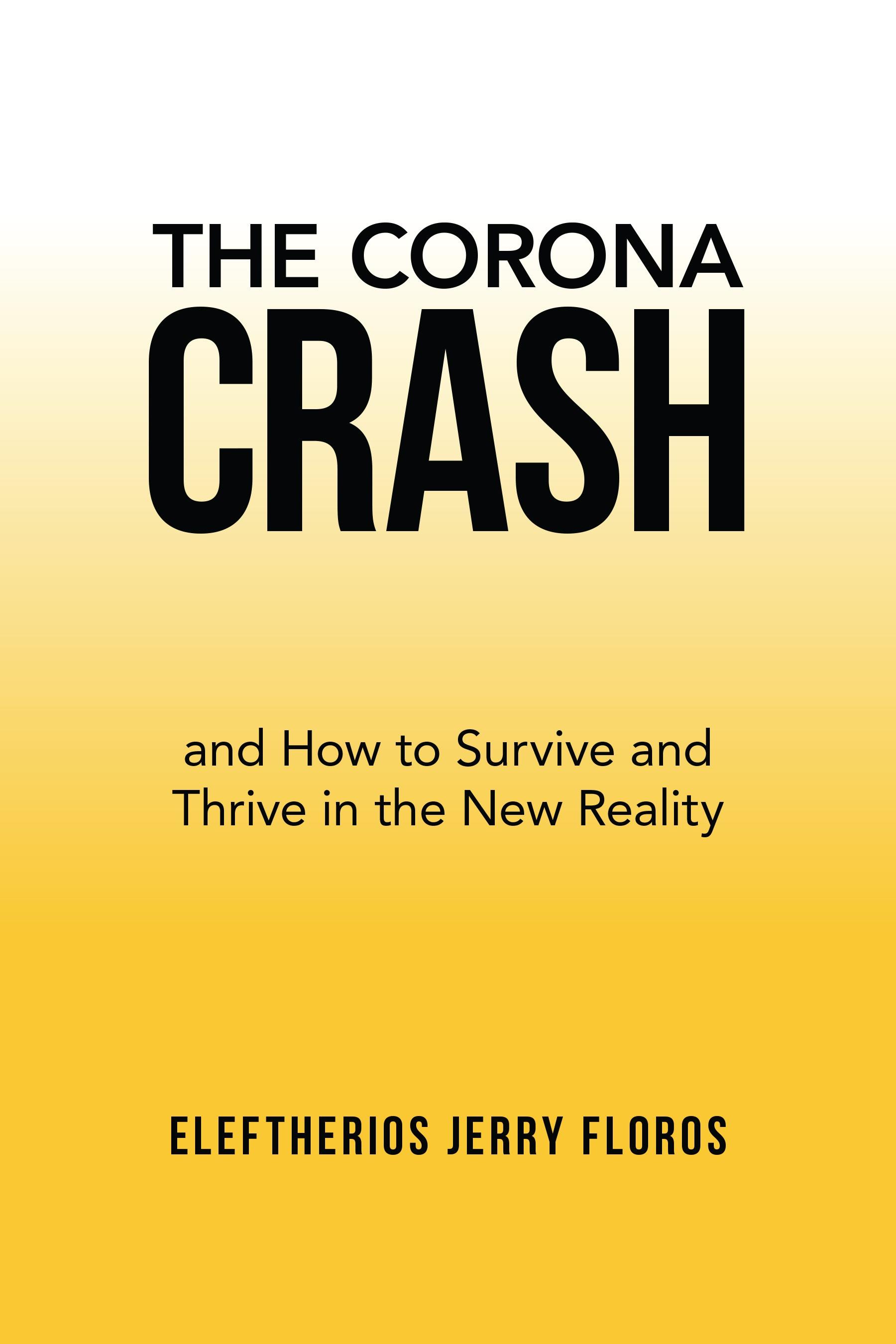
The Corona Crash and How to Survive and Thrive in the New Reality is available on Amazon, Lulu and Barnes & Noble. 

Let's block ads! (Why?)


"discourse" - Google News
December 30, 2020 at 09:34PM
https://ift.tt/34UuJXJ

COVID-Fury and the Lockdown Tears: A Discourse on the Economic Implications of Lockdowns - BBN Times
"discourse" - Google News
https://ift.tt/2KZL2bm
https://ift.tt/2z7DUH4

What Argentina's 'green handkerchief' movement is all about - CNN

On Wednesday, a majority of its Senate voted yes on a bill to legalize abortion up to 14 weeks into a pregnancy -- a significant liberalization of the current law, which generally prohibits the procedure, and only allows exceptions for rape and the pregnant woman's health. President Alberto Fernández has pledged to sign the bill into law, which will make Argentina the largest nation in Latin America to legalize abortion, and one of just a tiny handful of countries in the region where women are allowed to decide for themselves whether or not to continue a pregnancy.
But it's not just about legal abortion, Giselle Carino, an Argentinean feminist who is the CEO and regional director of International Planned Parenthood Federation/Western Hemisphere Region, told me. "It's also the notion that women are whole," she said. "It's about public health and saving one's life, but here it's also a bigger notion of how you can be a true part of the democratic process, and that's the notion of citizenship."
Since 2018, this is what many Argentinian women have been yelling on the streets: That for women to be full sovereign citizens and equal participants in society, they need full sovereignty over their own bodies.
This victory comes after decades of feminist advocacy and a women's movement that has demanded its issues be understood as interconnected and overlapping. The message of Argentinean feminists: You can't separate out the right of a woman to decide what happens to her reproductive system from the right of a woman to decide what happens to the rest of her body and the rest of her life -- that is, there are connections between abortion rights and the right to live free from violence, the right to go to school, the right to be paid fairly, the right to political representation and the right to chart one's own course.
These feminists asked: How can a woman plan her future and follow her dreams if she can't decide for herself when and whether to have children? How can we tell women they have the right to live free of male control and violence, and then allow the state to control their reproductive lives, forcing them to continue pregnancies, risk their health and their lives, and give birth against their will?
The abortion-rights movement in Argentina, Carino tells me, has gone hand in hand with the fights against gender-based violence and gender discrimination more broadly, because women's lives aren't segmented into political buckets.
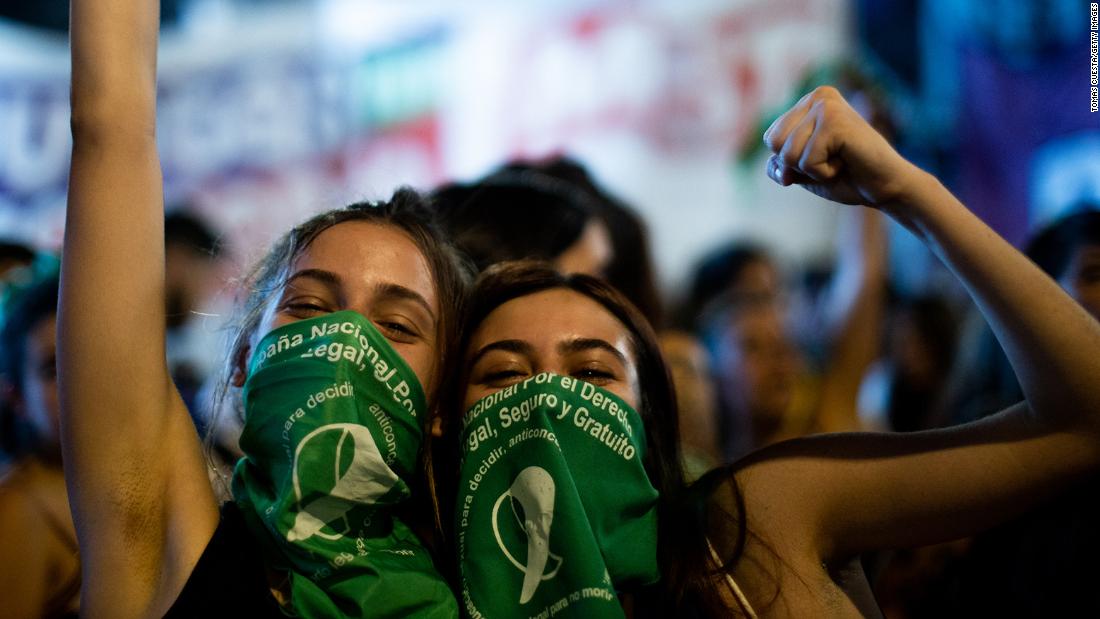
The symbol of this movement has been the green handkerchief, and it has spread across Latin America to symbolize a commitment to women's rights. "Walking the streets in Argentina anywhere, you see the young girls wearing the green handkerchiefs in their backpacks as they go to school," Carino says to me. "It's become a symbol of freedom and citizenship." And it's a resonant one in a nation where mothers who lost their children during the dictatorship would march with white headscarves, demanding answers for the "disappeared."
The reality of abortion in Argentina is the same as it is in many other nations where the procedure is outlawed or strictly limited: Some lucky women with means are able to work the system or find relatively safe but clandestine options to end unwanted pregnancies, while women with fewer means -- often rural, indigenous, and poor women -- have fewer options, and are often forced to either resort to less safe methods or to carry a pregnancy they desperately do not want.
All of those women, but most often the poor ones, risk being maimed or dying if an unsafe abortion goes wrong, or going to jail if they are caught by police. All of them are being stigmatized -- effectively told by their country that they are criminals who should be ashamed -- for a choice tens of millions of women make elsewhere around the world make every year.
Even in cases where abortion is permitted in Argentina -- rape, for example -- girls and women who live in rural areas or who don't have the resources to navigate the legal and medical systems often wind up with no choice at all. And if an over-zealous law enforcement official wants to send an anti-abortion message, women and doctors wind up treated like criminals, even when they comply with the law.
The costs of restrictive abortion laws are high: According to the World Health Organization, unsafe abortion remains a leading cause of maternal mortality worldwide and women die from unsafe abortions in the highest numbers in nations where it is illegal or difficult to access. For every woman who dies from an unsafe abortion, thousands more are seriously injured -- some 7 million women are hospitalized every year from unsafe abortions in developing nations, and globally, more than half a billion dollars is spent every year treating complications from unsafe and usually illegal procedures. Across Latin America, Guttmacher Institute research shows that most abortions are not safe abortions.
Argentina is an upper middle-income country and a regional leader. Legalizing abortion could have broad ripple effects from Brazil to Chile to Colombia and beyond. Yes, there are the usual opponents: The religious right, which in Pope Francis's homeland means the Roman Catholic Church and evangelical groups. But Argentinean feminists say there has been a sea change, especially among the young, and that the Covid-19 pandemic has raised the stakes even higher.
As in so many other nations, in Argentina there is evidence of a significant uptick in domestic violence during the lockdown, and women's rights groups are documenting more murders -- because for women, being trapped at home too often means being trapped with an abuser or a rapist. It's still too early for full, reliable data. But anecdotally, this has been a terrible year for women's economic stability, our professional advancement and our basic personal safety.
Which is one reason why it's such a big deal that Argentina, a divided nation in the midst of a global pandemic, legally confirmed that women have a right to bodily autonomy.
"We have all had a terrible year," Carino says to me. But, she says, this shows "that we can overcome and resist and continue fighting and eventually succeed, even in the oddest of circumstances possible."

Let's block ads! (Why?)


"Opinion" - Google News
December 30, 2020 at 07:42PM
https://ift.tt/3pzoVur

What Argentina's 'green handkerchief' movement is all about - CNN
"Opinion" - Google News
https://ift.tt/2FkSo6m
Shoes Man Tutorial
Pos News Update
Meme Update
Korean Entertainment News
Japan News Update

Opinion | pence-elecotoral-college-votesb - The New York Times

On Jan. 6, the vice president will preside as Congress counts the Electoral College’s votes. Let’s hope that he doesn’t do the unthinkable — and unconstitutional.

President Trump recently tweeted that “the ‘Justice’ Department and FBI have done nothing about the 2020 Presidential Election Voter Fraud,” followed by these more ominous lines: “Never give up. See everyone in D.C. on January 6th.”

The unmistakable reference is to the day Congress will count the Electoral College’s votes, with Vice President Mike Pence presiding. Mr. Trump is leaning on the vice president and congressional allies to invalidate the November election by throwing out duly certified votes for Joe Biden.

Mr. Pence thus far has not said he would do anything like that, but his language is worrisome. Last week, he said: “We’re going to keep fighting until every legal vote is counted. We’re going to win Georgia, we’re going to save America,” as a crowd screamed, “Stop the steal.”

And some Republicans won’t let up. On Monday, Representative Louie Gohmert of Texas and other politicians filed a frivolous lawsuit, which has multiple fatal flaws in both form and substance, in an attempt to force the vice president to appoint pro-Trump electors.

Mr. Trump himself has criticized virtually everyone’s view of the election, from that of the Supreme Court to the F.B.I. to Senator Mitch McConnell, but he has never attacked Mr. Pence, suggesting he has hopes for the vice president.

But as a matter of constitutional text and history, any effort on Jan. 6 is doomed to fail. It would also be profoundly anti-democratic and unconstitutional.

Both Article II of the Constitution and the 12th Amendment say that the votes of the Electoral College are to be opened by the “president of the Senate,” meaning the vice president. The Electoral Count Act, passed in 1887 to avoid chaotic counts like the one that followed the 1876 election, adds important details. It provides a detailed timeline to tabulate electoral votes, culminating with the final count to take place on Jan. 6, and it delineates the powers of the vice president.

He is to be the “presiding officer” (meaning he is to preserve order and decorum), open the ballot envelopes, provide those results to a group of tellers, call for any objection by members of Congress, announce the results of any votes on objections, and ultimately announce the result of the vote.

Nothing in either the text of the Constitution or the Electoral Count Act gives the vice president any substantive powers. His powers are ministerial, and that circumscribed role makes general sense: The whole point of an election is to let the people decide who will rule them. If an incumbent could simply maneuver to keep himself in office — after all, a maneuver to protect Mr. Trump also protects Mr. Pence — the most foundational precept of our government would be gravely undermined. In America, “we the people,” not “we, the vice president,” control our destiny.

The drafters of the Electoral Count Act consciously insisted on this weakened role for the vice president. They guarded against any pretense he might have to throw out a particular state’s votes, saying that the vice president must open “all certificates and papers purporting to be” electoral votes. They further said, in the event of a dispute, both chambers of Congress would have to disagree with a particular state’s slate of electoral votes to reject them. And they made it difficult for Congress to disagree, adding measures such as a “safe harbor” provision and deference to certification by state officials.

In this election, certification is clear. There are no ongoing legal challenges in the states of any merit whatsoever. All challenges have lost, spectacularly and often, in the courts. The states and the electors have spoken their will. Neither Vice President Pence nor the loyal followers of President Trump have a valid basis to contest anything.

To be sure, this structure creates awkwardness, as it forces the vice president to announce the result even when personally unfavorable.

After the close election of 1960, Richard Nixon, as vice president, counted the votes for his opponent, John Kennedy. Al Gore, in perhaps one of the more dramatic moments of our Republic’s short history, counted the votes and reported them in favor of George W. Bush.

Watching Mr. Gore count the votes, shut off all challenges and deliver the presidency to Mr. Bush was a powerful moment in our democracy. By the time he counted the votes, America and the world knew where he stood. And we were all lifted up when Mr. Gore, at the end, asked God to bless the new president and vice president and joined the chamber in applause.

Republican leaders — including Senators McConnell, Roy Blunt and John Thune — have recognized the outcome of the election, despite the president’s wrath. Mr. McConnell put it in clear terms: “The Electoral College has spoken. So today, I want to congratulate President-elect Joe Biden.”

Notably, Mr. Pence has been silent. He has not even acknowledged the historic win by Kamala Harris, the nation’s first female, first African-American and first Asian-American vice president.

He now stands on the edge of history as he begins his most consequential act of leadership. The question for Vice President Pence, as well as other members of Congress, is which side of history he wants to come down on. Can he show the integrity demonstrated by every previous presidential administration? The American people accept a graceful loser, but a sore loser never goes down well in the history books.

We urge Mr. Pence to study our first president. After the Revolutionary War, the artist Benjamin West reported that King George had asked him what General Washington would do now that America was independent. West said that Washington would give up power and go back to farming. King George responded with words to the effect that “if he does that, he will be the greatest man in the world.”

Indeed, Washington did so, surrendering command of the army to Congress and returning to Mount Vernon for years until he was elected president. And he again relinquished power eight years later, even though many would have been happy to keep him president for life. Washington in this way fully realized the American Republic, because there is no Republic without the peaceful transfer of power.

And it’s now up to Mr. Pence to recognize exactly that. Like all those who have come before him, he should count the votes as they have been certified and do everything he can to oppose those who would do otherwise. This is no time for anyone to be a bystander — our Republic is on the line.

Neal Katyal (@neal_katyal), a former acting solicitor general of the United States and the author of “Impeach: The Case Against Donald Trump,” is a law professor at Georgetown. John Monsky is the creator of the American History Unbound Series of multimedia productions that covers watershed moments in American History and is a board member of the New-York Historical Society.

The Times is committed to publishing a diversity of letters to the editor. We’d like to hear what you think about this or any of our articles. Here are some tips. And here’s our email: letters@nytimes.com.

Follow The New York Times Opinion section on Facebook, Twitter (@NYTopinion) and Instagram.

Let's block ads! (Why?)


"Opinion" - Google News
December 29, 2020 at 05:00PM
https://ift.tt/38IDy85

Opinion | pence-elecotoral-college-votesb - The New York Times
"Opinion" - Google News
https://ift.tt/2FkSo6m
Shoes Man Tutorial
Pos News Update
Meme Update
Korean Entertainment News
Japan News Update

Tuesday, December 29, 2020

Discourse on Slay and takeaways speaks volumes about Schwartz's defense - The Delaware County Daily Times

israelob.blogspot.com

[unable to retrieve full-text content]

Discourse on Slay and takeaways speaks volumes about Schwartz's defense  The Delaware County Daily Times

"discourse" - Google News
December 30, 2020 at 03:47AM
https://ift.tt/37WgO55

Discourse on Slay and takeaways speaks volumes about Schwartz's defense - The Delaware County Daily Times
"discourse" - Google News
https://ift.tt/2KZL2bm
https://ift.tt/2z7DUH4

Opinion | When ‘The American Way’ Met the Coronavirus - The New York Times

The end of the year has been awkward for Gov. Andrew Cuomo. As he promotes his new, self-congratulatory book about navigating New York through its first coronavirus wave of in the spring, he is also battling a new surge of cases.

He’s not been too happy. At a news conference in late November, he lashed out at his constituents.

“I just want to make it very simple,” he said. “If you socially distanced and you wore a mask, and you were smart, none of this would be a problem. It’s all self-imposed. It’s all self-imposed. If you didn’t eat the cheesecake, you wouldn’t have a weight problem.”

His blunt rhetoric exemplifies how political leaders — in Washington and in red and blue states — are responding to the Covid-19 crisis. They’ve increasingly decided to treat the pandemic as an issue of personal responsibility — much as our country confronts other social ills, like poverty or joblessness.

Yes, it’s absolutely critical that we wear masks and continue to keep our distance. But these individual actions were never meant to be our primary or only response to the pandemic.

Instead, more than 10 months into this crisis, our government has largely failed to act. There is no national infrastructure for testing or tracing. States have been put in a bind by federal failure, but even so, many governors have dithered on taking large-scale actions to suppress the current surge.

As Governor Cuomo excoriated New Yorkers about mask-wearing, he took no responsibility for not shutting down indoor dining for weeks, well into the new spike.

“We’re putting a lot of faith in individual actions and individual collective wisdom to do the right thing,” Rachel Werner, the executive director of the Leonard Davis Institute of Health Economics at the University of Pennsylvania, told me, “but it’s without any leadership.”

It’s no great mystery what the government could do to control the virus. Every expert I spoke to agreed on the No. 1 priority: testing.

“The primary thing we really should have had is ubiquitous testing, and the government has just not chosen to do that,” said Ashish Jha, the dean of the School of Public Health at Brown University and an early adviser to the White House Covid task force.

States can do only so much with their limited resources to roll out a testing regime; it requires the resources and heft of the federal government. And while the year-end relief legislation provides more money for testing, it’s not nearly enough, particularly for producing and sustaining rapid testing.

Dr. Jha said that early in his time on the task force there was a lot of interest in building a robust testing system. “But it was killed by the political leadership in the White House,” he said.

Then, the Trump administration allowed financial aid to businesses and households to dry up during some of the worst months of the pandemic — and only just struck a last-minute deal to partly revive it.

The inconsistent aid had a cascading effect. Governors like Mr. Cuomo, who don’t have the budgetary ability of the federal government to extend substantial business relief, ended up in a difficult situation as the virus surged in late summer and fall. New York had to keep high-risk businesses open, it was argued, so that they could earn whatever meager revenue they could. But what is “the economy” worth if it comes at the cost of our physical well-being, our very lives?

Calling Covid restrictions “Orwellian,” Kayleigh McEnany, the White House press secretary, said on “Fox & Friends” in late November that “the American people are a freedom-loving people” who “make responsible health decisions as individuals.” That, she said, is “the American way.”

I agree with her on one point: It is the American way to champion individualism over collective obligation. In 2019, 34 million Americans officially lived below the poverty line in this country, with many millions more struggling just above it — and that number has only increased since then. We could lift every family out of poverty by sending out regular checks; other countries use taxes to fund benefits that significantly reduce their poverty rates. Poverty, then, is a policy choice.

The pandemic gave us a crystal-clear window into this. The government’s initial response kept poverty from rising. But once stimulus checks and enhanced unemployment benefits started expiring, millions of people were pushed into destitution. It took Congress months to reach a deal to send more help, and even so, the latest relief bill cut back on stimulus spending and slashed supplementary federal unemployment benefits in half.

“We’ve basically had a complete abdication of the federal response,” Gregg Gonsalves, an assistant professor in epidemiology of microbial diseases at Yale, told me when asked about the interplay between public health and economic struggles.

If we want people to take individual actions to help curb the spread of the virus, we also need to invest in their ability to do so. The government could send every household masks — a plan the Trump administration nixed early on. It could pay Americans to stay home if they feel sick, test positive or work for a business that should close for public health reasons, to avoid choosing between their health and their bills.

“If you want people to do the right thing you have to make it easy, and we’ve made it hard,” Dr. Gonsalves noted. States, too, have been told they’re on their own, with Congressional Republicans refusing to agree to the money Democrats want to send to help fill the vast hole left by the pandemic. In response, some governors seem to be prioritizing businesses over public health, handing out ineffectual curfews to restaurants and bars rather than just shutting them down.

But to help small businesses, and to return to strong economic growth, tamping down the pandemic still has to come first, even as pressure inevitably mounts on the incoming Biden administration to view vaccination, which will take months, as a cure-all that allows for business as usual.

“There’s no realistic prospect of fostering a complete and durable recovery until the public health situation has been brought under control,” said David Wilcox, an economist and senior fellow at the Peterson Institute for International Economics.

The last 10 months have given us a very clear message: We are inextricably connected to each other. We can’t stay healthy unless our neighbors can do so, too. The economy can’t properly function if Americans are sick and dying. The economy is only a means to an end, a way to improve living conditions. The economy should serve us — we cannot sacrifice our lives at its altar.

The Times is committed to publishing a diversity of letters to the editor. We’d like to hear what you think about this or any of our articles. Here are some tips. And here’s our email: letters@nytimes.com.

Follow The New York Times Opinion section on Facebook, Twitter (@NYTopinion) and Instagram.

Let's block ads! (Why?)


"Opinion" - Google News
December 29, 2020 at 05:00PM
https://ift.tt/37W62fp

Opinion | When ‘The American Way’ Met the Coronavirus - The New York Times
"Opinion" - Google News
https://ift.tt/2FkSo6m
Shoes Man Tutorial
Pos News Update
Meme Update
Korean Entertainment News
Japan News Update

Opinion | Wrestling With Complicity in the Trump Administration - The New York Times

Readers, reacting to an Op-Ed by a former Justice Department lawyer about her ethical conflicts, offer both censure and sympathy.

To the Editor:

Re “My Regrets Working for Trump,” by Erica Newland (Op-Ed, Dec. 21):

The participants in the Trump administration are now coming out in droves to salvage or reinvent their careers and image. Erica Newland, a lawyer in the Justice Department, adds her name to that list. Well, at least she did eventually walk out. Perhaps in doing so she deserves a scintilla of forgiveness from those of us whose democratic sensibilities she offended. But democracy does not forgive. It either stands or falls.

Those in the Trump administration who were either active in promoting him or complicit in his abuses will be remembered for their contributions in his attempt to dismantle democracy. Most will try to rewrite their own record for their own legacy’s sake. For their children and grandchildren. But, hopefully, the work of good journalism now, and good historians in the future, will continue to shine a light on this sad period in American history and those who enabled it.

Holly Billeris
Bayville, N.Y.

To the Editor:

I am heartened and heartbroken to read Erica Newland’s Op-Ed. Having served as a deputy attorney general for Colorado, I can’t imagine having to compromise the public trust or my own dignity to work under the conditions she describes. It will be an enormous challenge to rebuild respect in our country’s legal profession. Ms. Newland’s Op-Ed is a start.

I don’t believe we were exclusively an army of pure-minded public lawyers before President Trump took office, but the destruction described by Ms. Newland is a substantial departure and is uniquely horrifying. May we all take responsibility to nourish a healthy legal system free from political pressure. We have an oath to uphold, humans to treat fairly, a legal system to defend and a country to be accountable to.

Thank you, Ms. Newland, for exposing the issues, and please continue to speak from your heart about this ethical dilemma. We need to hear the truth.

Diana E. Black
Denver

To the Editor:

After struggling with ethical conflicts similar to those that Erica Newland faced, I resigned from not one but two public service positions in local government here in New Mexico in less than a year.

In the first position, my Republican boss directed me to violate the very sunshine law I had been enthusiastically hired to enforce. In the second position, I was pressured by elected and appointed Democrats to alter my rendered legal opinions to achieve near-term political goals.

In both cases, I cited an ethical rule that allows an attorney to withdraw from representation where “the client insists upon taking action that the lawyer considers repugnant or with which the lawyer has a fundamental disagreement.”

Ms. Newland is right that rationalizing the decision to remain in a job where one’s ethical and even moral standards are on the line is a mistake. Lawyers must refuse to take part in local or national government administrations that insist on violating legal or ethical standards. To do anything less is to blur the line between right and wrong, and ultimately to render that distinction meaningless.

Joel M. Young
Bernalillo, N.M.

Let's block ads! (Why?)


"Opinion" - Google News
December 29, 2020 at 02:01AM
https://ift.tt/38KqXkL

Opinion | Wrestling With Complicity in the Trump Administration - The New York Times
"Opinion" - Google News
https://ift.tt/2FkSo6m
Shoes Man Tutorial
Pos News Update
Meme Update
Korean Entertainment News
Japan News Update

Search

Featured Post

I just paid $9.99 for a carton of 18 eggs. Will prices ever drop? | Opinion - Sacramento Bee

[unable to retrieve full-text content] I just paid $9.99 for a carton of 18 eggs. Will prices ever drop? | Opinion    Sacramento Bee ...

Postingan Populer