Rechercher dans ce blog

Friday, January 29, 2021

I'm part of the 1%. We need to acknowledge that the deck has been stacked in our favor - CNN

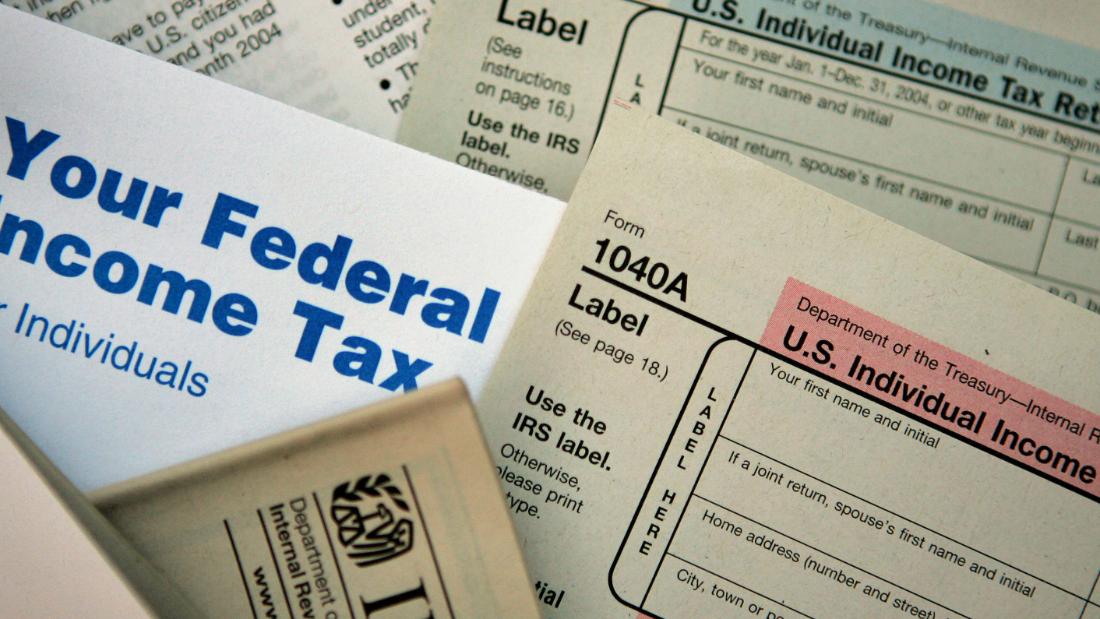
A new report this week estimated that among billionaires alone, the surging market accounts for a $1.1 trillion increase in wealth since the pandemic began in March. This windfall happened during a time when our democracy faced, in Trump, an existential threat, and when millions of Americans were devastated by Covid-19 while we were safely ensconced in second homes doing mostly non-essential jobs.
We've just lived through the term of a President who many of us in America's top 1% bracket -- defined in 2020 as having a net worth of at least $11 million -- vehemently opposed even though we got richer during his administration.
Will the Democrats among us now have the courage to wholeheartedly support one who works hard to make us pay more taxes? Will we recognize that the nation needs our cash to rebuild and that the system that has been so good to us must be reengineered in the interest of fairness in politics, education, health and employment, as well as to repair our degraded social relationships and rebuild some semblance of national solidarity?
The next four years are critically important to the future of our nation and our world. The Democratic coalition that defeated Trump is fragile and could fall apart if its wealthiest members balk when asked to bear the financial costs of the economic programs required to keep it together. Let's hope we prove up to the challenge of putting our money where our mouths have been. The alternative would be a disaster.
Doing the right thing will not be easy. Giving even a little of it up will be hard given the endowment effect and the deep connection many of us feel between net worth and self worth. However, here are some things that we should keep in mind to make it easier to do what's right:
Don't take tax increases personally. Yes, we are pretty smart, have mostly worked hard and played by rules which very, very few us had any hand in making. We've also had some luck. But this is not about personal virtue; it's just about money.
Recognize that the deck has been stacked in our favor. Many of us -- particularly those working in and around finance -- have been paid, directly or indirectly, by taking a slice off the top of markets (e.g. equity, debt, derivatives) that have been driven to record highs largely by wage repression and socialized interest rates. We've been able to double dip by investing -- it has been hard to spend all our income -- in the market. The market (including reinvested dividends) is 26 times higher than it was in 1980 after adjusting for inflation. Most of those gains have gone to the 1%.
Stay calm. Proposals to raise tax rates can sound scary to the wealthy, but there is no need to pack our bags for Switzerland, Florida or some other tax haven just yet. Policy makers will be hesitant to make sudden changes that could tank the stock market, increase interest rates or depress asset prices given the collateral damage it would do to the middle class through their mortgage-financed homes, student loans and 401(k)s. Despite a few crazy days in 1987, 2001 and 2008 -- thank God the Fed bailed us out every time -- it has been a slow and steady rise to the top. The return trip will be no different.
Become our higher selves. This may be just the nudge those of us with more than enough money need to try new and better things: taking a new job, volunteering, learning the piano, or spending more time with our kids and grandkids.
Hold our heads high. One important task of politics is to arrange society so that people can pursue their own projects without doing wrong, injuring others or benefiting from their misfortune. But many of us have benefited from the misfortune of others who have suffered from awful things like wage repression, leveraged buyouts, reckless lending to consumers. A more balanced policy environment will make it easier to go to work with our heads held higher.
Relax about the kids. It's only natural to worry about our kids and grandkids, but we know that too much money can be bad for them and we've still got plenty to help with college or medical bills if the need arises. Given how close we are to the top, regression to the mean guarantees that most of our kids will be significantly less wealthy than us. So a world less skewed to the wealthy will be better for them. And though technology-driven creative destruction has been brutal for many people, it's created job opportunities among winner-take-all companies like Amazon and Google that our well-educated, well-connected children are strongly positioned to compete for.
Don't fall for the rhetoric. Our success since 1980 has not been "capitalism," and policies less friendly to us are hardly "socialism." Let's not embarrass ourselves by regurgitating the simplistic economics that we learned in college. The recurring crises of the past decade have left those simplistic notions largely discredited.
Go out with a bang! The world needs our money, so if we don't want to lose it, let's use it! Let's give it away, invest it for real impact (e.g. climate, crumbling infrastructure, healthcare, social justice, etc.), or just go on a massive spending spree at a time when the economy could use the boost.
Keeping these things in mind will make it easier for us to embrace the obvious things that Joe Biden should do: raise our taxes, take explicit steps to shrink the finance industry (just like gambling and cigarettes, the growth of finance has been self-evidently bad even while being good to many of us) and establish new norms that emphasis fairness, median income growth and well-being rather than the stock market, GDP growth and the Forbes billionaires list.

Let's block ads! (Why?)


"Opinion" - Google News
January 30, 2021 at 04:51AM
https://ift.tt/3iV5Lx8

I'm part of the 1%. We need to acknowledge that the deck has been stacked in our favor - CNN
"Opinion" - Google News
https://ift.tt/2FkSo6m
Shoes Man Tutorial
Pos News Update
Meme Update
Korean Entertainment News
Japan News Update

The forces driving the GameStop rebellion - CNN

Three weeks later, a different and non-violent crowd went on a different rampage, this one tearing through Wall Street, borrowing the slogan to defend their right to flex their muscle in the stock market. They had already sent the markets reeling and caught the attention of government watchdogs at the highest levels, after they sent the prices of distressed companies shooting into the stratosphere. It was a move that, not coincidentally, was reminiscent of other anti-establishment rebellions popping up across the world.
You may not find much in common between what happened in Washington and what transpired this week on Wall Street, or in other seemingly unrelated raucous protests overseas, but if you look closely, there is a common thread, a common set of forces at play, and a not-so-hidden warning.
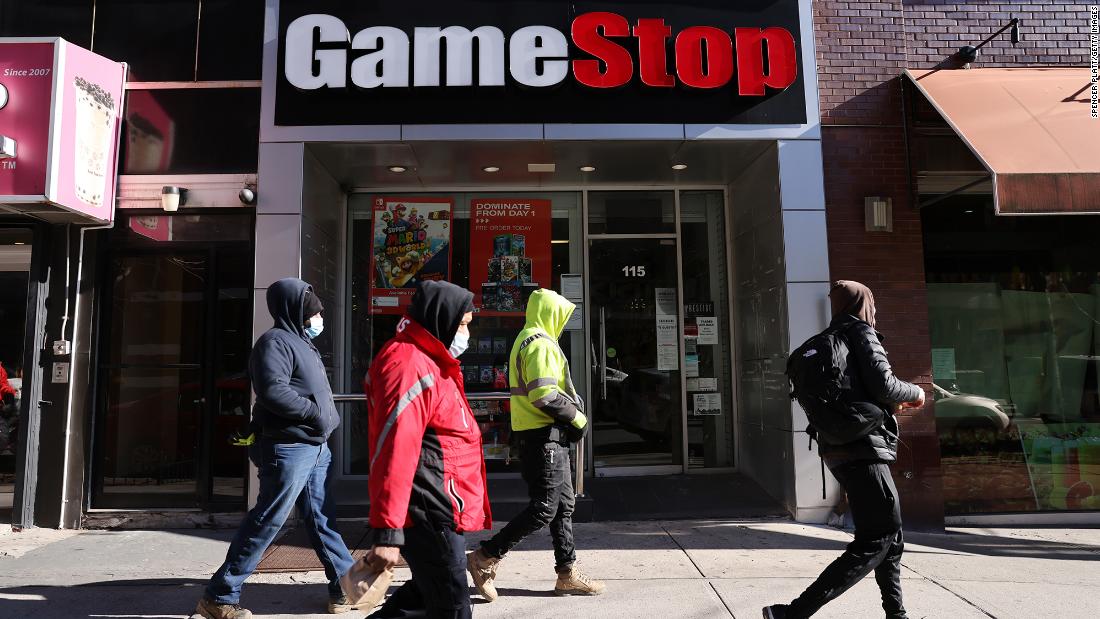
Few people had heard about GameStop before this week, much less about GameStop stock, GME. But two groups had: The members of an online forum on the social media platform Reddit and Wall Street financiers, who had bet heavily on the failure of the company. In the past few days, the two clashed in what amounted to financial warfare. The online youngsters headbutted the traders, drawing financial blood in the process. It was a sight to behold!
The forces fueling the emotions and the mechanics of the clash are not unlike what we've seen in other confrontations in recent months. Social media as the organizing environment; a sense of frustration against the establishment; a belief that some sort of injustice is benefitting the powerful, and a newfound source of strength, a way to attack, to inflict fear and pain on those viewed as responsible, or at least benefitting from that injustice. The difference, of course, was that what the Capitol rioters did was break the law and what the Redditers did on Wall Street appeared to be perfectly legal.
What better way to get even, they might have thought, than to stick it to the very rich, to the Wall Street elite, no less. The moment had echoes of Occupy Wall Street, but this was a different generation, a different time, and very different tactics.
Members of the Reddit page WallStreetBets decided to go after short sellers, traders who believe a stock price is going to fall badly. Short sellers borrow stock and sell it, expecting that the stock will drop, perhaps the company will go out of business. Their plan is to buy the stock much more cheaply than they sold it in order to return the stock they borrowed, and in the process make a profit. But if the price goes up instead of down, suddenly they have to pay a lot more than they received when they sold the borrowed stock. The cost to short sellers in a so-called short squeeze can be catastrophic.
So, Reddit traders set out to boost the stock of GameStop, a struggling video game retailer. When the stock started climbing, other buyers jumped on board. Then short sellers were forced to buy to repay their loan. It was a dizzying process. The stock exploded, up more than 1,200%.
The game extended to other companies, including Nokia, AME and Blockbuster, creating and destroying fortunes, putting hedge funds against the wall, triggering alarms in Washington and Wall Street. The question came up in the White House press briefing, where President Joe Biden's press secretary confirmed the White House is "monitoring" the situation.
Some online trading platforms crashed; trading was halted due to the huge swings. When the app Robinhood announced it would stop trading the targeted stocks, someone quickly filed a lawsuit accusing it of market manipulation. Robinhood later changed its stance. Adding to the drama, Rep. Alexandria Ocasio-Cortez had called for an investigation of Robinhood's move. When Republican Sen. Ted Cruz replied "fully agree" with AOC, she blasted him, accusing him of "trying to get me killed," on Jan. 6. "You can sit this one out," she advised about the trading turmoil.
Of course, the events in Washington and on Wall Street are very different, but a number of similarities suggest we will see more anti-establishment developments erupt where and when we least expect it. And the suddenness of the events, along with the damage it can inflict -- as we already saw on Capitol Hill, on Wall Street, and in other places including, for example, nearly a dozen cities in the Netherlands recently -- could be startling.
In the case of the violent insurrection, the coup attempt of Jan. 6, the fact that a single charismatic figure, the outgoing president, stoked the emotions and directed his followers into the focus of their attack, turned the anger of the multitudes organized mostly through social media into a very specific and uniquely destructive conflagration.
It's a reminder that free-floating anger and a restlessness to become empowered, to exact revenge, and to right a perceived wrong, can turn explosive under the sway of charismatic demagogues. Without such leadership, movements can erupt and shake things up, but they become truly dangerous when a leader emerges.
In the Wall Street confrontation, Elon Musk threw some logs in the bonfire, but he was not the leader. The Reddit traders broke no glass; they didn't kill anyone. But there was plenty of metaphoric and very real financial carnage.
The financial system was shaken, and deeply troubled. The markets, which had preoccupied many observers by climbing relentlessly despite the pandemic recession, suddenly looked vulnerable to the unpredictable behavior of mostly anonymous players. And "players" seemed like the right word. The Reddit crowd, and the people who followed their lead, seemed to be pulling a prank, but it was one with potentially dire consequences. If a Reddit forum can create and destroy billions of dollars, how much can we trust the markets, financial engines of the US economy? And if the players could disrupt US markets, what could they do to smaller ones around the world? How much should we worry about the global economy, already battered by a once-in-a-century pandemic?
From Capitol Hill to Wall Street, from the Netherlands to Germany, the people are restless, social media is open, and institutions are vulnerable. Economic inequality, pandemic frustration, and a sense of uncertainty have brought us to what feels like a hinge in history. The challenge for responsible leaders feels as crucial as it has at any time in living memory.

Let's block ads! (Why?)


"Opinion" - Google News
January 30, 2021 at 02:38AM
https://ift.tt/3r3TSrC

The forces driving the GameStop rebellion - CNN
"Opinion" - Google News
https://ift.tt/2FkSo6m
Shoes Man Tutorial
Pos News Update
Meme Update
Korean Entertainment News
Japan News Update
Opinion: Biden’s plans boost Texas energy jobs that will prevent climate disasters - Houston Chronicle

When it comes to climate change, there’s a new sheriff in town. Unfortunately, too many politicians are still pretending it’s the Old West.

In his first days in office, President Joe Biden took significant action to combat the climate crisis — from weaning the United States off fossil fuels to setting bold goals for clean energy. Unsurprisingly, the usual suspects — too many of them from Texas — responded with incoherent arguments against renewable energy and for the continued desecration of our public lands.

Sen. Ted Cruz claimed Biden is “more interested in the views of the citizens of Paris than in the jobs of the citizens of Pittsburgh.” The Paris Climate Agreement, an international agreement to eliminate fossil fuel usage, was agreed upon in 2015, and Biden just reaffirmed U.S. support. That agreement isn’t for the French; it benefits all of us. Ironically, given our junior senator’s statement, the city of Pittsburg, Texas, is saying goodbye to its coal plant and Campbell Soup is installing solar at its factory in, yes, Paris, Texas.

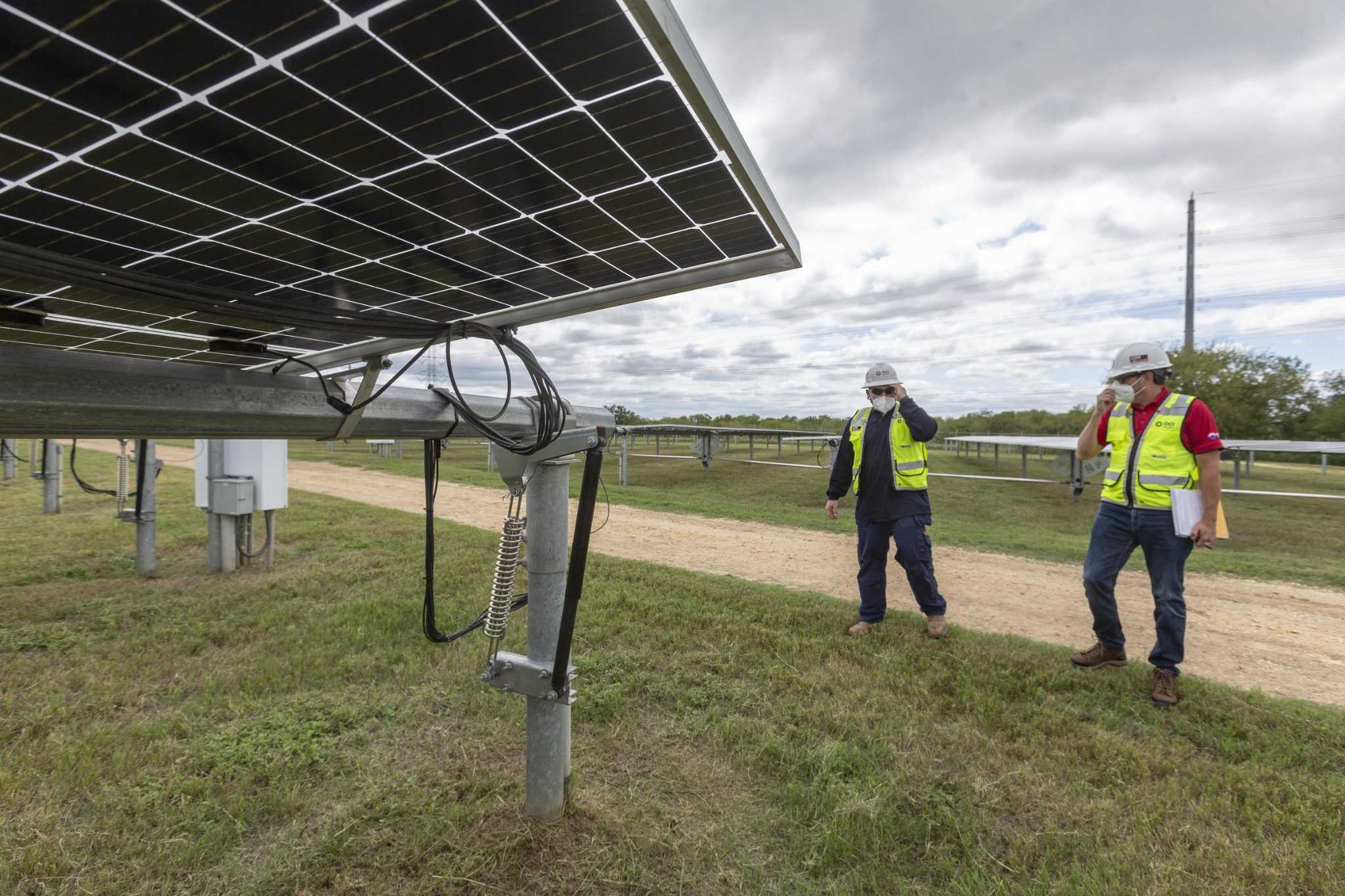
Rep. Dan Crenshaw has repeated half-truths about the impact to jobs from the president’s actions. He described wind and solar power as “silly solutions” which “don’t work.” Strange, because they sure do work in Texas. We lead the nation in wind power, and last year wind surpassed coal as the state’s second largest source of electricity. This year, Texas will install more solar capacity than any other state. The sun and wind are reliably powering our grid, reducing pollution and employing out-of-work oil and gas landmen.

We agree with Crenshaw on one thing: Research and development are worthwhile investments of public funds to propel ongoing progress against climate change. But innovation doesn’t happen on its own. It’s set in motion by market-shaping polices, and Biden’s are grounded in science. To keep global temperatures from rising more than 1.5 degrees Celsius — the level necessary to avoid catastrophic climate change — we must reach net-zero emissions by 2050. We can’t wait for more research. We already know what we need to do.

We need to electrify all our cars, trucks and buses. We need to build high-speed rail connecting our cities. We need to reduce energy waste in our buildings and generate 100 percent of our electricity from zero-carbon sources. It is a massive job, akin in scale to the U.S. mobilization for World War II. But it’s a job we can’t afford to put off.

In recent years, Texans have experienced devastation wrought by climate change. Think about Hurricane Harvey’s impact on Houston: over 90 killed and some parts of the city still in disrepair. Scientific studies estimate that global warming made Harvey’s rainfall 15 percent more intense.

Last year’s hurricane season brought a record total of 12 tropical storms to the U.S. coastline, surpassing the previous record of nine from 1916.

According to the National Climate Assessment, the future looks grim, with more extreme heat and humidity, increasingly severe storms and sea-level rise.

Biden is right. It doesn’t make sense to be creating new oil and gas infrastructure, such as the Keystone XL pipeline, when the world is moving away from oil. For example, just this week, General Motors announced it’ll stop making gas-powered cars and SUVs by 2035.

It doesn’t make sense to allow oil companies to continue to release methane, a powerful greenhouse gas, into the atmosphere, when the atmosphere is showing us every day it can’t handle the stress. Our necessary transition to clean energy will also create opportunities for oil and gas workers to help secure a healthy, thriving Texas for generations to come.

Already 250,000 Texans work in the advanced energy industry — in areas such as energy efficiency, solar, wind and electric vehicles — many of whom are earning high salaries as engineers, financial analysts and construction managers. Federal investment in clean energy, like that proposed by the president, “would add $350 billion to Texas gross state product, a six-fold return on investment; increase tax revenues; create 2 million jobs; and deliver billions in annual savings to consumers,” according to the Texas Advanced Energy Business Alliance. But arguments over jobs distracts from the real issue — life as we know it, and the rich diversity of the planet, is at grave risk.

We face no greater long-term threat than climate change. Anyone who is serious about protecting the health of our great state and its people will support Biden’s efforts to reduce American reliance on fossil fuels.

Metzger is executive director of Environment Texas, a non-profit advocate for clean air, clean water and open spaces.

Let's block ads! (Why?)


"Opinion" - Google News
January 30, 2021 at 03:07AM
https://ift.tt/3pAydqG

Opinion: Biden’s plans boost Texas energy jobs that will prevent climate disasters - Houston Chronicle
"Opinion" - Google News
https://ift.tt/2FkSo6m
Shoes Man Tutorial
Pos News Update
Meme Update
Korean Entertainment News
Japan News Update
I'm one of the 1%. We should support Biden in raising our taxes - CNN

A new report this week estimated that among billionaires alone, the surging market accounts for a $1.1 trillion increase in wealth since the pandemic began in March. This windfall happened during a time when our democracy faced, in Trump, an existential threat, and when millions of Americans were devastated by Covid-19 while we were safely ensconced in second homes doing mostly non-essential jobs.
We've just lived through the term of a President who many of us in America's top 1% bracket -- defined in 2020 as having a net worth of at least $11 million -- vehemently opposed even though we got richer during his administration.
Will the Democrats among us now have the courage to wholeheartedly support one who works hard to make us pay more taxes? Will we recognize that the nation needs our cash to rebuild and that the system that has been so good to us must be reengineered in the interest of fairness in politics, education, health and employment, as well as to repair our degraded social relationships and rebuild some semblance of national solidarity?
The next four years are critically important to the future of our nation and our world. The Democratic coalition that defeated Trump is fragile and could fall apart if its wealthiest members balk when asked to bear the financial costs of the economic programs required to keep it together. Let's hope we prove up to the challenge of putting our money where our mouths have been. The alternative would be a disaster.
Doing the right thing will not be easy. Giving even a little of it up will be hard given the endowment effect and the deep connection many of us feel between net worth and self worth. However, here are some things that we should keep in mind to make it easier to do what's right:
Don't take tax increases personally. Yes, we are pretty smart, have mostly worked hard and played by rules which very, very few us had any hand in making. We've also had some luck. But this is not about personal virtue; it's just about money.
Recognize that the deck has been stacked in our favor. Many of us -- particularly those working in and around finance -- have been paid, directly or indirectly, by taking a slice off the top of markets (e.g. equity, debt, derivatives) that have been driven to record highs largely by wage repression and socialized interest rates. We've been able to double dip by investing -- it has been hard to spend all our income -- in the market. The market (including reinvested dividends) is 26 times higher than it was in 1980 after adjusting for inflation. Most of those gains have gone to the 1%.
Stay calm. Proposals to raise tax rates can sound scary to the wealthy, but there is no need to pack our bags for Switzerland, Florida or some other tax haven just yet. Policy makers will be hesitant to make sudden changes that could tank the stock market, increase interest rates or depress asset prices given the collateral damage it would do to the middle class through their mortgage-financed homes, student loans and 401(k)s. Despite a few crazy days in 1987, 2001 and 2008 -- thank God the Fed bailed us out every time -- it has been a slow and steady rise to the top. The return trip will be no different.
Become our higher selves. This may be just the nudge those of us with more than enough money need to try new and better things: taking a new job, volunteering, learning the piano, or spending more time with our kids and grandkids.
Hold our heads high. One important task of politics is to arrange society so that people can pursue their own projects without doing wrong, injuring others or benefiting from their misfortune. But many of us have benefited from the misfortune of others who have suffered from awful things like wage repression, leveraged buyouts, reckless lending to consumers. A more balanced policy environment will make it easier to go to work with our heads held higher.
Relax about the kids. It's only natural to worry about our kids and grandkids, but we know that too much money can be bad for them and we've still got plenty to help with college or medical bills if the need arises. Given how close we are to the top, regression to the mean guarantees that most of our kids will be significantly less wealthy than us. So a world less skewed to the wealthy will be better for them. And though technology-driven creative destruction has been brutal for many people, it's created job opportunities among winner-take-all companies like Amazon and Google that our well-educated, well-connected children are strongly positioned to compete for.
Don't fall for the rhetoric. Our success since 1980 has not been "capitalism," and policies less friendly to us are hardly "socialism." Let's not embarrass ourselves by regurgitating the simplistic economics that we learned in college. The recurring crises of the past decade have left those simplistic notions largely discredited.
Go out with a bang! The world needs our money, so if we don't want to lose it, let's use it! Let's give it away, invest it for real impact (e.g. climate, crumbling infrastructure, healthcare, social justice, etc.), or just go on a massive spending spree at a time when the economy could use the boost.
Keeping these things in mind will make it easier for us to embrace the obvious things that Joe Biden should do: raise our taxes, take explicit steps to shrink the finance industry (just like gambling and cigarettes, the growth of finance has been self-evidently bad even while being good to many of us) and establish new norms that emphasis fairness, median income growth and well-being rather than the stock market, GDP growth and the Forbes billionaires list.

Let's block ads! (Why?)


"Opinion" - Google News
January 29, 2021 at 06:38PM
https://ift.tt/3iV5Lx8

I'm one of the 1%. We should support Biden in raising our taxes - CNN
"Opinion" - Google News
https://ift.tt/2FkSo6m
Shoes Man Tutorial
Pos News Update
Meme Update
Korean Entertainment News
Japan News Update

Opinion: How to be a better ally to the transgender people in your life - Houston Chronicle

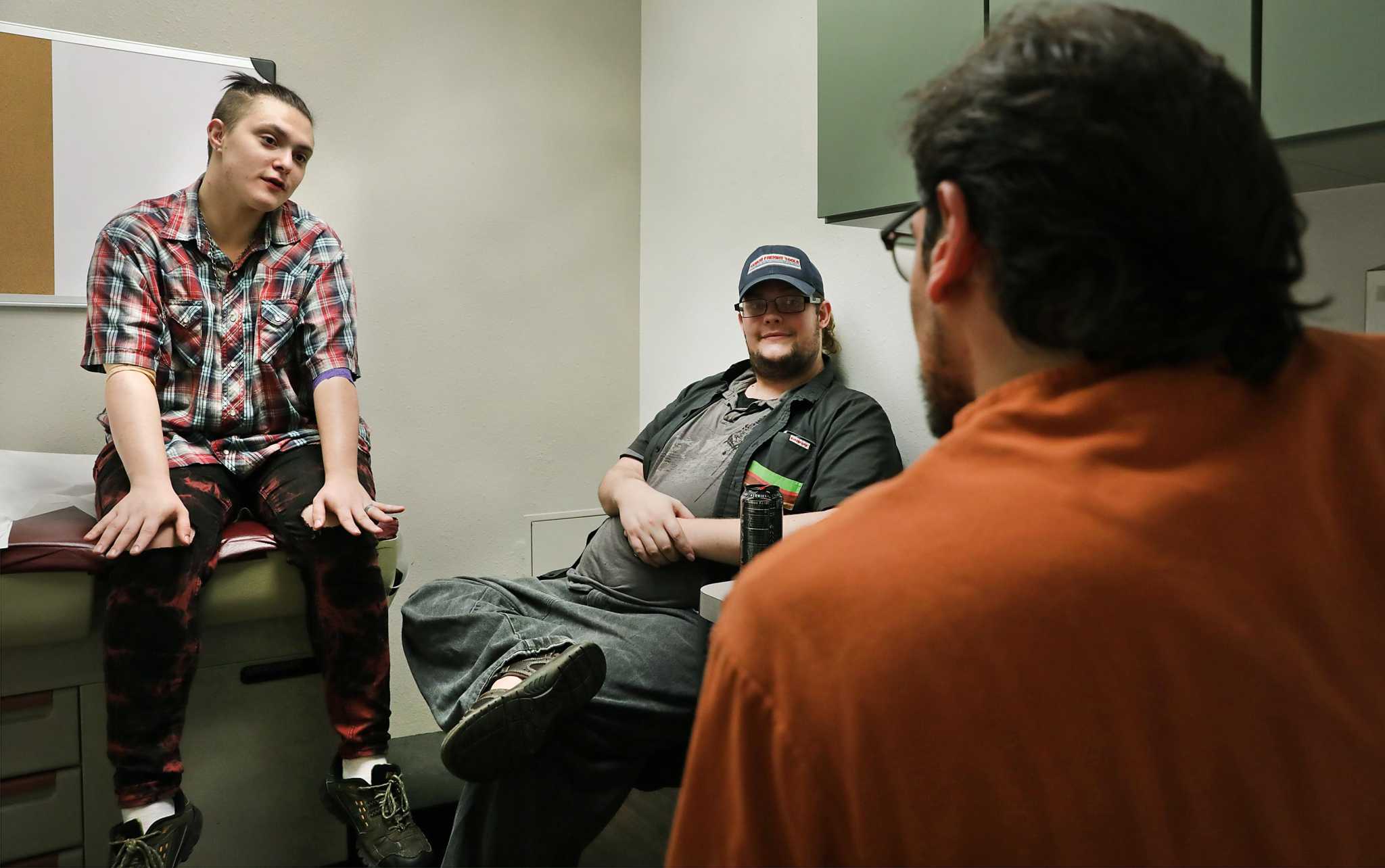
I discovered what it meant to be an ally to the transgender community when my son came out to me. However, I would say that my journey really began when he asked me if I would provide medical care to his friends who were transgender men who didn’t want to be outed by sitting in an obstetrics and gynaecology waiting room.

It was then that I began offering a “Saturday Guys’ Clinic” once a month with my long-time office nurse, Lynette. She taught them to do their injections and helped provide health-care information pertinent to men of the transgender experience. I found caring for these gentlemen extremely rewarding. As my son says, “they are the most grateful patients you’ll ever see.” All these men ask is that we use their correct name and pronouns, be kind and treat them with the dignity they deserve.

To be a cisgender ally — “cisgender” meaning that I identify with the gender I was assigned at birth — is important, and not at all difficult. Here are the basics to being a good ally:

Pronouns are important. In my experience treating, properly-used pronouns can be a source of comfort; used incorrectly, they can cause great pain. You can ensure that you’re creating a welcoming environment by offering your pronouns when introducing yourself. For example, “Hi, I’m Dr. St. Amand and my pronouns are she and her.” This encourages the other person to do the same. If you make a mistake, acknowledge it and try again; this lets the person you’re speaking with know you care. Other steps you can take could be adding your pronouns to your email signature, your social media bios, or your name on Zoom.

Center voices of transgender people. When it comes to issues that affect the transgender community, nobody knows them better than the people affected by them. If you listen, you will learn — and this is the time to listen actively. To be an ally requires us to be educated on important issues affecting the community and to work toward making necessary changes.

Know that gender is a spectrum, and unrelated to sexuality. The term “transgender” is relatively new, but people who identify as what we today call transgender have been around forever, and within cultures across the globe. Some folks identify as female, some male and some identify as agender, nonbinary, or another gender — and these are all valid.

This conversation may be new to you, and perhaps you don’t yet understand it. But even if you don’t understand someone’s identity, that doesn’t mean you can’t respect it.

Additionally, someone’s gender identity does not tell you their sexual orientation. Gender identity refers to who they are, whereas sexual orientation refers to who they are attracted to. A transgender man who is attracted to men might identify as gay because he’s a man attracted to men, whereas a transgender female attracted to men might identify as straight because she’s a woman attracted to men, etc.

To simplify this, “Your identity is based on who you go to bed as; your orientation is based on who you go to bed with.” Be careful about making assumptions.

Use gender inclusive language. Hey y’all, Texas has long been at the forefront of gender-inclusive language. No, really - when addressing a group, consider using gender-inclusive language like “y’all” (or “you all”), “everyone,” or perhaps “distinguished guests,” should you be hosting a nice get together. This is of course in place of gendered language like “hey guys/ladies/girls/boys,” etc. We don’t know how everyone identifies, and letting the community know that you take that into consideration is one simple way to make space for everyone.

The old adage “sticks and stones may break my bones but words will never hurt me” may not always hold true, so please be considerate with what you say. “I never would have guessed you’re transgender!” is not the compliment that you might think it is. Other backhanded compliments or topics to avoid might be:

· “I could tell you are transgender because of ___.”

· “You’re too pretty/handsome to have ever been a man/woman.”

· “Are you going to have the surgery?”

· “Be thankful you don’t have periods.”

· “It’s so cool to have a transgender friend.”

Reducing a transgender person’s identity to their transition — or decision not to — is dehumanizing and offensive, and frankly is none of your business. Not all transgender folks have surgery. Being transgender is about being seen as who you are and surgery is not a requirement. Do not ever “out” a transgender person without their permission as this could be life threatening.

Finally, use your own voice to speak for those who are not heard. Work toward policy changes to make the world safer for everyone including transgender folk. Volunteer with an LGBTQ+ advocacy group. Invite transgender folk to speak to your organization. Be active in stopping verbal harassment. This is not comprehensive, but it is a step in the right direction.

Amand is a physician and OB/GYN at Legacy Community Health’s Central Beaumont clinic and an ally to the transgender community. She has been a practicing OB-GYN in Beaumont for 36 years. She has been caring for transgender patients in her practice for over a decade.

Let's block ads! (Why?)


"Opinion" - Google News
January 29, 2021 at 04:11PM
https://ift.tt/2My0kIr

Opinion: How to be a better ally to the transgender people in your life - Houston Chronicle
"Opinion" - Google News
https://ift.tt/2FkSo6m
Shoes Man Tutorial
Pos News Update
Meme Update
Korean Entertainment News
Japan News Update

Opinion | Marco Rubio Deserves Ivanka Trump - The New York Times

Will the senator’s sycophancy and shape-shifting come to naught?

It’s a measure of the Republican Party’s current depravity that I think of the period when Marco Rubio was besmirching Donald Trump’s genitalia as the good old days.

It was early 2016, Trump hadn’t yet locked down the Republican presidential nomination and Rubio, smarting from Trump’s nickname for him (“Little Marco’) and cracks about his overactive sweat glands, began pointing voters toward Trump’s private parts.

“He’s, like, 6-2, which is why I don’t understand why his hands are the size of someone who’s 5-2,” Rubio told voters at a campaign rally in late February that year. “Have you seen his hands? And you know what they say about men with small hands.”

In that age of innocence, we were talking and even laughing about the nether regions of Republican anatomy. Five years later, we’re talking and most certainly not laughing about the nether regions of Republican morality, which Rubio plumbs as shamelessly as his more exposed Senate colleagues Josh Hawley, Ted Cruz and Tom Cotton do.

All four seem to have dreams of 2024 and don’t want to run afoul of Trump and his base, no matter how thoroughly that debases them. They’re vain weather vanes of his hold on the party, the strength and stubbornness of which are evident in the populous crowd of Trump-smooching presidential aspirants (these four, Mike Pompeo, Nikki Haley, etc.) versus the sparse crew of Trump-spanking ones (Larry Hogan, Ben Sasse and that’s about it).

As Trump’s impeachment trial looms, everything that these young or youngish senators say and do can be seen as an audition for his mantle, which Hawley and Cruz reached for with special cynicism when they joined six other senators in voting not to certify Joe Biden’s election. Rubio and Cotton didn’t go quite that far, but I’m sure Rubio was tempted. Ever since, he has mustered extra energy for showing what a fierce Trump loyalist he can be.

On Fox News recently, he dismissed Trump’s upcoming Senate trial as “stupid,” seemingly daring Hawley, Cruz and Cotton to top his disdain and his adjective. He paired that exalted commentary with an inadequately punctuated, inelegantly worded and ineptly reasoned tweet:

Five people died when a Trump-loving mob, whipped into a violent frenzy by his and his Republican enablers’ lies about election fraud, stormed and trashed the Capitol. But sure, Senator Rubio, Democrats’ upset is purely theatrical. Absolutely, the lesson here is the bloodthirst of “the radical left.”

That’s no garden-variety misdirection. That’s pure derangement.

Marco Rubio greeted Ivanka Trump at the Capitol in 2017.
Erica Werner/Associated Press

It also smacks of desperation. “Little Marco,” you see, may have big trouble. It’s blond, it’s relentless, it has a new address in Florida and it’s spelled I-V-A-N-K-A. The shiniest Trump and her smug husband, pariahs now in New York City, have moved on, and there’s some speculation that their relocation presages a Senate candidacy for her in 2022, when Rubio is up for re-election.

She’d potentially challenge him in the Florida Republican primary. Now there’s a reason to sweat. Rubio confronts what Republican lawmakers all over the country do, the prospect of being ousted, en route to their general elections, by rivals who are even Trumpier than they are. Only there’s no out-Trumping an actual Trump. And there’s no defaming this Trump progeny without inflaming the Trump patriarch.

Ivanka would be Rubio’s worst nightmare. She’d also be his perfect comeuppance. He would have done all that shape-shifting, summoned all that sycophancy and sold out for naught.

Maybe Ivanka would take pity on him and take a pass.

Yes, that was a joke.

As, at this point, is Marco Rubio.

I can remember back to 2013, when, as a member of the bipartisan “Gang of Eight” in the Senate, he helped to draft legislation for comprehensive immigration reform, including a path to citizenship for millions of people in this country illegally. He was then styling himself as a pragmatist determined to broaden the Republican Party’s tent.

Now he rails against “amnesty.” He’s a Trump-style populist, content with a clownish part in the Republican Party’s circus.

I remember how his parents’ flight to the United States from Cuba was the supposed cornerstone of his political convictions, the prompt for a hawkish foreign policy with no tolerance for autocrats at odds with our democratic values.

But he just spent four years blowing kisses at an American president more autocratic and more contemptuous of those values than any in his lifetime.

I remember how, for much of 2016, he pledged that he would not-not-not run for re-election to the Senate, framing that resolve as a point of honor. He said that it was an impotent institution and that lawmakers needed to limit their time in Congress, lest they become hacks. He expressed indignation at any suggestion that he would change his mind, tweeting: “I have only said like 10000 times I will be a private citizen in January.”

That was in mid-May of that year. Little more than a month later, he announced his re-election bid. So much for private citizenry.

Rubio says whatever he feels that the moment demands, whatever keeps the wind in his sails, because he’s unfazed by the fact that he once said something completely different, by the possibility that he’ll contradict himself down the line or by the bald selectiveness of his self-righteousness.

He’s a creature of Republican vogues, so he’s polishing his anti-elitist riffs, like a tweet with which he slammed the emerging Biden administration:

Politeness! Order! The horror! But that’s not the best part. Biden stands out from his five immediate predecessors in the White House, including Trump, for not having the Ivy League degrees that they did. Where there’s fancy education aplenty is in Rubio’s ranks: Hawley has degrees from Stanford and Yale, Cruz from Princeton and Harvard and Cotton from Harvard two times over.

Maybe Rubio was slyly knocking those potential 2024 competitors, too, and previewing a line of 2024 attack. His own degrees are from the University of Florida, the University of Miami and the School of Unchecked Opportunism.

To his anti-elitism he has added overwrought, indiscriminate media bashing, as when he responded to the coronavirus’s rampage through America with a tweet last March that accused journalists of “glee & delight in reporting that the U.S. has more #CoronaVirus cases than #China” and called it “grotesque.”

I don’t recall such glee. I’ll tell you what’s grotesque: training more of your fury about the pandemic’s devastation at the unelected people covering it than at the elected one minimizing and mismanaging it.

He was preening for Trump. He was parroting him. He still is, and he’s proving that while Trump may be gone from the White House, he remains deeply present in Washington, because it’s lousy with minions who remade themselves in his image.

Rubio’s fate was to become what Trump once called him, not just exuberantly but prophetically: a little man, at least by the yardstick of integrity, which is the only endowment that matters.

I invite you to sign up for my free weekly email newsletter. You can follow me on Twitter (@FrankBruni).

Let's block ads! (Why?)


"Opinion" - Google News
January 29, 2021 at 05:00PM
https://ift.tt/3qZF8Ka

Opinion | Marco Rubio Deserves Ivanka Trump - The New York Times
"Opinion" - Google News
https://ift.tt/2FkSo6m
Shoes Man Tutorial
Pos News Update
Meme Update
Korean Entertainment News
Japan News Update

Opinion | The First Post-Reagan Presidency - The New York Times

During Donald Trump’s presidency, I sometimes took comfort in the Yale political scientist Stephen Skowronek’s concept of “political time.”

In Skowronek’s formulation, presidential history moves in 40- to 60-year cycles, or “regimes.” Each is inaugurated by transformative, “reconstructive” leaders who define the boundaries of political possibility for their successors.

Franklin Delano Roosevelt was such a figure. For decades following his presidency, Republicans and Democrats alike accepted many of the basic assumptions of the New Deal. Ronald Reagan was another. After him, even Democrats like Bill Clinton and Barack Obama feared deficit spending, inflation and anything that smacked of “big government.”

I found Skowronek’s schema reassuring because of where Trump seemed to fit into it. Skowronek thought Trump was a “late regime affiliate” — a category that includes Jimmy Carter and Herbert Hoover. Such figures, he’s written, are outsiders from the party of a dominant but decrepit regime.

They use the “internal disarray and festering weakness of the establishment” to “seize the initiative.” Promising to save a faltering political order, they end up imploding and bringing the old regime down with them. No such leader, he wrote, has ever been re-elected.

During Trump’s reign, Skowronek’s ideas gained some popular currency, offering a way to make sense of a presidency that seemed anomalous and bizarre. “We are still in the middle of Trump’s rendition of the type,” he wrote in an updated edition of his book “Presidential Leadership in Political Time,” “but we have seen this movie before, and it has always ended the same way.”

Skowronek doesn’t present his theory as a skeleton key to history. It’s a way of understanding historical dynamics, not predicting the future. Still, if Trump represented the last gasps of Reaganism instead of the birth of something new, then after him, Skowronek suggests, a fresh regime could begin.

When Joe Biden became the Democratic nominee, it seemed that the coming of a new era had been delayed. Reconstructive leaders, in Skowronek’s formulation, repudiate the doctrines of an establishment that no longer has answers for the existential challenges the country faces. Biden, Skowronek told me, is “a guy who’s made his way up through establishment Democratic politics.” Nothing about him seemed trailblazing.

Yet as Biden’s administration begins, there are signs that a new politics is coalescing. When, in his inauguration speech, Biden touted “unity,” he framed it as a national rejection of the dark forces unleashed by his discredited predecessor, not stale Gang of Eight bipartisanship. He takes power at a time when what was once conventional wisdom about deficits, inflation and the proper size of government has fallen apart. That means Biden, who has been in national office since before Reagan’s presidency, has the potential to be our first truly post-Reagan president.

“Biden has a huge opportunity to finally get our nation past the Reagan narrative that has still lingered,” said Representative Ro Khanna, who was a national co-chair of Bernie Sanders’s presidential campaign. “And the opportunity is to show that government, by getting the shots in every person’s arm of the vaccines, and building infrastructure, and helping working families, is going to be a force for good.”

Opinion Debate What should the Biden administration and a Democratic-controlled Congress prioritize?
  • The Editorial Board argues that the president should rely less on executive orders, which can prove ephemeral and “are not meant to serve as an end run around the will of Congress.”
  • Steven Rattner writes that the Biden administration should be doing "much more" to help financially insecure Americans — but "far more surgically, and with a nod toward our long-term fiscal challenges."
  • Art Cullen writes that despite progressives’ complaints about Biden’s agriculture secretary nominee Tom Vilsack, the duo “may well reverse the dwindling prospects for rural America through conservation agriculture and renewable energy.”
  • Jamelle Bouie, Opinion columnist, writes that Democrats need to end the filibuster: “The first step toward victory is a government that can act.”
  • Burt Neuborne and Erwin Chemerinsky write that while abolishing it may prove difficult, restoring the more difficult “speaking” filibuster could protect “the conscience of the minority without turning the Senate into a super-majoritarian body.”

A number of the officials Biden has selected — like Rohit Chopra for the Consumer Financial Protection Bureau, Gary Gensler for the Securities and Exchange Commission and Bharat Ramamurti for the National Economic Council — would have fit easily into an Elizabeth Warren administration. Biden has signed executive orders increasing food stamp benefits, took steps to institute a $15-an-hour minimum wage for federal employees and contractors, and announced plans to replace the federal fleet with electric vehicles. His administration is working on a child tax credit that would send monthly payments to most American parents.

Skowronek told me he’s grown more hopeful about Biden just in the last few weeks: “The old Reagan formulas have lost their purchase, there is new urgency in the moment, and the president has an insurgent left at his back.”

This is the second Democratic administration in a row to inherit a country wrecked by its predecessor. But Biden’s plans to take on the coronavirus pandemic and the attendant economic disaster have been a departure from Obama’s approach to the 2008 financial crisis. The difference isn’t just in the scale of the emergencies, but in the politics guiding the administrations’ responses.

In “A Promised Land,” the first volume of his presidential memoir, Obama described a meeting just before he took office, when the economic data looked increasingly bleak. After an aide proposed a trillion-dollar rescue package, Rahm Emanuel, Obama’s chief of staff, began “to sputter like a cartoon character spitting out a bad meal.” Emanuel, according to Obama, said the figure would be a nonstarter with many Democrats, never mind Republicans. In Obama’s telling, Biden, then vice president, nodded his head in agreement.

Now Emanuel, hated by progressives, has been frozen out of Biden’s administration, and the new president has come out of the gate with a $1.9 trillion proposal. In addition to $1,400 checks to most Americans and an increase in federal unemployment aid to $400 a week, it includes a national $15-an-hour minimum wage, something dismissed as utopian when Bernie Sanders ran on it in 2016.

What has changed is not just the politics but the economic consensus. Recently I spoke to Jared Bernstein, a member of Biden’s Council of Economic Advisers, on “The Argument,” the Times podcast I co-host. When Biden was vice president, Bernstein was his chief economic adviser, and he said the meetings he’s in now are very different from those he was in during the last economic crisis.

Back then, Bernstein said, there was a widespread fear that too much government borrowing would crowd out private borrowing, raising interest rates. That thinking, he said, has changed. As Biden told reporters this month, “Every major economist thinks we should be investing in deficit spending in order to generate economic growth.”

It’s not just that the Democratic Party has moved left — the old Reaganite consensus in the Republican Party has collapsed. There’s nothing new about Republicans ignoring deficits — deficits almost never matter to Republicans when they’re in power. What is new is the forthright rejection of laissez-faire economics among populist nationalists like Senator Josh Hawley of Missouri, who joined with Sanders to demand higher stimulus payments to individuals in the last round of Covid relief.

That doesn’t mean we should be optimistic about people like Hawley, who wouldn’t even admit that Biden won the election, helping the new administration pass important legislation. But Republicans are going to have an increasingly difficult time making a coherent case against economic mercy for the beleaguered populace.

“This idea that the inflation hawks will come back — I just think they’re living in an era that has disappeared,” Elizabeth Warren told me.

However popular it is, Biden’s agenda will be possible only if Democrats find a way to legislate in the face of Republican nihilism. They’ll have to either convince moderates to finally jettison the filibuster, or pass economic legislation through reconciliation, a process that requires only a majority vote. Where Congress is stalemated, Biden will have to make aggressive use of executive orders and other types of administrative action. But he has at least the potential to be the grandfather of a more socially democratic America.

A moderate president, says Skowronek, can also be a transformative one. “It’s a mistake to think that moderation is a weakness in the politics of reconstruction,” he said, noting that both Abraham Lincoln and Roosevelt were “viciously” attacked from the left. “Moderation can stand as an asset if it’s firmly grounded in a repudiation of the manifest failure and bankruptcy of the old order. In that sense, moderation is not a compromise or a middle ground. It’s the establishment of a new common sense.”

There is, of course, no guarantee that Biden will fully rise to the moment. Skowronek has always expected that eventually American politics will change so much that the patterns he identified will no longer apply. “All I can say is that so many of the elements, the constellation of elements that you would associate with a pivot point, are in place,” he said. In this national nadir, we can only hope that history repeats itself.

The Times is committed to publishing a diversity of letters to the editor. We’d like to hear what you think about this or any of our articles. Here are some tips. And here’s our email: letters@nytimes.com.

Follow The New York Times Opinion section on Facebook, Twitter (@NYTopinion) and Instagram.

Let's block ads! (Why?)


"Opinion" - Google News
January 29, 2021 at 08:50AM
https://ift.tt/3qYrBCA

Opinion | The First Post-Reagan Presidency - The New York Times
"Opinion" - Google News
https://ift.tt/2FkSo6m
Shoes Man Tutorial
Pos News Update
Meme Update
Korean Entertainment News
Japan News Update

Search

Featured Post

I just paid $9.99 for a carton of 18 eggs. Will prices ever drop? | Opinion - Sacramento Bee

[unable to retrieve full-text content] I just paid $9.99 for a carton of 18 eggs. Will prices ever drop? | Opinion    Sacramento Bee ...

Postingan Populer