Rechercher dans ce blog

Friday, July 30, 2021

Opinion | Pursuing 'equity' over equality reveals the nation's moral regression - The Washington Post

In 1958, Chief Justice Earl Warren wrote that the Eighth Amendment’s proscription of “cruel and unusual” punishments “must draw its meaning from the evolving standards of decency that mark the progress of a maturing society.” Warren’s confidence was that “evolving” is a synonym for “improving.”

The theory that a wisdom ratchet clicks irreversibly in the direction of improvement is, however, now being refuted by the nation’s moral regression. This is being driven by progressives who are recoiling, in the name of “equity,” against the aspiration of colorblind equality.

To understand how radically reactionary this is, consult a splendid new biography that arrives at a moment when its subject, although still praised, is being implicitly repudiated by policies. Peter S. Canellos’s “The Great Dissenter: The Story of John Marshall Harlan, America’s Judicial Hero” covers the still-resonant career of a son of a Kentucky slaveholding family, born in 1833 and named for the jurist who ranks as the most important American who never was president.

Harlan never thought of Kentucky as Robert E. Lee thought of Virginia, as his “country.” Rather, one formative influence on Harlan were the nation-building principles by which his namesake strengthened national power, and hence national identity over states’ rights. Another influence was Kentucky Sen. Henry Clay’s sense of national destiny. A third influence was his brother, if such he was: Robert Harlan, the son of an enslaved mother and white father, presumably John’s, became one of the most successful Black Americans of the 19th century, and a constant reminder to his jurist brother of the potentialities of former slaves.

Harlan’s reputation rests primarily on his prescient — or so it seemed until very recently — 1896 dissent in Plessy v. Ferguson. Harlan supplied the credo of the mid-20th century civil rights movement. In a 7-to-1 decision, the court validated the doctrine of “separate but equal” public facilities, giving a patina of constitutionality to Jim Crow segregation. Harlan demurred:

“Our Constitution is color-blind. ... The law regards man as man, and takes no account of his surroundings or of his color when his civil rights as guaranteed by the supreme law of the land are involved.”

Looking back at slavery, which was for them a living memory, Harlan’s fellow justices saw “separate but equal” as dramatic progress, hence benign. Looking forward, Harlan saw what the nation would at last affirm with the 1964 Civil Rights Act: That a condition is especially intolerable — a constant insult — when it is defended as not quite as odious as slavery.

Harlan’s Plessy dissent reflects modernity’s break with pre-modern politics. This break has had three components: Treating citizens as individuals rather than as members of collectivities (guilds, classes, etc.). Guaranteeing the equal rights of citizens in, and against, the state. And equal opportunity — all careers open to talents.

Equal opportunity is an aspiration forever imperfectly realized. But the steady pursuit of it is as noble as today’s progressive abandonment of this aspiration in favor of “equity” is ignoble. This regression involves ascribing all disparities in social outcomes to racism, and requiring government to use explicitly racial criteria when allocating supposedly remedial benefits. Examples are the Biden administration’s racial preferences when distributing restaurant revitalization and farm relief funds. Or states and localities having racial preferences regarding vaccinations and scholarships.

Harlan’s Plessy dissent insisted that the Constitution’s post-Civil War amendments forbid “the imposition of any burdens or disabilities that constitute badges of slavery or servitude.” Today, 125 years later, multiplying departures from colorblind government — myriad race-based preferential treatments — are becoming a different but also invidious badge: of permanent incapacity.

Laws or administrative policies adopted for (in the words of today’s chief justice, John G. Roberts Jr.) the “sordid” practice of “divvying us up by race” can be deleterious for the intended beneficiaries. Benefits allocated to a specially protected racial cohort might come to be seen as a badge of inferiority. Such preferences might seem to insinuate that recipients of government-dispensed special privileges cannot thrive without them.

Government spoils systems, racial or otherwise, wound their beneficiaries. Getting used to special dependency, and soon experiencing it as an entitlement, the beneficiaries might come to feel entitled to preferences forever. Hence, progressives working to supplant equality of opportunity with “equity” — race-conscious government allocation of social rewards — are profoundly insulting, and potentially injurious, to African Americans and other favored groups.

Canellos’s stirring biography resoundingly establishes that Harlan was a hero. So, what are those who today are trying to erase the great principle of colorblindness that Harlan championed?

Adblock test (Why?)


"Opinion" - Google News
July 30, 2021 at 09:00PM
https://ift.tt/3ley7FU

Opinion | Pursuing 'equity' over equality reveals the nation's moral regression - The Washington Post
"Opinion" - Google News
https://ift.tt/2FkSo6m
Shoes Man Tutorial
Pos News Update
Meme Update
Korean Entertainment News
Japan News Update

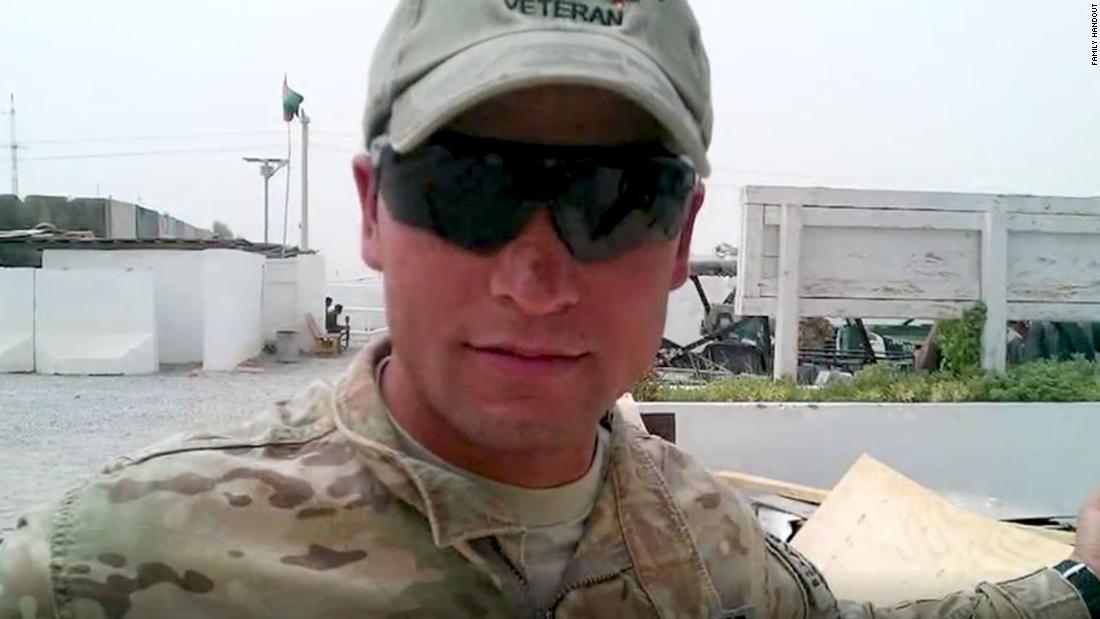
The Biden administration has a life-or-death decision to make about Afghanistan - CNN

When a war ends, two questions loom large: Was it worth it? And how do we end it? Only history can answer the first. Only we can answer the latter.
As North Vietnamese forces bore down in a final assault on the dying nation of South Vietnam, American diplomats, spies, and the small remaining cadre of military advisers desperately mounted a last-minute rescue. None of it was planned ahead of time. The fact that we were able to evacuate 130,000 of our Vietnamese wartime allies in such circumstances was a miracle. Many escaped via ships -- the remnants of the South Vietnamese Navy and merchant fleet -- and sailed to Guam.
Afghanistan is a landlocked country -- we do not have the luxury of an ocean and boats to aid us in the evacuation of the more than 70,000 Afghan wartime allies estimated in need of rescue from certain Taliban death.
We cannot load everyone into trucks and drive to safety now that our war is over.
Should we choose to save our Afghan wartime allies -- the interpreters, engineers, aid workers, and others essential to our effort -- we are going to need the largest airlift since Berlin after World War II.
The White House has finally agreed our allies must be evacuated and it has a plan to evacuate those who can make it to Kabul. Sadly, it is not enough. The Association of Wartime Allies recently polled the Afghan Special Immigrant Visa population. Nearly 49% are outside Kabul -- a population of approximately 34,000 people. Unless we go save them, they will die within weeks.
The Taliban claims to control 85% of the country and is fighting to take the cities it does not yet control. They may take Kandahar, Afghanistan's second-largest city, within weeks. An Association of Wartime Allies survey estimates that 3,200 Afghan allies are currently trapped in Kandahar.
The Taliban has a presence on Afghanistan's roads and have created checkpoints for vehicles. They have used biometric data at these checkpoints to identify US allies and administer their death sentences on the side of the road. Hundreds have already suffered this fate, according to No One Left Behind.
Commercial air travel is scarce between Afghan cities, and most of our allies cannot afford the ticket. The Afghan military cannot defend or move these people. Only US troops can do it. Now, we have two options before us. Either we accept the mass murder of people we made a promise to save or we take bold action. I argue we must do the latter.
The President should order the 82nd Airborne Division or the 2nd Marine Expeditionary Force back into Afghanistan. We should retake airfields we held mere months ago. Some remain in Afghan military control, others we will likely have to seize from the Taliban by force. From these air bases, we should begin the evacuation of our Afghan wartime allies that should have properly occurred before we withdrew any of our own forces.
Anything less than this bold action all but guarantees our allies and their families who are left behind will die gruesome deaths that the Taliban may film for the world to see. They want to convince our future allies that American friendship is a death sentence. With prior videos of horrendous executions as evidence, how could we argue it isn't? How will any future allies be able to trust us?
Any lives we save now will prove to allies later that Americans keep their word and will not abandon our friends to our enemies. Our allies are in danger because of their service to the United States mission in Afghanistan. America must meet our commitment to them. A bipartisan coalition in Congress, as well as veteran, human rights and faith organizations all agree -- we must save these people. A plan exists to make it happen. Only President Biden can give the order.
How will we end this war? With honor or shame? Do we have the courage and conviction to save these allies or will we leave them to die?

Adblock test (Why?)


"Opinion" - Google News
July 31, 2021 at 04:29AM
https://ift.tt/3rWb4Rz

The Biden administration has a life-or-death decision to make about Afghanistan - CNN
"Opinion" - Google News
https://ift.tt/2FkSo6m
Shoes Man Tutorial
Pos News Update
Meme Update
Korean Entertainment News
Japan News Update

Opinion: 'They' are not unknown, and mean-spirited Josh Mandel knows that - The Columbus Dispatch

ER Doctor: 'What a senseless, self-inflicted wound' - CNN

In the early stages of the pandemic, my sickest patients were almost exclusively older people with chronic health problems. But after the vaccine rollout and the giddy days of "reopening" -- followed by the arrival of the more contagious Delta variant -- all that changed.
Now the patients I see, frightened and struggling to breathe, are mostly in their 30s, 40s and 50s. They come from different racial and socioeconomic backgrounds. Many of them have no identifiable risk factors. The one thing many of them have in common: They are all unvaccinated.
The more than 40% of Americans who remain unvaccinated now account for 97% of all Covid-19 hospitalizations and 99.2% of deaths. Hundreds of Americans are dying every day from a vaccine-preventable illness.
About seven months ago, at the beginning of the vaccine rollout, the United States was averaging more than 3,000 deaths each day -- for nearly a month. The surge in cases back then pushed hospitals across this country to their breaking point. People with cancer and chronic illnesses had their treatments interrupted. Without the tens of millions of Americans who lined up to get the vaccine last winter, there is no telling how long that would have gone on.
Half of America has rolled up its sleeve and done its part so we can all move on from this. My colleagues and I have been working tirelessly for over a year to end this pandemic. But here we are, staring down the barrel of yet another wave of death. What a senseless, self-inflicted wound.
One patient I cared for, an unvaccinated man in his late 30s, was only a few days into his illness and was already severely short of breath and requiring oxygen. Neither his clinical appearance nor his chest X-ray was particularly encouraging. I told him that there was a good chance he would get worse and that he would need to be admitted to the hospital. He asked me if I could give him the vaccine before he got worse, seemingly unaware that it does not treat the disease or cure you once you become infected.
Many of my patients exhibit stunning levels of ignorance when it comes to this disease and the vaccine, which, it's worth noting, has so far saved an estimated 275,000 lives and prevented over a million hospitalizations in the US alone, according to research from Yale University and the Commonwealth Fund.
The list of debunked myths and misinformation I hear -- presented to me as fact -- grows longer by the day. No wonder the US Surgeon General has called Covid-19 misinformation an "urgent threat" to public health.
I hear often from patients that the vaccine development was "rushed" or that it hasn't been "studied enough" despite the fact that the Covid-19 vaccine was assessed for safety in tens of thousands of patients -- far more than widely-used drugs like Viagra were. More than 3.8 billion doses have been administered worldwide, over 340 million of them right here in the US.
Many of these same patients, unwilling to be what they term as vaccine "guinea pigs," end up hospitalized, deeply regretting their decision. Ironically, pretty much every therapy that hospitals have used to treat Covid-19 -- like dexamethasone, remdesivir, hydroxychloroquine, and monoclonal antibodies like tocilizumab, sotrovimab, bamlanivimab -- has far less data behind it than the vaccine does.
Another young man in his 20s with no pre-existing medical conditions was admitted to a Florida hospital in the spring after catching Covid-19 at a concert. He quickly ended up on a ventilator. Though I was not involved in his care, the story has been widely reported by CNN and others. He spent several months in the intensive care unit and ended up on extracorporeal membrane oxygenation, or ECMO, a last-ditch therapy that uses a machine to oxygenate your blood outside of the body. He ultimately underwent a double lung transplant and is expected to recover.
Many young women tell me they are concerned about infertility or miscarriage, despite there being zero scientific evidence to support such fears. In fact, there is now a large body of evidence that vaccination is safe before and during pregnancy, and it's recommended by both the American College of Obstetricians & Gynecologists and the American Society for Reproductive Medicine.
The risk to mom and baby posed by Covid-19 is real and cannot be overstated. Pregnancy increases a woman's risk of severe illness, respiratory failure requiring intubation and death from Covid-19. Pregnant women are also more likely to go into premature labor, and their baby is more likely to require admission to the neonatal intensive care unit.
I will never forget some of the pregnant women I have seen with this disease. Early on in the rollout, one young woman I cared for, so young she did not yet qualify for the vaccine, presented severe respiratory failure, and she underwent an emergency Caesarean section to save her baby. In the ICU, she developed multi-organ failure and spent weeks in critical condition. Her child will never truly understand how close he came to growing up without a mom.
It sounds strange to say this, but the patients I've just described are some of the lucky ones. We still do not understand why this virus causes mild symptoms in some people but severe organ failure and death in others. I have seen bedbound nursing home patients get asymptomatic infections and teenagers end up on ventilators, and I have read numerous case reports of young athletes in peak physical condition who die from this. I cannot urge people strongly enough not to mistake their youth or good health for invincibility.
When it was first reported that an American contracted this disease in January 2020, we knew virtually nothing about the virus and even less about how best to treat it. By December, the Food and Drug Administration had given emergency use authorization to two vaccines with over 90% efficacy against Covid-19. A generation ago, there's no telling how many years that would have taken.
In the beginning, ending up on a ventilator was basically a death sentence. Now, if you become that sick, there's a decent chance we can save your life. The one thing we haven't figured out yet is how to convince someone to save their own.

Adblock test (Why?)


"Opinion" - Google News
July 30, 2021 at 05:55PM
https://ift.tt/3lavAMP

ER Doctor: 'What a senseless, self-inflicted wound' - CNN
"Opinion" - Google News
https://ift.tt/2FkSo6m
Shoes Man Tutorial
Pos News Update
Meme Update
Korean Entertainment News
Japan News Update

Local ‘reparations’ plans make promises they can’t keep | Opinion - The Philadelphia Inquirer

In the last few years, the term “reparations” has leaped from the fringe of American discourse to the mainstream. This happened in part thanks to the last presidential race, when Marianne Williamson recommended $100 billion to $500 billion in compensation and some of her fellow Democratic hopefuls agreed some form of restitution was justified.

In the aftermath of George Floyd’s highly visible murder, not only do reparations continue to be a topic under national consideration — municipalities are now racing to pilot their own “reparations” programs on behalf of African Americans. California and New York have created reparations commissions, and proposals have been floated in Pennsylvania and New Jersey. Indeed, piecemeal “reparations” initiatives appear to be experiencing a spawning season.

» READ MORE: Despite racial reckoning, state efforts stall on reparations

They may be encouraged by Evanston, Ill., vaunted this spring for being the first American city to pay “reparations.” But more accurately, Evanston created a housing voucher plan creating $400,000 in homeownership and improvement grants, plus mortgage assistance — which cannot come close to meeting the sums needed to close the wealth gap for its Black residents. In a city with about 11,000 eligible Black recipients, the total needed to erase the gap would be $3.3 billion. The annual city budget is $300 million. And this captures the fatal flaw of these local and state proposals that, in the absence of a precise definition, parade merrily under the label of “reparations” while offering no such thing.

ADVERTISEMENT

In our work, we have been specific about the appropriate contours of a plan for Black reparations, emphasizing that such a plan must prioritize elimination of the wealth gap between Black Americans who are descendants of persons enslaved in the United States and white Americans. The gulf in wealth between Black and white America is the best single economic indicator of the cumulative, intergenerational effects of racial injustice. We estimate that this would require an aggregate expenditure of at least $11 trillion or an allocation of upwards of $360,000 to each of 40 million eligible recipients.

State and local governments simply can’t produce that kind of money.

Assume, conservatively, that the average payout per individual needed to bridge the racial wealth disparity is $300,000. Nationally, about 90% of Black Americans are persons with ancestors who were enslaved here.

Amherst, Mass., where advocates have cited Evanston’s program, announced in late June that it has created a fund to pay reparations to Black residents. It has an eligible Black population of around 2,000 people. To erase the racial wealth gap, it would need $600 million. The entire town budget is $85 million. Asheville, N.C., which claimed to adopt a reparations plan a year before Evanston and allocated $2.1 million for the program this June, has an eligible Black population of about 9,000. Juxtapose the $2.7 billion needed to close the gap for its residents against the $200 million city budget.

ADVERTISEMENT

» READ MORE: Penn Museum owes reparations for previously holding remains of a MOVE bombing victim | Opinion

And in Philadelphia, the estimated eligible population is about 650,000 Black residents. To eliminate the racial wealth gap for them would require a $195 billion expenditure in a city looking at a $5.3 billion annual budget.

What about state government capabilities? California has an eligible Black population of about two million. The $600 billion needed to close the racial wealth gap is more than twice the state’s current $260 billion budget. New York, also establishing a state-level reparations commission, has an estimated 2.3 million eligible Black recipients. They would need to receive $690 billion to eliminate the racial wealth gap, and the state’s budget is $212 billion.

In Pennsylvania, an estimated 1.3 million eligible Black recipients would need to receive $390 billion to eliminate the gap, but the state’s budget is closer to $40 billion.

ADVERTISEMENT

Suffice it to say neither states nor localities taken individually or collectively have the ability to close the Black-white wealth gap, which must be the central objective of true reparations. Labeling these local attempts “reparations” may simply reflect an attempt to score political points, and distract from substantial efforts.

In contrast, the federal government is the financially capable party. As the response to the pandemic has demonstrated, the federal government has the ability to mobilize, quickly, vast resources — spending $5 trillion on pandemic-era stimulus.

The federal government also is the culpable party.

William Darity Jr. and A. Kirsten Mullen

Crucially, the federal government also is the culpable party. Black Americans are about 12% of the nation’s population yet possess only 2% of the nation’s wealth. The federal government has produced and maintained the conditions that produced the Black-white wealth gap, including slavery, legal segregation, white terrorist massacres and lynchings leading to seizure of Black-owned property, redlining, discriminatory application of the GI Bill, mass incarceration, and employment bias.

For 100 years, starting in 1862, the federal government invested in white wealth accumulation with the Homestead Act. Some 1.5 million households received tax-free 160-acre land grants out west, completing the colonial settler project, which translates into 45 million white beneficiaries today. When the Civil War ended, Black Americans were promised — and then denied — 40-acre land grants along the Southern coast, land confiscated from the Confederates. Their descendants are the people who are eligible to make a reparations claim.

Reparations for Black American descendants of slavery in the United States must be a federal project. States and localities should not continue to describe any actions they take as “reparations.” Let’s reserve that term for a comprehensive national program that brings average Black wealth into alignment with average white wealth.

William Darity Jr. is the Samuel DuBois Cook Professor of Public Policy and African and African American Studies at Duke University. A. Kirsten Mullen is a folklorist and the founding director of Artefactual, an arts consulting organization based in North Carolina.

Adblock test (Why?)


"Opinion" - Google News
July 30, 2021 at 04:01PM
https://ift.tt/3zTG9YM

Local ‘reparations’ plans make promises they can’t keep | Opinion - The Philadelphia Inquirer
"Opinion" - Google News
https://ift.tt/2FkSo6m
Shoes Man Tutorial
Pos News Update
Meme Update
Korean Entertainment News
Japan News Update

The Washington horror movie that could have a happy ending - CNN

The way President Biden has pursued a big, bipartisan infrastructure deal was roundly dismissed by many within his own party. They treated his consensus-seeking as a pointless and nostalgic fetish and grumpily accused the old man of wasting time looking for common ground that no longer existed in Washington.
Now, it seems, Biden's persistence -- and that of an intrepid group of moderate senators of both parties -- may be rewarded.
After months of false starts and gloomy forecasts, 17 Republicans joined with Senate Democrats Wednesday to advance a trillion-dollar plan painstakingly negotiated by the moderates and the White House.
Like any negotiation, this plan was the product of compromise. It is not as ambitious as the $2.2 trillion blueprint the President first proposed. It's more expansive than the plans Republicans at first offered. But it would be, by far, the largest investment in infrastructure we have seen in generations.
That is good news for a country whose roads, bridges, ports and other public works desperately need replacement or repair. If it survives the next steps to passage, it will be a hopeful development for our frayed democracy.
This is a big moment for Biden, who made unity and the promise of bipartisan cooperation a signature of his campaign. Passage of the major infrastructure bill that eluded his predecessors would help validate his message and the skills he's honed over nearly a half century in Washington as a senator and vice president.
Biden's progress on this bill suggests that to meet, listen, compromise and refrain from personalizing differences still has some currency in Washington. That will sit well with a majority of Americans after the relentlessly divisive presidency of Donald Trump.
But even if such deals are still possible, this hardly trumpets a new era of cooperation in Washington. Pitched battles loom over a host of issues, including the even larger spending bill Democrats plan to ram through a procedural loophole later this summer, filled with plans to strengthen the nation's social safety net.
But by overriding the left and working closely on this bipartisan bill with moderate Democratic senators, led by Joe Manchin and Kyrsten Sinema, Biden improved his chances of getting their critical support for that larger bill later this year.
Biden struck an appropriately cautionary note after the infrastructure bill crossed its first major hurdle Wednesday night. Nothing is certain in a fragile Washington until it's sitting on the President's desk for signature.
"As the deal goes to the entire Senate, there is still plenty of work ahead to bring this home," he said, with the wisdom of a man who's seen a few things. "There will be disagreements to resolve and more compromise to forge along the way."
Yet the fact that minority leader Mitch McConnell, generally viewed by Democrats as the Lord Voldemort of the Senate, was among the Republicans who supported the plan suggests its final passage is likely.
Progressive Democrats in the House, who have the numbers to sink any close vote in a chamber where the party now has a slim, three-vote majority, will try and use that leverage to include more of their priorities. But enough Republicans are likely to support the infrastructure bill to carry the day.
There will be more scary twists and turns in the plot of this saga; more spats and threats and gloomy reports about last-minute complications.
But the final scene is coming into focus and for Biden and those who yearn for a functioning democracy, it will play to loud applause.

Adblock test (Why?)


"Opinion" - Google News
July 30, 2021 at 08:12AM
https://ift.tt/3xhBzS9

The Washington horror movie that could have a happy ending - CNN
"Opinion" - Google News
https://ift.tt/2FkSo6m
Shoes Man Tutorial
Pos News Update
Meme Update
Korean Entertainment News
Japan News Update

Opinion | In vaccine-resistant Alabama, hospitals face a two-front war - The Washington Post

Michael Saag is professor of medicine and infectious diseases and virology at the University of Alabama at Birmingham.

All of us have suffered mightily from the covid pandemic during the past 18 months. Some of us have had the infection. Many more have provided support to a friend or colleague who fought the infection. More than 611,000 Americans have lost their lives to this global plague.

Through the spring and into the early summer, owing in large part to large-scale vaccine production and distribution, every American age 12 and over had access to the vaccine. Many received their “jab” as soon as it was available. As a result, the number of covid cases plummeted, the grip on our hospital systems relaxed, death rates fell and we began to see the light at the end of the tunnel.

But in many regions of the country, including the Southeast where I live, up to two-thirds of the population chose not to protect themselves. I’ve heard all the reasons: “The vaccines are experimental.” “I am young and healthy; I don’t need the vaccine.” “So what if I get covid?” “The epidemic is over.” “The vaccine will destroy my fertility.” “The vaccine is a government plot.” “I have the freedom to choose.” “Nobody can tell me what to do.” “The doctors are lying to me.”

Like most of my fellow health-care workers, these comments stunned and stung me. We had spent a year fighting a raging pandemic. We suspended activities in our usual disciplines of medical care, rolled up our sleeves and provided care to the more than 30 million people who showed up in our ERs, clinics and hospitals. Covid was more than disruptive; it was exhausting. Most of us survived. But we were also fatigued and battle-worn.

Enter delta. We knew variants had emerged elsewhere in the world. The alpha variant entered the United States as the vaccines were rolling out and, fortunately, was well neutralized by the vaccine’s immune response. Delta, we thought, would be similar. It is not.

As we entered into the July Fourth weekend, many Americans celebrated as if the epidemic had ended: traveling in record numbers and engaging in large gatherings with no masks and no social distancing. All the while, many of those celebrating were unvaccinated and immunologically vulnerable. With the delta variant going from zero cases in March to 60 percent of cases by mid-July, we were approaching a near-perfect storm.

Now we are in it. Cases are exploding. Here in Alabama, the state with the lowest vaccination rate (less than 35 percent), rates of infection have risen from less than three cases per 100,000 people four weeks ago to more than 54 cases per 100,000 this week. Suzanne Judd at the University of Alabama at Birmingham School of Public Health generated models that show, by Labor Day, cases will skyrocket to two to three times the peak we experienced in January. At our 1,157-bed hospital in Birmingham, Alabama’s largest, we have risen from three cases in-house in mid-June to more than 67 cases on Wednesday. Statewide, the rise exceeds 500 percent since July 4.

These trends are terrifying and, as a virologist who had covid-19 last spring, I can say they induce a kind of pre-traumatic stress in our health-care workers. We know what’s coming. We’ve experienced this trauma before. We don’t want to do this again, but the die is already cast. My fellow health-care workers are being thrown back into the fire, like servicemen and women going back for a third tour of duty in a war zone. This week alone, one infectious-disease colleague and four ER physicians, all fully vaccinated, have become ill with the variant. This is very different from what we experienced before. Delta is different.

With the current spike of cases, 99 percent of deaths are occurring in unvaccinated people. Almost all of these are preventable. That is particularly troublesome to health-care workers who struggle valiantly to save the lives of those who now present to the hospital, the vast majority of whom chose not to be vaccinated.

Making it worse is the hate we experience from a small, but very real, group of people who seek to undermine our efforts through the steady release of misinformation in social media and elsewhere. I received an inquiry this week from a person who claimed to be a CNN reporter, initially asking me for information about delta and then demanding “proof” that delta is here. Despite my best effort to explain, I was berated with accusations that I was making this up. (He later posted most of the exchange on Facebook.) I am not alone in suffering these types of attacks. It is this sort of behavior that has led to poor vaccine uptake among many people and resulted in this new spike of cases.

Despite the static and misinformation, we will get it done. It will be helpful, however, if this time around we pull together as a country, ignore those who spew hate and sow mistrust of those trying to serve the public. The virus is a formidable enemy and terrifying enough. We can’t afford to be fighting a two-front war.

Adblock test (Why?)


"Opinion" - Google News
July 30, 2021 at 04:39AM
https://ift.tt/2Ws8dns

Opinion | In vaccine-resistant Alabama, hospitals face a two-front war - The Washington Post
"Opinion" - Google News
https://ift.tt/2FkSo6m
Shoes Man Tutorial
Pos News Update
Meme Update
Korean Entertainment News
Japan News Update

Search

Featured Post

I just paid $9.99 for a carton of 18 eggs. Will prices ever drop? | Opinion - Sacramento Bee

[unable to retrieve full-text content] I just paid $9.99 for a carton of 18 eggs. Will prices ever drop? | Opinion    Sacramento Bee ...

Postingan Populer