Rechercher dans ce blog

Friday, October 28, 2022

Opinion: Why My Pillow Guy is a central figure in the rise of right-wing extremism - CNN

Editor’s Note: Julian Zelizer, a CNN political analyst, is a professor of history and public affairs at Princeton University. He is the author and editor of 24 books, including, “The Presidency of Donald J. Trump: A First Historical Assessment.” Follow him on Twitter @julianzelizer. The views expressed in this commentary are his own. View more opinion on CNN.

CNN  — 

My Pillow founder and CEO Mike Lindell is known for much more than selling bedding. The provocative entrepreneur has become a familiar face in national politics for supporting former President Donald Trump and funding election denialism – all while peddling his wares to Trump supporters.
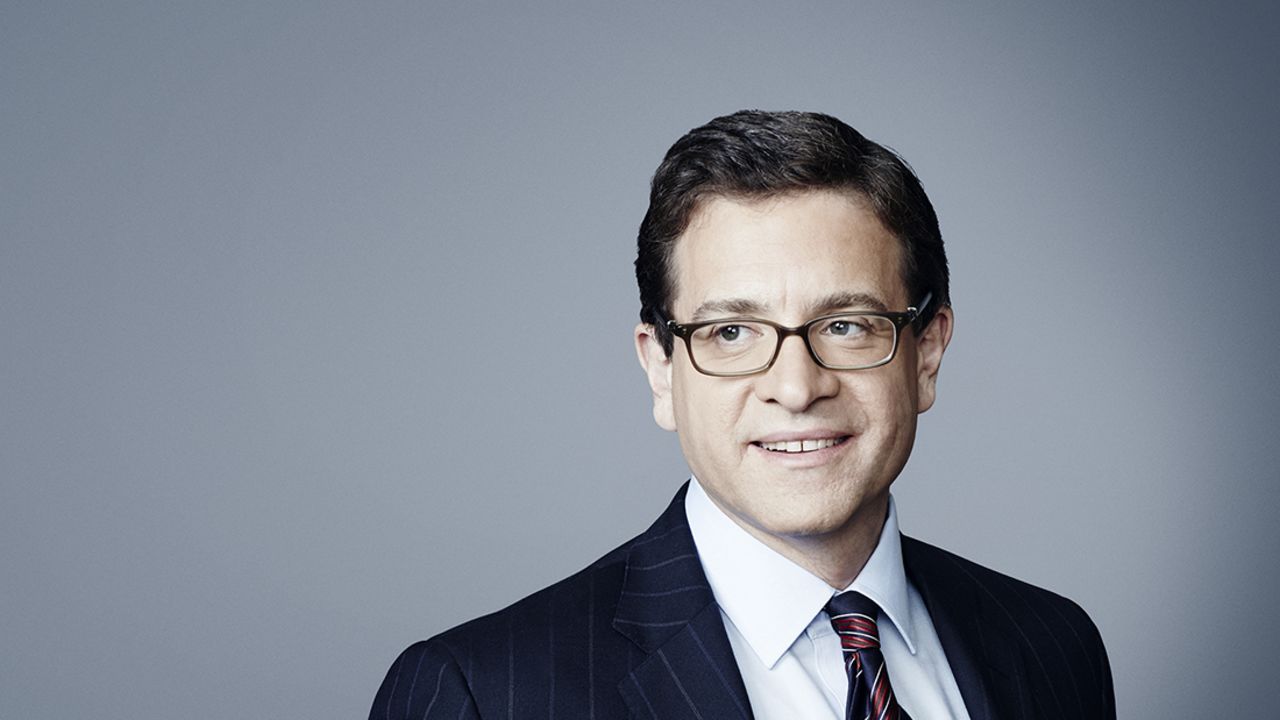
Julian Zelizer

Lindell is the single largest advertiser on Fox News’ opinion prime-time lineup, according to the New York Times. And he has, by his own estimates, spent as much as $40 million on conferences, a digital media platform, legal battles and more – all to advocate spurious conspiracy theories about how the 2020 election was stolen. These conspiracy theories have been central to promoting candidates, who, if victorious in the upcoming midterm elections, could be in a position to overturn the results in 2024.

Trump’s former White House strategist Stephen Bannon, who was sentenced recently to four months in prison for defying a subpoena from the House Jan. 6 committee, has called Lindell “the most significant financier in all of conservative media.”

Lindell is an important figure, especially as our core democratic institutions and norms have come under sustained attack, and his impact is a vital reminder that election denialism is not an idea that simply took off on its own. Lindell is part of a much bigger story – one that reveals how a complex web of donors, party leaders, conservative organizations and media outlets has been essential to reinforcing extremism and helping it spread from the fringes to the mainstream.

This is not the first time we have seen this phenomenon; the rise of McCarthyism, a wrecking ball during the 1950s, also depended on the support of politicians, wealthy donors, conservative organizations and media outlets. Named after Republican Senator Joseph McCarthy, McCarthyism weaponized the fear of communist infiltration within the US government. McCarthyites leveraged baseless insinuations, allegations and lies against public figures as well as members of the political establishment, particularly those in the Democratic Party.
Communism lurked everywhere, according to members of the radical right, and McCarthyites did not wait for evidence to make its case. Although there were some Communist spies lurking in the United States, there were not nearly the amount McCarthy was insinuating. Nor were most of the people who he targeted guilty of the charge. While Senator McCarthy wielded great influence between 1950 and 1954, the political tactics he deployed far outlasted his time in the upper chamber. McCarthyism – the epitome of the “paranoid style in American politics,” which historian Richard Hofstadter famously described as a combination of “heated exaggeration, suspiciousness, and conspiratorial fantasy” – fueled bitter divisions and generated fear during the Cold War.

It’s important to note that McCarthyism depended on a formidable infrastructure of support from members of the right. Otherwise, it would likely have fizzled much earlier.

In his classic work, “The Politics of Fear,” historian Robert Griffith documented how major Republican leaders in the House and Senate, many of whom didn’t personally like McCarthy or his tactics, perceived the Senator as a useful tool to attack Democrats. His extreme version of anti-communism was a powerful weapon against the popularity of the New Deal and the voting blocs and interest groups that supported FDR’s programs. Although the party leadership ultimately cracked down on McCarthy when he was no longer seen as useful, they would continue to embrace his rhetoric in the coming decades, warning about how Democrats were weak on defense and how liberal figures had dangerous associations with communist organizations.

Right-wing anti-communism also depended on big funders. There was an entire generation of financiers in the 1940s and 1950s, such as Texas oil magnates H.L. Hunt and Clint Murchison, as well as businessmen Russell Maguire and J. Howard Pew, who provided money to right-wing organizations, publications and causes.

Organizations such as Fred Schwartz’s Christian Anti-Communist Crusade and the John Birch Society grew in popularity. They sponsored large rallies and small gatherings to promote right-wing causes. These groups were central to the rise of Arizona Senator Barry Goldwater, who won the Republican presidential nomination in 1964 despite the fact that he was considered far to the right of mainstream at the time. Members of these groups continued to sound the alarm on communism and alleged it was lurking in the United States, even within presidential administrations.

The anti-communist crusade also counted on the media. McCarthy counted on some reporters of friendly newspapers to amplify his talking points while blocking hostile ones from his press conferences. Conservatives also had a robust media ecosystem of their own with talk radio hosts like Clarence Manion, who drew massive audiences spreading conspiratorial claims. Publishing houses like Regnery put out conservative books that enjoyed robust sales while magazines like “The Freeman and The American Mercury” propagated the hardline.

The sociologist Daniel Bell brought together prominent social scientists in the 1963 book, “The Radical Right,” to better understand how these forces had gained such a hold in the nation. Looking at these developments, he warned, “given the severe strains in American life, the radical right does present a threat to American liberties, in a very different and less immediate sense [than an electoral takeover]. Democracy, as the story history of Europe has shown, is a fragile system, and if there is a lesson to be learned from the downfall of democratic governments in Italy, Spain, Austria, and Germany … it is that the crucial turning point comes … when political parties or social movements can successfully establish ‘private armies’ whose resort to violence … cannot be controlled by the elected authorities, and whose use of violence is justified or made legitimate by the respectable elements in society.”

These concerns reached the highest levels of power. When President John F. Kennedy asked an adviser, Myer Feldman, to put together a study of the radical right, he detailed just how extensive the movement was, with its own sources of money, organizational support and proximity to mainstream politics. Feldman informed the president that the radical right, which he believed different though connected to the “conservative right” was spending millions a year on radio broadcasts alone. Feldman warned that the difference between extremists and mainstream Republicans was in “degree and intensity, but not in kind.” The right was “more successful, politically, than is generally realized.”

Get our free weekly newsletter

Today the situation is not that much different. Conservative businessmen like Lindell have been pivotal to financing election denialism. Republican leaders such as Senator Mitch McConnell and Congressman Kevin McCarthy have learned to live with extremists within their party, allowing them to gain positions of power because it has been in their perceived partisan interest. Conservative organizations such as the Stop the Steal Movement and the Proud Boys are the ground troops for these theories. Conservative outlets – from Fox News to social media apps like Parler offer massive platforms where election lies and other conspiracy theories are allowed to spread. Mainstream journalists have also been guilty of “both-sides-ism,” trying so hard to equate the polarization of the left and right that they are reluctant to call out the anti-democratic extremism that has shaped only one side of the political spectrum.

Unless those who want to defend democracy go after the sources underpinning election denialism in 2022 by boycotting businesses that sponsor these sorts of candidates and funding alternatives to election denialist candidates, they won’t make much progress. Election denialism is gaining, not losing, strength.

Adblock test (Why?)


"Opinion" - Google News
October 29, 2022 at 06:00AM
https://ift.tt/r1j650D

Opinion: Why My Pillow Guy is a central figure in the rise of right-wing extremism - CNN
"Opinion" - Google News
https://ift.tt/m4zBNi7
Shoes Man Tutorial
Pos News Update
Meme Update
Korean Entertainment News
Japan News Update

Danette Mitchell: Give your opinion with your vote - Vacaville Reporter

An adage goes like this: All money ain’t good money. While we have many needs in California, such as quality education, homelessness, mental health, gambling addiction programs, and support for Native-American tribes, I prefer we brainstorm other solutions to support these persistent issues without expanding gambling.

In my last column, I gave my stand on a few state propositions voters are asked to consider on the Nov. 8 ballot. Here are the last four.

Propositions 26 and 27 promise to address California’s critical issues with additional funding. While there are many adults who gamble responsibly, encouraging increased gambling for legitimate causes is a slippery slope. Gambling can be highly addictive and can ruin people’s lives. Gambling addictions can indirectly lead to substance abuse, alcoholism, and criminal activities.

Proposition 26 expands betting in California to in-person sports gambling, roulette, and dice games at tribal casinos and specific licensed racetracks. Proposition 27 legalizes online sports betting in California, but not on tribal lands.

The United States owes a great deal to indigenous people for centuries of genocide, land theft, and disease outbreaks. Native Americans should have independence on their sovereign land. And the additional revenue from tribal casinos can help more people in their community.

The key to effective programs to combat homelessness, and provide quality education and mental health is getting dollars to cities, counties, and school districts with the least amount of strings attached. Implementing specific programs that benefit all Native Americans represents serious reparations, including the United States honoring past treaties with indigenous people.

The idea of additional tax revenues to combat homelessness, fund education, and help support tribes is appealing. Still, both measures come at a cost to the lives potentially ruined by gambling addiction.

No one likes increased taxes. Proposition 30 will raise taxes on Californians with a personal annual income of more than $2 million.

The 1.75 percent tax increase on these individuals would be placed in a fund separate from the General fund to increase the use of electric cars, reduce pollution from public buses and big rig trucks, and develop a network of charging stations. The fund would also help manage wildfires by providing training, hiring firefighters, and executing other preventative programs.

Another goal is to make electric vehicles affordable to low- and middle-income families. And the initiative could create or support green jobs.

California must reduce emissions for cleaner air, which could slow climate change, triggering prolonged drought and extreme heat. We have an annual threat of wildfires, devastating the lives of many families, that we must also address.

Environmental justice activists say that low-income communities, communities of color, and other vulnerable populations experience a disproportionately severe impact of climate change compared to other communities.

For these reasons, Proposition 30 merits support, as wildfires, gas cars and diesel vehicles remain significant sources of air pollution.

When it comes to Proposition 31, banning flavored tobacco products, a yes vote will uphold the 2020 law banning the retail sale of specific flavored tobacco products. Opposition means voters want to repeal the 2020 law by keeping the sale of flavored tobacco legal in California.

The Sacramento Sister Circle mentioned in their 2022 Voter Guide a survey that “e-cigarette use more than doubled among high school students from 2017 to 2019 and tripled among middle school students.” Seventy percent of the teens cited “flavors” for their use.

For decades, we’ve heard about the increased risk of many health problems from tobacco use and secondhand smoke. Kids are drawn to sweet-flavored tobacco products. Nicotine is addictive and flavored tobacco could cause life-long addiction. Also, most tobacco ads heavily target African Americans and people of color who suffer the most disparities from tobacco-related illnesses.

The opposition states that we would lose out on some tax revenue that funds health care, early childhood programs, tobacco control, and medical research with a yes vote. Adults would lose their freedom to legally purchase flavored tobacco products at local locations.

I said earlier that all money ain’t good money. We must protect the next generation as much as possible, understanding that even with a yes vote, parents, teachers, and the community must continue educating about the long-term severe effects of using tobacco products.

That’s my stand on the state propositions. As I said in my previous column, if the government is smart enough to ask for our opinions on Nov. 8, I think we should give them.

— The Vacaville author is a social issues advocate. 2022 Women of the Year Congressional Award Recipient. E-mail: damitchell@earthlink.net

Adblock test (Why?)


"Opinion" - Google News
October 29, 2022 at 01:26AM
https://ift.tt/ZQYnhFU

Danette Mitchell: Give your opinion with your vote - Vacaville Reporter
"Opinion" - Google News
https://ift.tt/m4zBNi7
Shoes Man Tutorial
Pos News Update
Meme Update
Korean Entertainment News
Japan News Update

The response to John Fetterman’s debate performance reveals the stigma employees with disabilities still face. Here’s why the discourse needs to change - Fortune

israelob.blogspot.com

Happy Friday.

A lot of you agreed with me that Kanye “Ye” West’s slow descent into bigotry and problematic speech was a long-missed opportunity to curb the harm that kind of power can perpetuate. “You so perfectly stated the issues around supporting Kanye West all these years and the deep issues surrounding his behavior. Although his antisemitic rants were the straw that broke the camel’s back, as a society we are all responsible for letting it get to this point,” wrote one reader. And plenty thought that major brands should have weighed in much, much earlier. His anti-Blackness wasn’t bad for business, so they let that slide, was the general theme.

But issues around disability were once again front and center in the raceAhead ecosystem after a televised debate, between Pennsylvania U.S. Senate hopefuls John Fetterman—the state’s lieutenant governor—and television celebrity Dr. Mehmet Oz, revived ableist talking points about Fetterman’s performance.

Fetterman is still recovering from a stroke he suffered five months ago. His halting speech—worsened in part by the unusual format of debates—became a flash point for politicians, media figures, and online chatter. It was a “rocky debate performance,” declared the AP, echoing a mainstream consensus. 

Online commenters, reading from an outdated playbook, piled on in similarly cringe-inducing ways.

“There is no amount of empathy for and understanding about Fetterman’s health and recovery that changes the fact that this is absolutely painful to watch,” tweeted one prominent commentator, who was quickly buried by counter-sentiments in response.

People with disabilities are underrepresented in political life but not completely absent. But it is an issue, says Andrew Pulrang, co-founder of CripTheVote, a campaign to encourage people with disabilities to engage in policy and politics. “Disability and disability accommodations are a question mark for a lot of people — they raise questions, they raise suspicion,” he told the Washington Post, talking about the stigma disabled candidates continue to face.

But the lingering rhetoric around Fetterman’s performance is symptomatic of the insidious way we still think and talk about people with disabilities, which leaves it to business to help reshape an exclusionary narrative.

Disability is the only segment of underrepresented talent that anyone can join, often quite suddenly, at any time. That’s part of what made the new “realization” during COVID that anyone could work from anywhere such a breakthrough for disabled talent.

That breakthrough is about to be put to the test.

Currently, some 1 in 4 Americans live with a disability, and at least 70% of disabilities are not readily apparent. But by late 2020, the CDC declared COVID a disabling event, with more than one million newly disabled workers attempting to navigate their new reality.

Expect those numbers to grow.

While a new study from the University of New Hampshire’s Institute on Disability and the Kessler Foundation finds that employers are responding—some 78% of 3,800 supervisors surveyed said their workplace established or changed the way they provide accommodations because of the COVID pandemic—big questions remain about whether leaders are going to be nimble enough to both welcome talent with existing disabilities and retain employees with new ones.

“Our community is growing exponentially from long COVID,” Jill King, a disability rights advocate who is disabled, told NPR. “More people are needing [accommodations] as well as asking for them.” That means that employers are in the hot seat to make sure they feel safe enough to do so. “[Workers], as well as all other nondisabled employees, deserve to feel safe to bring their whole selves to work. And this means being unafraid to disclose a disability and seek any support they may need in the workplace,” said Julie Sowash, executive director of the nonprofit consultancy Disability Solutions, in an interview with the Society for Human Resource Management (SHRM).

One big bright spot in the news this week has been how members of the public were increasingly able to make the distinction between Fetterman’s recovery and his ability to think, lead, and continue his work in public service. The public’s response, in some regards, has put the pundits to shame.

“To see someone who is in recovery, using these tools that were fairly new to him, and doing so in a public debate where the stakes are so high, and all eyes are on him – it’s pretty incredible,” Maria Town, the president of the DC-based American Association of People with Disabilities told the Guardian. “I have a lot of respect for what he was doing.”

Next week, I’ll be digging more deeply into how systemic racism has sidelined voices of people of color in the disability rights movement.

More interesting stuff below.

Wishing you an incredible weekend.

Ellen McGirt
@ellmcgirt
Ellen.McGirt

This edition of raceAhead was edited by Ashley Sylla.

On point

A Thai media “tycoon” and transgender advocate has bought the Miss Universe pageant. And I am here for it. The pageant, previously owned by former U.S. president Donald Trump, was purchased by Anne Jakkaphong Jakrajutatip, the CEO of JKN Global Group PCL, a Thailand-based media company. Jakrajutatip has been outspoken about her experiences as a transgender woman and has been a longtime advocate for LGBTQ+ issues in Thailand. She’s also famous for her appearances on Thai versions of reality shows, like Project Runway, evidently. She paid $20 million for the property, and I'm already picking out my viewing party outfit.
CNN

Mostly good news in the latest Hollywood diversity report. As part of its newly structured Entertainment and Media Research Initiative, the now annual Hollywood Diversity Report from UCLA shows a meaningful increase in diversity since the 2019/2020 season. But researchers warn that those changes may not be permanent, particularly in leadership roles in writer’s rooms and beyond. “The next few years may be a true test of whether Hollywood is truly committed to the changes they promised during the nation’s reckoning on race following the murder of George Floyd,” Ana-Christina RamĂłn, co-author of the report, told the Hollywood Reporter. Social media engagement is higher when shows have truly diverse casts; despite clear consumer interest in entertainment with majority-minority casts, actors of color were still underrepresented in lead roles on broadcast TV, though in better shape on cable and in film.
Hollywood Reporter

Wharton gets it  The Wharton School of the University of Pennsylvania is planning to offer students a new program of study in diversity, equity, and inclusion, beginning in the 2023-2024 academic year, reports my colleague Paolo Confino in the must-read newsletter CHRO Daily. It will combine courses already within the Wharton curriculum that, when taken together, provide essential skills to deliver both the “ethical promise” of DEI with the necessary financial returns. "Our students have challenged us to do more to prepare them for the new realities of leadership, which involve creating and sustaining diverse, equitable, and inclusive organizations,” says Stephanie Creary, a Wharton professor of management. Sign up for CHRO Daily here.
Fortune

On background

Missing summer fun? Head to Crip Camp. In this poignant essay, Maysoon Zaid, an actor, comedian, and activist with cerebral palsy (and a raceAhead favorite) reviews Crip Camp, a 2020 Netflix documentary that won or was nominated for a slew of awards. She begins by sharing her experience as the only disabled kid at a traditional summer camp. “As I dragged myself up the Appalachian Trail, I could never have imagined that decades earlier a camp existed for kids like me. Crip Camp tells the story of that fantastical place I never knew existed that changed the course of disabled history in America,” she says. The story follows a teenaged Jim Lebrecht, now a disability rights activist, but then a kid in a wheelchair whose life was about to be changed by the hippies who ran Camp Jened in Hunter, New York. Crip Camp was produced by Higher Ground, the production company founded by Barack and Michelle Obama.
Refinery 29

For journalists with disabilities, obstacles abound but so do solutions. Michelle Hackman now covers immigration policy for the Wall Street Journal, but in this first-person account, finding a job was never guaranteed. “Those who make it in the field are the standout go-getters who seek out work-arounds to lessen the burden of their disabilities on employers,” she explains. They become their own IT experts, often hacking together solutions that help them do their work without drawing attention to perceived limitations. “And they are the ones willing to tolerate relentless, if latent, prejudice from sources and editors alike who often have trouble squaring disability with competence.”
Nieman

Parting words

"My advice to other disabled people would be, concentrate on things your disability doesn't prevent you doing well, and don't regret the things it interferes with. Don't be disabled in spirit, as well as physically.”

—Stephen Hawking

Adblock test (Why?)


"discourse" - Google News
October 29, 2022 at 03:43AM
https://ift.tt/oxid4hk

The response to John Fetterman’s debate performance reveals the stigma employees with disabilities still face. Here’s why the discourse needs to change - Fortune
"discourse" - Google News
https://ift.tt/kqyU3hB
https://ift.tt/1tZN7Vd

Discourse, Disagreement Central to Truly Liberal Thought – The Oberlin Review - The Oberlin Review

israelob.blogspot.com

Two weekends ago, I took a short trip to Cincinnati to visit my grandmother. While driving through the rural farmlands and small towns of suburban Ohio, I came to the realization that I, a person born and raised in Seattle, was studying at a college with sensibilities that effectively mirrored that of my hometown and that these farmlands and small towns were far more reflective of Ohio than anything I would witness in Oberlin. Oberlin, the isolated, liberal bubble in the middle of Ohio, is not a good representation of the larger community itself.

One of the main reasons I chose to attend Oberlin was its distance from my home state. Although I knew that Oberlin had a fairly large liberal demographic, I made the assumption that the farther I was from my home, the more politically diverse my community would be. And yet somehow, I ended up right back in Seattle.

But is Oberlin truly a liberal space? I believe so. Liberalism has a funny way of preaching inclusion but remaining extraordinarily exclusionary to other categories of political thought. I do believe the Oberlin community could benefit from an opening of minds and a broadening of theoretical political horizons. I am not suggesting that Oberlin needs to start accepting more conservative students, nor am I promoting conservatism on campus. I am merely suggesting that Oberlin offer more opportunities for students to broaden their intellectual horizons through offering a large range of lectures, dialogues, and courses. It is my opinion that in order to be a true liberal, one must understand other families of political thought on a deep level.

Oberlin College was founded as a Christian college, but its political origins are distinctly liberal. It was the first American institute of higher learning to make racial colorblindness a written aspect of College policy, and thus was the first to admit Black students in 1835. It was also the first college to offer bachelor’s degree programs to women beginning in 1837. Since then, Oberlin has prided itself on its diversity, equity, and inclusion programs, social justice-oriented campus life, and commitment to environmental justice. 

However, with the recent intensification of political discourse, particularly its rapid diffusion on social media, the very definitions of and ways of practicing liberalism have been changing. Today, it’s common to read a short blurb or graphic on social media and repost it, contributing to a phenomenon known as “social media activism.” It’s an opportunity for information to become easily accessible and widely dispersed but also a way for people to become complacent with inequality under the guise of reposting and sharing media.

This contemporary form of liberalism is especially prevalent for young people, and I’ve noticed this at Oberlin. Students feel more comfortable regurgitating information they’ve already heard than critically analyzing social issues and forming their own opinions. While this isn’t necessarily an issue, and rather a form of privilege, it does become a problem when people claim to be “activists” or “allies.” Activism and allyship involve much more than reiterating information. They involve active engagement, critical thought, and sacrifice.

While I believe Oberlin does provide opportunities for students to understand forms of non-liberal political thought to a certain degree,  there’s still work to be done. At the start of the year, I remember being told that making mistakes was a part of Oberlin culture. It’s important to take risks and be unafraid to say things that may be “incorrect,” because making mistakes is an integral part of learning. However, since orientation, I have yet to see a single person “make a mistake” in class, during casual conversations, or online. And while this could be chalked up to first-year nervousness about participating in class, I also think the rigidity of liberal values at this school, along with the intense pressure that students may feel to conform to the majority, may discourage students from speaking candidly and without fear of making a mistake.

I’ll be the first to admit that, like most people, I take a sort of subconscious comfort in knowing that everyone around me shares my values. Yet I know that this structure is not conducive to a functioning and ultimately progressive society. The competition of different political ideologies is what inspires our democratic process — the basis for our country’s political system. It’s important that we not only amplify all voices but also work to critically analyze and understand other perspectives. 

While I have spent most of my life in Seattle, I’ve also spent a lot of time among both conservative Americans and Indians in my family. Though it’s difficult to have conversations about politics with people who have completely opposite views as you, I have learned to find merit in open, respectful dialogue. Understanding where other people are coming from, what motivates their political beliefs, and what they like or dislike about conservatism, liberalism, and other groups of thought can be eye-opening.

Typically, liberals want to remain in liberal spaces, and conservatives want to remain in conservative spaces. It’s an innate human inclination to be with people who are similar and like-minded. However, closing yourself off to new people means closing yourself off to a host of experiences. Higher education is an opportunity to not only meet new people but also gain the tools for understanding and engaging with advanced political thought. My advice is not necessarily to move to a conservative area or forcefully seek out conversations and interactions with conservatives. I am merely suggesting that research and critical thinking can go a long way. It can rip you from the binds of homogeneous liberal theory and force you to be your own person with your own values.

Adblock test (Why?)


"discourse" - Google News
October 29, 2022 at 04:03AM
https://ift.tt/SyVkczP

Discourse, Disagreement Central to Truly Liberal Thought – The Oberlin Review - The Oberlin Review
"discourse" - Google News
https://ift.tt/kqyU3hB
https://ift.tt/1tZN7Vd

Thursday, October 27, 2022

Riham Isaac seduces the stage with Another Lover's Discourse - The New Arab

israelob.blogspot.com

The New Arab caught up with one of Palestine's most exciting contemporary artists, Riham Isaac, to find out more about her one-woman show on love, a performance that has since been met with critical acclaim.

This autumn Riham Isaac brings her first solo theatre show, created and performed solely by her, to the Belfast International Arts Festival. The multimedia performance, titled Another Lover’s Discourse, explores the complexity of love and relationships.

Four years ago, Isaac embarked on a journey to explore what it meant to love; what ideas we have about it and what was holding her back from it. This inventive new multimedia performance invites the audience to think differently about love.

“It’s been a long journey for me,” Riham explains. “I started working on the show in 2018, researching and developing work around the theme of love. I was trying to understand how we fall in love and what our ideas around it are, especially as an Arab woman.

"Encouraging a more open conversation about how we understand romantic relationships, her [Riham's] unique show mashes up interviews video, music, performance and original film to explore the complexity of love and relationships"

"The idea was to do a personal investigation into the theme of love. I wanted to express it in its complexity because love can be very complex, it can be very simple. Sharing your personal experience with the audience – it’s a healing process.”

What perhaps sets Riham’s performance apart is the intimate aspect of it, with candid interviews and discussions taking place around the subject of love: “I think one of the key moments in my performance is my interview with my mother, more of an intimate conversation that I wished I had when I was a kid. I do believe that revolution doesn’t happen just by going out in the street; I think revolution starts from within.” 

In March 2020 Riham was invited to showcase snippets of the performance at the AWAN festival. “I had this amazing opportunity to collaborate with other artists and get a sense of how I wanted the show to be,” she explains.

“We put the show together in three weeks and caught the eye of Belfast Arts Festival, who commissioned us to do the full show.”

However, luck wasn’t on Riham's side and, shortly after, Covid forced the world into lockdown, delaying her debut. 

When describing what viewers of Another Lover’s Discourse can expect from her performance, Riham’s eyes light up. “Love is very complex and there are so many emotions – you expect to have a journey with yourself when observing me.”

Encouraging a more open conversation about how we understand romantic relationships, her unique show mashes up interviews, videos, music, performance and original film to explore the complexity of love and relationships.

“It’s multidisciplinary; there’s music and a video installation. I filmed myself in the style of old classical Egyptian films. There are humour aspects to it, with me acting and singing on stage and some intimate moments where I share interviews I’ve done with family, friends and even my mother.”

Riham's practice is interdisciplinary in its art form, exploring both theatrical and cinematic genres. With video installations and integrated live performances – including striking video design by Welsh artist Simon Clode – audiences will be intrigued, curious, and excited by the way Riham communicates and tells stories.

With live music composed by Palestinian musician and composer Faris Ishaq, Riham also sings songs inspired by classical black and white Egyptian films, in which men's and women’s roles were always fixed and linear. 

By representing a nonstereotypical and nuanced take on love, desire and romance as an Arab woman, she aims to challenge heteronormative gender roles and romantic relationships with humour, truth and empathy. 

Following on from Belfast, Another Lover’s Discourse will be performed at PalArt Festival at London’s Rich Mix. Partnering with Amnesty International UK, this one-of-a-kind theatre and arts festival will present art from across Palestine from October 28-31, that covers media such as theatre, spoken word, poetry, music and visual art. 

The festival hopes to welcome all Palestinian artists, anyone who is interested in meeting like-minded artists, and those looking for an alternative experience of arts and culture. 

Riham will also be hosting workshops and community work with young people alongside the performances, including events at Barbican Plymouth, Theatre Royal Bath and Belfast International Arts Festival, as well as a schools’ project in Hounslow linked with the Bethlehem Cultural Festival. 

Sami Rahman is a freelance lifestyle writer based in London. 

Follow her on Twitter: @bysamirahman   

Adblock test (Why?)


"discourse" - Google News
October 28, 2022 at 03:18AM
https://ift.tt/QYsp0t9

Riham Isaac seduces the stage with Another Lover's Discourse - The New Arab
"discourse" - Google News
https://ift.tt/b45ExOo
https://ift.tt/doOcxbH

In Focus 10/27/22 – Inst. for Civic Discourse & Beach Museum of Art, Pawnee Mental Health - News Radio KMAN

israelob.blogspot.com

Segment 1 – 00:00
Segment 2 – 14:41
Segment 3 – 24:17
Segment 4 – 34:55

Thursday’s edition of In Focus featured guests from K-State’s Institute for Civic Discourse and Democracy, the Marianna Kistler Beach Museum of Art, and Pawnee Mental Health Services.

The first half of the program welcomed ICDD Director Dr. Colene Lind as well as Beach Museum Curator Aileen June Wang. The two discussed the ‘Do You See What I See’ exhibit on display at the museum, intended to challenge viewers to reconsider their perspective on a representation through considering how others may view it in a safe setting. Wang and Lind also highlighted a facilitated panel discussion led by Museum Specialist Nate McCLendon about the exhibit coming up on Nov. 3, as well as the ICDD and Beach Museum’s blossoming relationship of collaboration.

The second half of the program, we were joined via phone by Pawnee Executive Director Robbin Cole from Topeka. She was awaiting her scheduled testimony before the Kansas Legislature’s special committee on mental health beds, and shared a preview of her testimony about challenges facing the mental health workforce as well as discussed the state of mental health in Kansas in light of low national rankings.

Adblock test (Why?)


"discourse" - Google News
October 27, 2022 at 10:41PM
https://ift.tt/FdcYfzL

In Focus 10/27/22 – Inst. for Civic Discourse & Beach Museum of Art, Pawnee Mental Health - News Radio KMAN
"discourse" - Google News
https://ift.tt/b45ExOo
https://ift.tt/doOcxbH

How the Jan. 6 hearings changed public opinion ahead of the midterms - ABC News

The House Jan. 6 committee, in its last scheduled hearing, warned that those involved in what they called the attempted coup must be held accountable or history could repeat itself.

"With every effort to excuse or justify the conduct of the former president, we chip away at the foundation of our republic. Indefensible conduct is defended," chair Bennie Thompson, D-Miss., said as the panel gaveled in on Oct. 13. "Inexcusable conduct is excused. Without accountability, it all becomes normal and it will recur."

But has the committee succeeded in swaying public opinion? And will that be a factor in the midterm elections?

Polling indicates overall views have not changed much even after 10 public hearings -- nine since June -- in which the committee presented damning evidence about a plot to overturn the 2020 election.

Rep. Liz Cheney, R-Wyo., the vice chair of the committee, has told ABC News she's working to "ensure that we do everything we can not to elect election deniers."

But more than one-third of Americans said it would make no difference in their vote if a candidate said they believed the election was stolen from Trump, an October ABC News/Ipsos poll found. A narrow majority of Americans said it would make them less likely to vote for that candidate, but just 3% said it would cause them not to vote in November.

At the center of the plot, committee members said, was former President Donald Trump. Trump was subpoenaed by the committee last week to produce documents and appear for testimony next month.

"That kind of drama is the stuff of history," Ray Smock, a former historian of the U.S. House of Representatives, told ABC News.

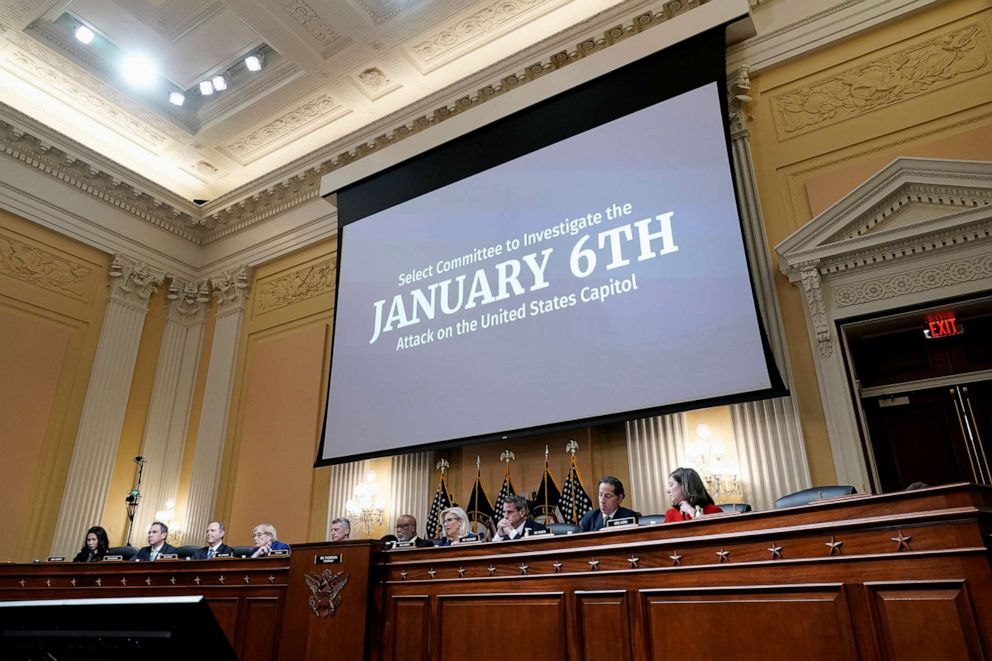
PHOTO: The House select committee investigating the Jan. 6 attack on the U.S. Capitol holds a hearing, Oct. 13, 2022, in Washington.

The House select committee investigating the Jan. 6 attack on the U.S. Capitol holds a hearing, Oct. 13, 2022, in Washington.

J. Scott Applewhite/AP

But did the hearings change minds?

Despite the made-for-television hearings, views on the Capitol attack and on Trump have remained consistent over the past several months.

A poll conducted by ABC News/Ipsos in mid-June, after three of the committee's hearings, found 58% of Americans believed Trump bore a good or great deal of responsibility for the Jan. 6 attack. That number was unchanged from a poll ABC News and Ipsos conducted in January, well before the hearings began.

Just 9% of Americans said they were watching the hearings "very closely" while 36% said they weren't following the events closely at all, the June survey showed. This was despite most Americans saying the committee was doing a fair and impartial job.

Monmouth University polling from June showed 65% of Americans considered the Jan. 6 attack on the Capitol a riot, 50% said it was an insurrection and 34% said it was legitimate protest. By the end of July, after eight hearings, those numbers were practically the same: 64% said Jan. 6 was a riot, 52% said it was an insurrection, and 35% said it was legitimate protest.

And while Trump undoubtedly has been the focus of the Jan. 6 hearings, he remains a top figure in the Republican Party. The October ABC News/Ipsos poll found 64% of registered Republican voters think Trump should have a great deal or good amount of influence on the future direction of the party.

Republicans in Congress -- besides the two members of the committee -- Cheney and Adam Kinzinger -- have also largely brushed off the panel's work as a partisan exercise.

Trump acolytes, including candidates who support and spread his election lies, have succeeded up and down the ballot this November. According to FiveThirtyEighty, 199 Republican nominees running for office have fully denied the legitimacy of the 2020 election despite no evidence of fraud.

At the same time, the ABC News/Ipsos poll shows 58% of independent voters say that if a candidate says they believe that the 2020 presidential election was stolen from Trump, they are less likely to vote for that candidate.

While Democrats have tried to make the threat to democracy a focus of the midterms, with President Joe Biden framing the 2022 midterms as a referendum on extremist MAGA Republicans, surveys show the economy, abortion and crime are the top issues for voters. A New York Times/Sienna College poll found that while voters overwhelmingly believe American democracy is under threat, few call it the nation’s most pressing problem.

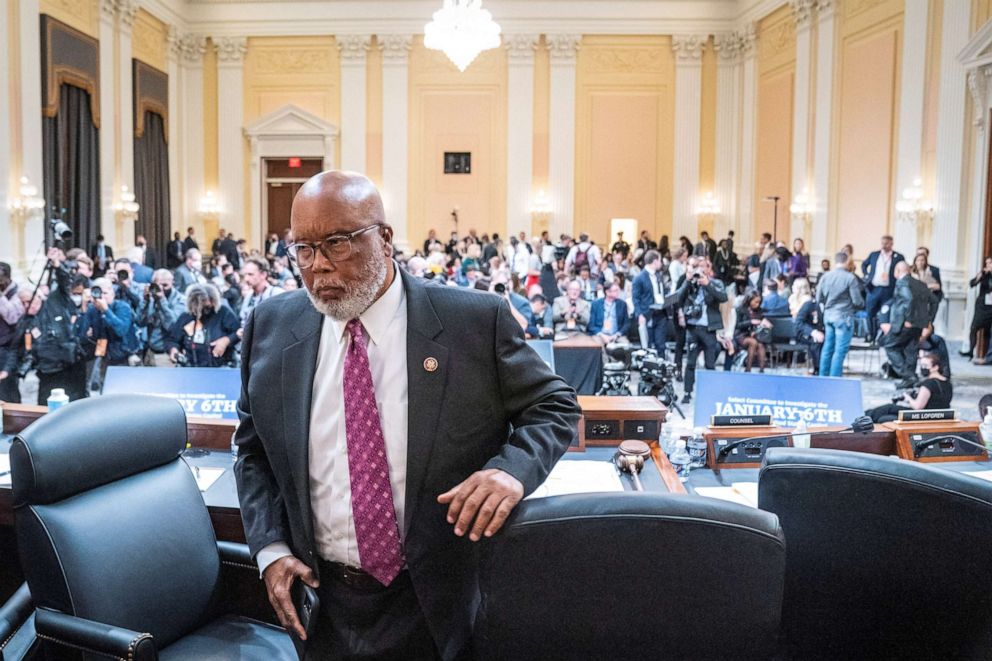
PHOTO: Chairman Bennie Thompson departs during a break as the House select committee investigating the Jan. 6 attack on the U.S. Capitol holds a hearing, Oct. 13, 2022, in Washington.

Chairman Bennie Thompson departs during a break as the House select committee investigating the Jan. 6 attack on the U.S. Capitol holds a hearing, Oct. 13, 2022, in Washington.

Jabin Botsford/Pool via REUTERS

Jan. 6 committee's work isn't done

The House Jan. 6 committee has more work to do, including releasing a final report on its findings and recommendations. The panel is expected to complete the report by the end of the year.

There's also the overarching question of whether the Justice Department will take action after the committee wraps up its investigation.

It'll be up to Attorney General Merrick Garland to decide whether to take legal action against Trump. Garland has vowed to pursue charges for anyone criminally responsible for Jan. 6 and the department's made more than 880 arrests so far in connection with its investigation, but hasn't made any public indications about Trump's fate.

A prosecution could affect public opinion about Jan. 6, Smock said.

"The full verdict on the impact of this committee is yet to be felt," he told ABC News.

"They made the case but their work stops at the water's edge and it now becomes the executive branch, through the Department of Justice, that has to take this up. If the Department of Justice does not take it up sufficiently or adequately, then this hearing will have a different view in history -- that whatever the committee did, it didn't resonate."

Adblock test (Why?)


"Opinion" - Google News
October 27, 2022 at 04:16PM
https://ift.tt/3Y8ShnL

How the Jan. 6 hearings changed public opinion ahead of the midterms - ABC News
"Opinion" - Google News
https://ift.tt/cZk6alo
Shoes Man Tutorial
Pos News Update
Meme Update
Korean Entertainment News
Japan News Update

Search

Featured Post

I just paid $9.99 for a carton of 18 eggs. Will prices ever drop? | Opinion - Sacramento Bee

[unable to retrieve full-text content] I just paid $9.99 for a carton of 18 eggs. Will prices ever drop? | Opinion    Sacramento Bee ...

Postingan Populer